Start with a dry sweep and a plant check
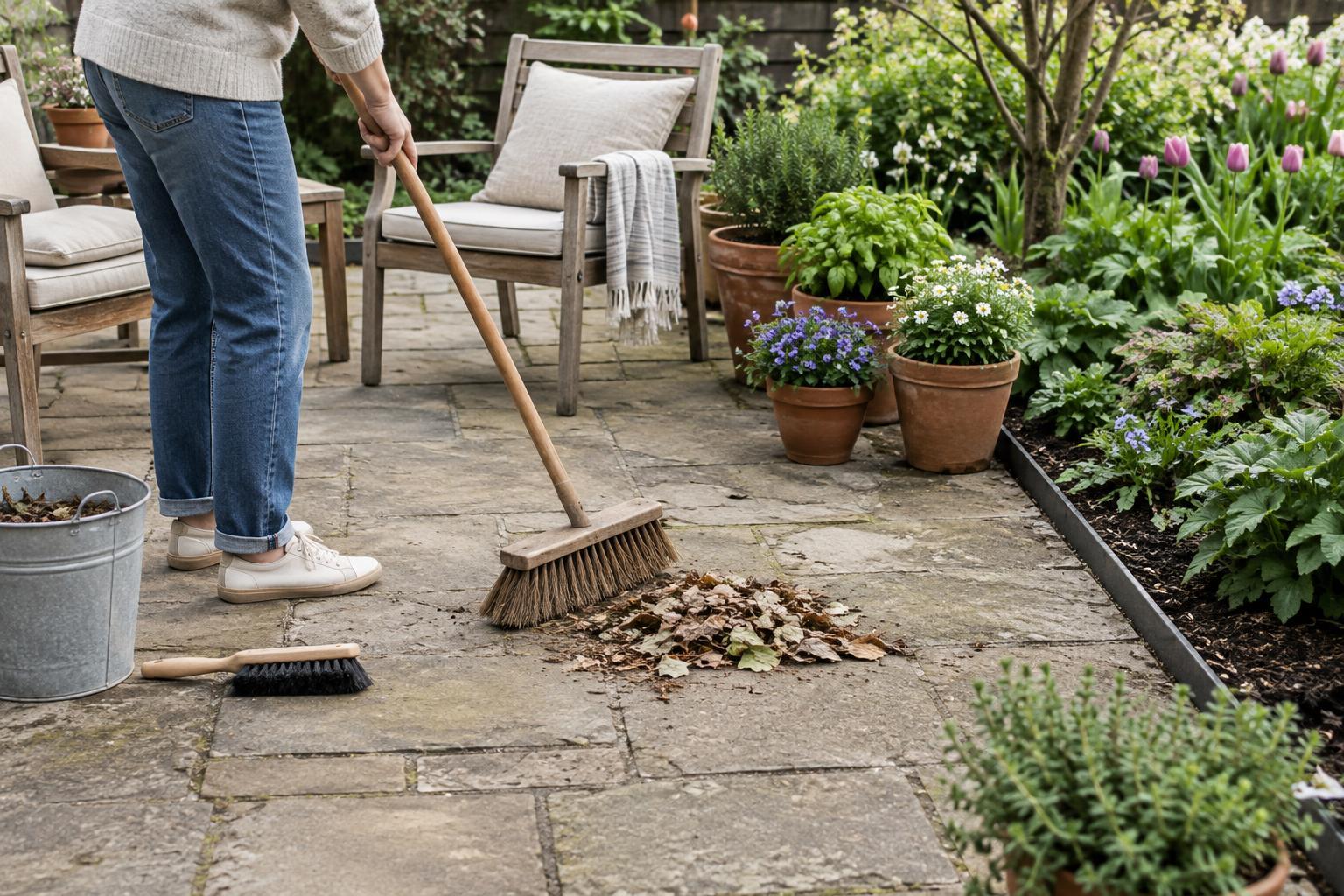
Before bringing out a hose, move chairs, pots and loose accessories off the patio. Sweep up leaves, grit and old potting mix, working away from planting beds where possible. Lift debris from corners and drains by hand so it does not wash into the soil later. A stiff broom may be enough to improve the look of a lightly soiled surface.
Look at the plants around the patio before choosing a cleaning method. Note low leaves that touch the paving, containers that could be moved and beds that sit downhill from the work area. Shift portable pots out of the splash zone, and loosely tie back stems that extend over the patio. Avoid pulling branches into tight bundles or covering plants for longer than necessary, especially on a warm day.
Check the patio material, too. Rough concrete, brick, natural stone, tile and decking can respond differently to scrubbing and water pressure. If you are unsure what a surface can tolerate, begin with a soft brush in a small, less visible area.
Choose the least intensive cleaning method that works
For ordinary winter dust and tracked-in dirt, try warm water and a brush first. Work in small areas, using just enough water to loosen the dirt, then gather the muddy water with a mop or wet vacuum if you have one. This keeps more residue from flowing toward roots. A soft brush or cloth is a better starting point for surfaces that scratch easily.
If water alone is not enough, choose a cleaner labeled for your particular patio material and follow its directions. Do not assume that a product described as natural is harmless to plants: concentrated soap, vinegar and other household mixtures can still affect leaves or soil. Test any product on a hidden patch, keep it off foliage, and avoid mixing cleaners. For a patio next to open beds, spot-cleaning stubborn marks is often easier to control than coating the entire surface.
For algae or slippery patches, scrub carefully and keep the loosened material out of beds and drains. A pressure washer may remove grime, but a strong jet can damage soft surfaces, dislodge jointing material and spray dirty water onto plants. If you use one, follow the surface maker’s guidance, start with the gentlest suitable setting and direct the spray away from planting areas.
Keep runoff under control
The most plant-friendly wash is one that does not carry cleaner or concentrated dirt into the garden. Before wet cleaning, check which way the patio slopes. Block a direct path to a bed with an old towel or another temporary absorbent barrier, making sure you are not diverting water toward the house. Clean a manageable section at a time so you can collect dirty water rather than chasing it across the whole patio.
Use a mop, sponge or wet vacuum to lift pooled water. If you need to rinse a product, follow its label and collect the rinse water where practical. Dispose of collected water according to the cleaner’s directions and any local requirements; do not pour it onto plants simply because it has been diluted. Keep leaves clear of overspray, and wipe any accidental splashes off foliage with plain water promptly.
Once cleaning is finished, remove temporary barriers and check that normal drainage routes are open. Let the patio dry before putting pots and furniture back. This is also a good moment to notice places where water repeatedly sits; a simple change in pot placement may help keep those areas easier to maintain.
Reset the space for everyday use
While the patio is clear, inspect furniture feet, planters and the spaces beneath them. Clean trays and saucers, discard soggy debris, and make sure containers have drainage suited to the plants inside. Raise pots on feet if needed to make sweeping underneath easier, but keep them stable and away from narrow walking routes.
Bring furniture back with room to move comfortably around it. Place the pots you use most often where you can reach them for watering, and group smaller containers on a stable surface rather than scattering them across the paving. If a large planter blocks access to a bed or drain, shift it now before new growth makes the area harder to reach.
Finish with a light sweep and put a broom somewhere convenient. A quick sweep after windy days and prompt spot-cleaning of spills can prevent another major scrub later. The aim is not a spotless patio at any cost, but a usable spring space that leaves nearby plants and soil undisturbed.