Start with the finish, not the wood
A dining table, a painted cabinet and an older waxed chest may all be made of wood, but their surfaces need different care. Most everyday cleaning touches the finish on top of the wood. Before reaching for a product, check any care instructions supplied with the piece. If you do not know what the finish is, begin with the least aggressive method: a soft, dry cloth.
Look for loose or flaking finish, cracks, lifted veneer or areas that feel sticky. Moisture and rubbing can make these problems worse. Test any new cleaning method on a small, inconspicuous area and let it dry before treating a visible surface. Take particular care with antique, valuable or sentimental furniture; when a finish is unstable, it is safer to ask a furniture conservator or experienced restorer than to experiment.
Dust gently and clean only as much as needed
Regular dusting helps prevent grit from being dragged across a finish. Use a clean microfiber or other soft, lint-free cloth. Lift objects before wiping underneath them rather than pushing dust around their bases. For grooves and carvings, a soft brush can loosen dust without the pressure of a fingernail or a stiff scrubber.
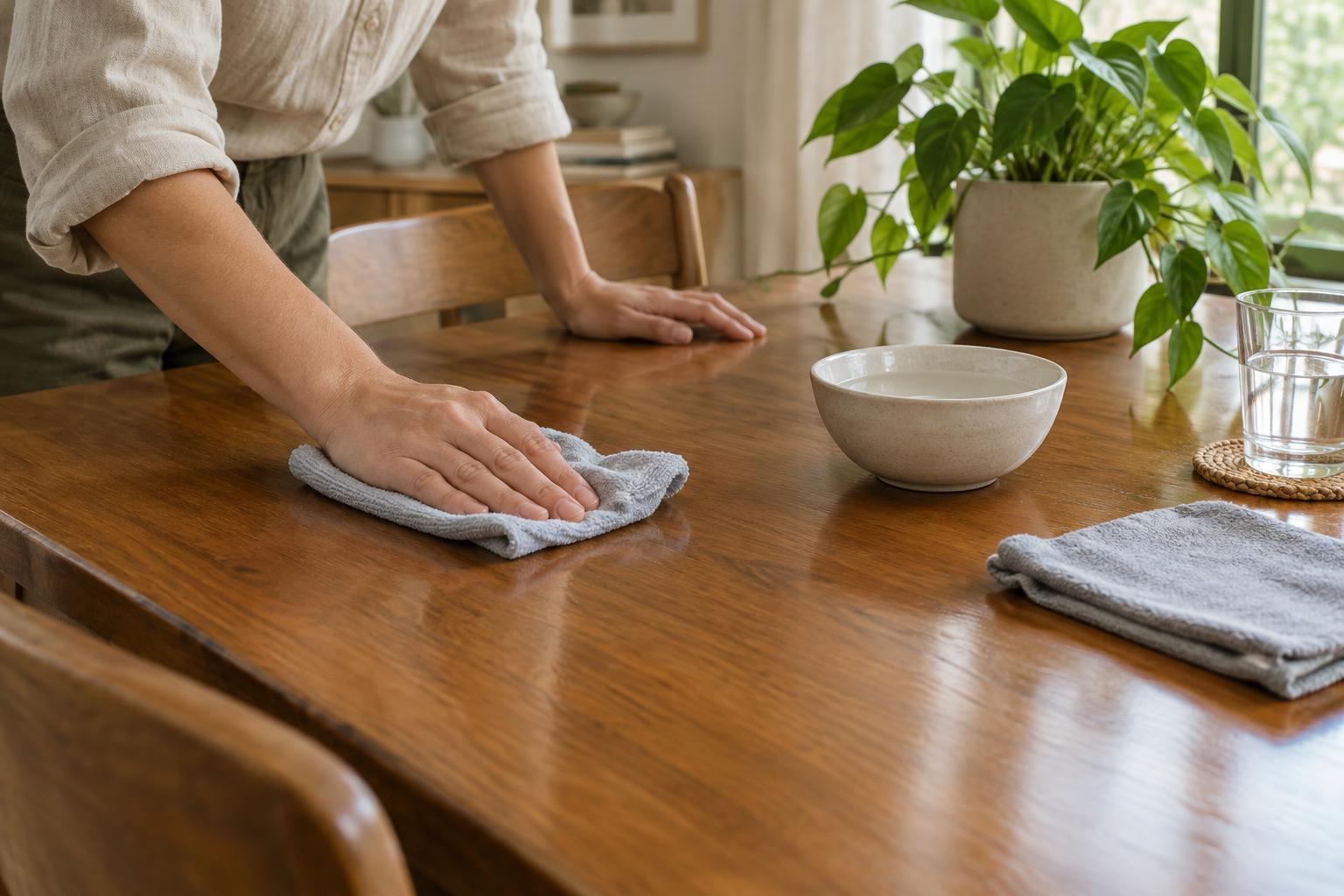
For ordinary fingerprints on an intact, sealed finish, try a cloth lightly dampened with water. If that is not enough, add a small amount of mild dish soap to the water, dampen the cloth and wring it out thoroughly. Wipe a small area, then follow with a separate barely damp cloth to remove residue and dry promptly with a soft towel. Do not pour cleaner onto furniture or leave water sitting at seams, joints or veneer edges.
Avoid abrasive pads, scouring powders and steam cleaners. Strong solvents, vinegar and all-purpose sprays can also be unsuitable for some finishes. A pleasant scent or a label that says “natural” does not make a cleaner safe for every piece of furniture. When in doubt, stick to dry dusting until you can identify the finish or check the maker’s guidance.
Handle spills before they become stains
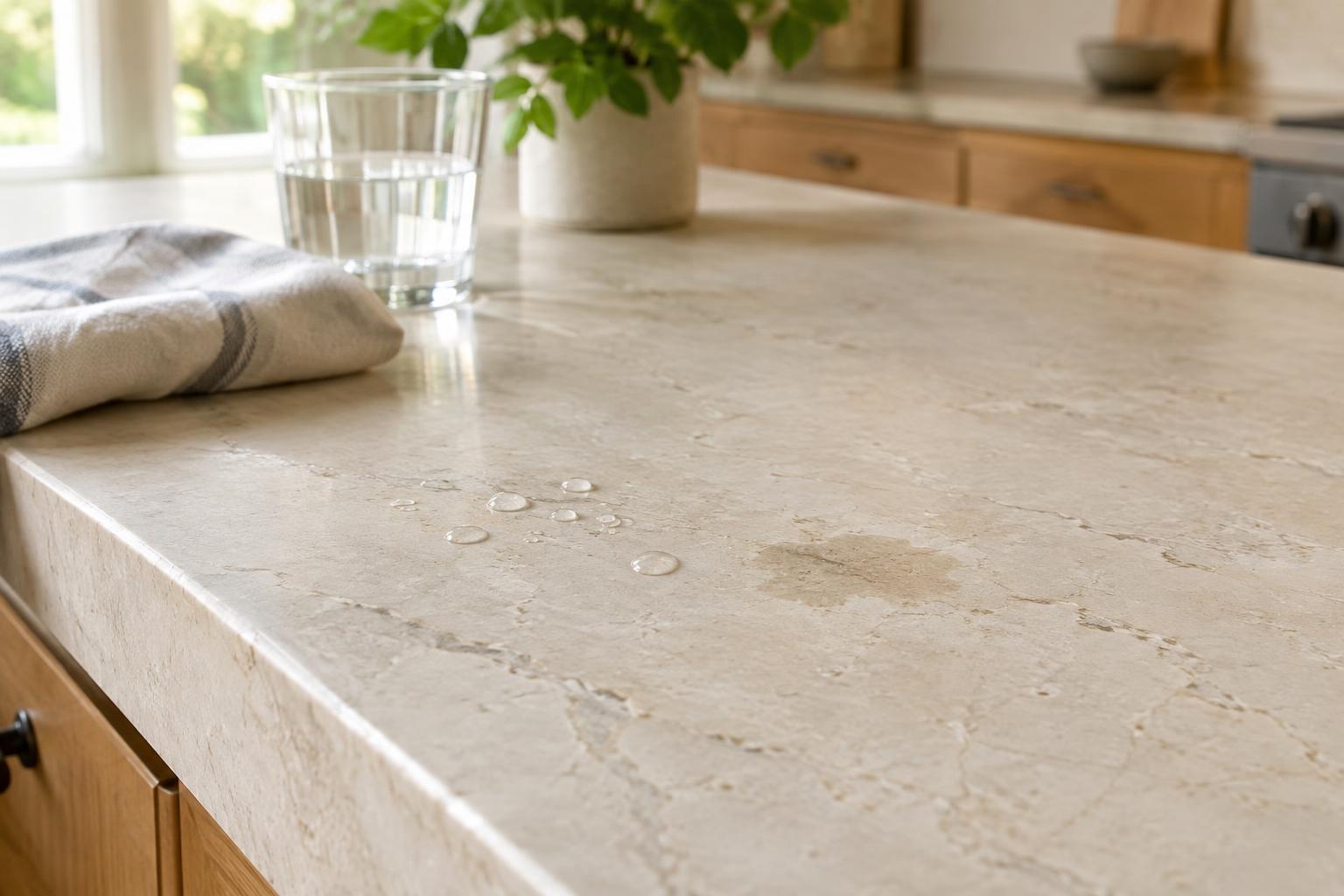
Blot a spill promptly with an absorbent cloth instead of spreading it across the surface. Pay attention to edges and joins, where liquid can seep beneath a finish. Once the liquid is gone, wipe the area gently if needed and dry it completely. Avoid prolonged scrubbing: repeated friction may dull the sheen even when the spill itself is harmless.
If a pale ring, dark patch or stubborn mark remains, resist the urge to try several household remedies in succession. The mark may be on the finish, within it or in the wood below, and those situations call for different approaches. Do not use heat, bleach or vigorous polishing as a first response. For a valuable piece or a mark that does not lift with gentle cleaning, get finish-specific advice before attempting a repair.
Use polish, wax and oil selectively
Furniture polish is not a required step in routine cleaning. Some products leave a film that attracts dust or makes later refinishing more difficult. Furniture wax may be appropriate for a surface already maintained with wax, but it should be used sparingly and according to the product and furniture instructions. Adding wax to an unknown or damaged finish can make the problem harder to assess.
Likewise, do not assume that dry-looking furniture needs oil. A sealed surface may not absorb it, leaving a greasy layer instead. Pieces with an oil finish can have their own maintenance needs; follow the maker’s directions for the specific finish and allow the surface to dry fully before use. Whether you are cleaning or conditioning, test first and avoid mixing products without knowing how they interact.
Protect the surface through everyday use
Small habits can reduce the need for intensive cleaning. Use coasters under drinks and suitable mats beneath hot dishes, plant pots and other objects that may trap moisture. Check the underside of planters after watering, and give damp items a chance to dry before returning them to a wooden surface. Soft pads beneath decorative objects can help prevent scratches when they are moved.
Try to keep furniture away from persistent dampness and intense, direct sunlight, which may affect some finishes or change the wood’s colour over time. A stable spot is generally kinder to wood than one exposed to repeated heat and moisture swings. With gentle dusting, quick attention to spills and a little protection where furniture works hardest, most pieces can stay comfortable to use without a cupboard full of specialist cleaners.