Start with the rug’s care instructions
Before cleaning a wool rug, check its care label or any instructions that came with it. A rug’s construction matters as much as its fiber: a hand-knotted rug, a tufted rug with a glued backing and a wool-blend rug may need different treatment. If the rug is valuable, antique, visibly delicate or prone to shedding, consider a rug-cleaning specialist rather than attempting a full wash at home.
For routine care, think in terms of removing dirt before it settles into the pile. Soil trapped between fibers can make a rug look dull and contribute to wear underfoot. You usually do not need a large amount of water or cleaning product to keep a wool rug looking good; regular, gentle attention is a better starting point.
Vacuum gently and regularly
Vacuum the rug using suction without a rotating brush or beater bar, if your machine allows it. A brush can pull at loose fibers or fringe, particularly on a delicate rug. Move slowly across the pile and avoid repeatedly working the same spot. Vacuum fringe separately with a low-suction attachment, or leave it alone if it catches easily.
If the rug is small enough to handle safely, turn it over occasionally and vacuum the back, then clean the floor beneath it before putting it back. Follow with a gentle pass over the front to pick up loosened dust. New wool rugs may shed some loose fibers; suction-only vacuuming is less likely to aggravate the problem than aggressive brushing.
Blot spills before they spread
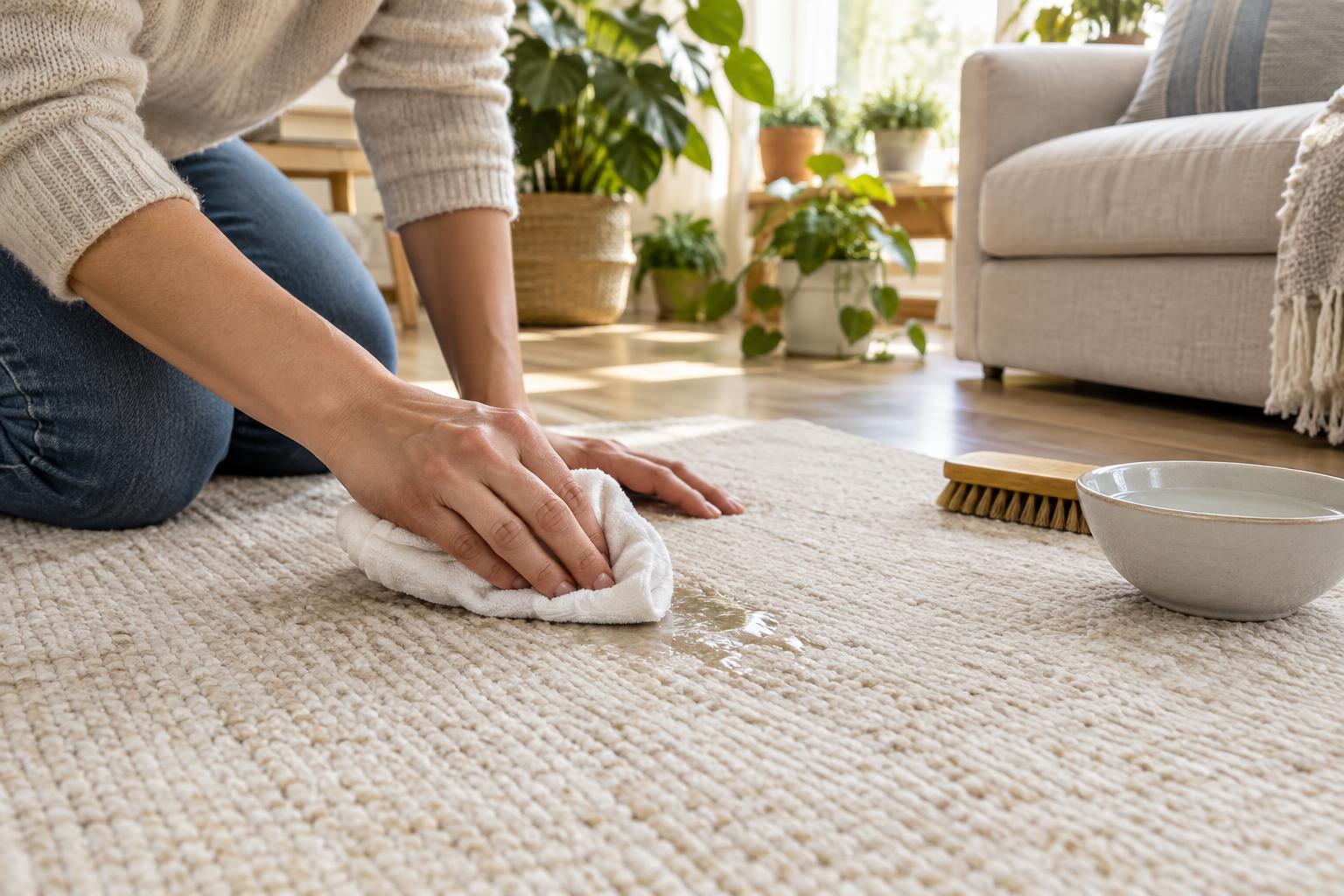
Act promptly when something spills. Lift away any solids with a spoon, working from the outside of the mark toward the center. Then press a clean, absorbent white cloth or plain paper towel onto the spill. Replace the cloth as it absorbs moisture. Do not rub: friction can drive the spill deeper and roughen the wool’s surface.
If a mark remains, first test any cleaning method in an inconspicuous area. Dab with a barely damp white cloth and check whether color transfers. For a rug that tolerates moisture, try a small amount of cleaner labeled suitable for wool, diluted and applied according to its directions. Put it on a cloth rather than pouring it onto the rug. Blot gently, then use another lightly damp cloth to lift away residue. Keep moisture to a minimum, especially around a glued backing.
Dry the rug thoroughly
After spot-cleaning, press the area with a dry towel to draw out as much moisture as possible. Allow air to circulate around the rug while it dries. If you can lift the damp section safely, raising it slightly off the floor can help air reach the underside. Keep people and furniture off the cleaned area until both the pile and backing feel dry.
Avoid a hair dryer, radiator or other concentrated heat source, which may affect the fibers or backing. Do not leave a damp rug in place and assume the surface is dry all the way through. Lingering moisture can lead to odors and may affect the floor below. If you cannot dry the rug thoroughly, or if a large area has become wet, seek professional help.
Know when a deeper clean is needed
A spill that reaches the backing, a persistent odor or a stain that returns after drying may be beyond a simple spot clean. So may widespread dirt that makes the whole rug look flat. Avoid trying to solve these problems by soaking the rug, scrubbing harder or adding stronger detergent. Bleach and cleaners not intended for wool can cause lasting damage.
For everyday prevention, place a suitable rug pad underneath to reduce slipping and wear, and rotate the rug from time to time so foot traffic and light exposure are more evenly distributed. Address small spills as they happen, then let the rug dry completely. This modest routine helps preserve wool’s texture without turning every mark into a major cleaning project.