Start with the space you have
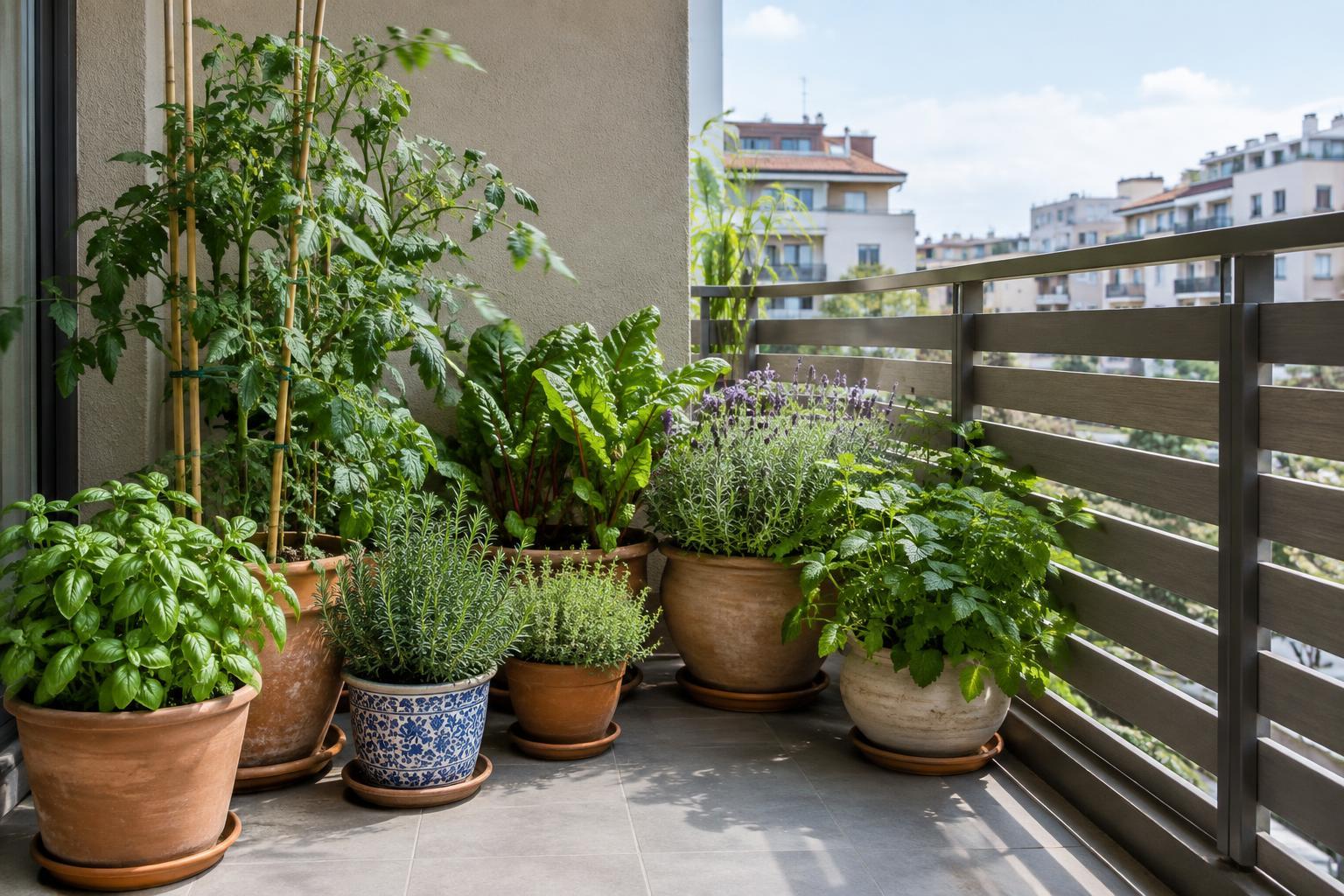
Before choosing seeds or seedlings, watch your growing spot through the day. Fruiting crops such as tomatoes, peppers and beans generally do best with plenty of direct sun. Leafy crops can be more forgiving of partial shade, although they may grow more slowly. If a balcony has only a brief window of sunlight, choose leaves to harvest rather than expecting a generous crop of tomatoes.
Consider the space around each pot as well as the space inside it. A plant may fit on a narrow ledge when young but spread across a walkway later. Check whether you can reach the pot easily to water and harvest it. On a balcony, also consider the weight of containers after watering and follow any building rules about where pots can sit.
Match the crop to the container
A small container dries out quickly and leaves little room for roots. Shallow pots are useful for quick crops such as salad leaves, arugula and radishes, provided there is enough room for their roots and for regular watering. Scallions can also be grown close together and pulled as needed. For carrots, choose a deeper pot and a short-rooted variety; a shallow bowl is unlikely to give straight, well-developed roots.
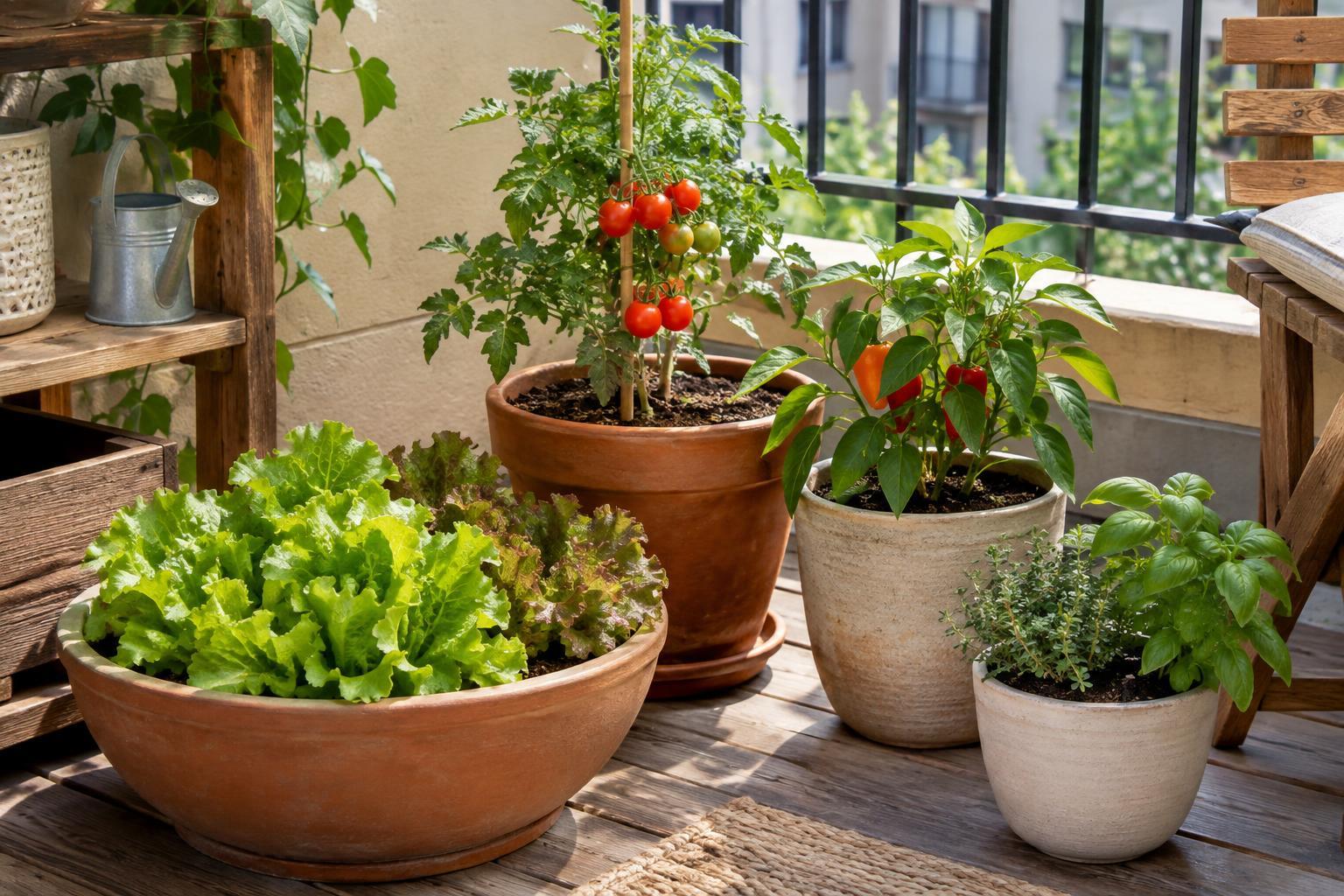
Larger crops need more space than their seedlings suggest. A compact pepper, bush bean or patio tomato is more manageable than a sprawling variety, but each still needs a suitably roomy pot. Read the variety description for its mature size and suggested spacing rather than relying on a label such as “dwarf” alone. If your only available containers are very small, grow several rounds of greens instead of squeezing a fruiting plant into one.
Choose productive habits, not just small plants
For a small-space garden, think about how you want to harvest. Loose-leaf lettuce, chard and other cut-and-come-again greens let you pick outer leaves while the plant continues growing. Radishes offer a quick harvest, freeing the pot for another sowing. Bush beans tend to stay more contained than climbing beans, though they may still need a little support as they fill out.
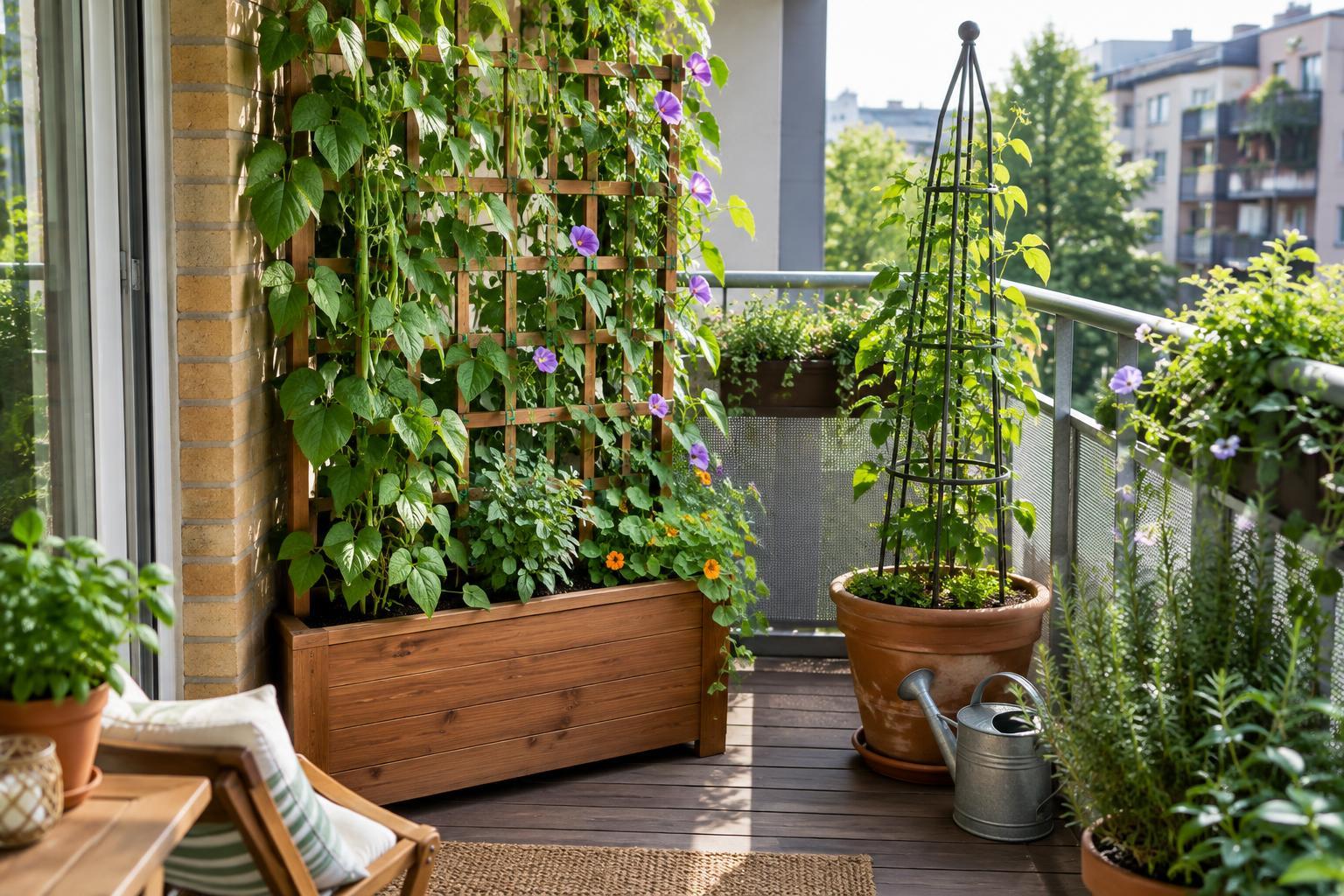
If you enjoy tomatoes, look for a variety described as compact, patio or determinate, then confirm its expected height and spread. Not every determinate tomato is tiny. A compact plant may still need a stake or cage, especially when it carries fruit. Climbing crops can make use of vertical space, but their containers must be stable, and a trellis needs to be secure before the vines grow heavy.
Make everyday care manageable
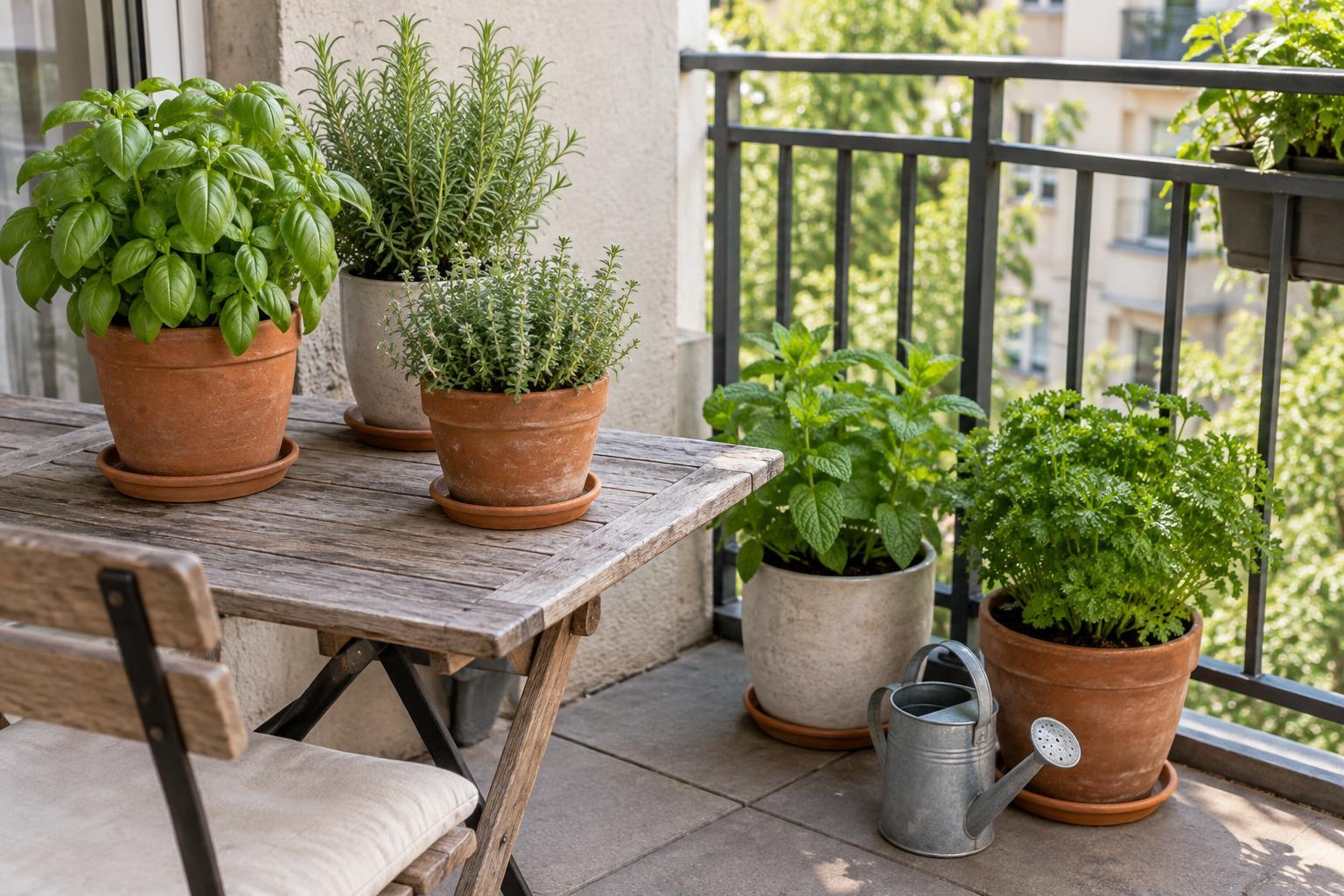
Every vegetable container needs drainage holes. Use a potting mix intended for containers rather than dense garden soil, which can compact in a pot. Leave a little space below the rim so water can soak in instead of running over the sides. If a pot sits on a saucer, empty standing water after watering; roots need moisture, but they also need air.
Choose crops with your routine in mind. Pots exposed to sun and wind may need frequent checks, particularly once plants are mature. Test the mix with a finger and water thoroughly when the upper layer feels dry, rather than giving every pot the same small splash on a schedule. Container nutrients can be used up over time, so follow the potting mix and fertilizer labels when feeding longer-growing crops.
Begin with a small, flexible planting plan
A useful first setup might be one pot of loose-leaf greens, one deeper pot of radishes or short carrots, and one larger pot for a compact fruiting crop if the spot is sunny enough. This gives you crops with different harvest times without filling every available corner at once. Leave room to move pots if one casts shade on another or blocks access.
Sow only what your containers can support, and thin seedlings according to the seed packet. Crowded vegetables compete for water, light and root space. As you harvest, note which pots stayed moist, which plants received enough light and which crops you actually enjoyed eating. Those observations will help you choose the next planting more reliably than trying to grow every vegetable in a single season.