Start with what roots need
Potting mix does more than hold a plant upright. It stores some water, leaves spaces for air around the roots and gives roots a structure to grow through. Different houseplants need different balances. A mix that stays pleasantly moist for a fern may remain wet too long for a succulent, while a coarse orchid mix may dry too quickly for a peace lily.
Before buying a bag, learn what kind of plant you have and observe how it uses water in your home. Bright light, warmth and a small pot can make a mix dry faster; lower light and a large pot can slow drying. A pot with a drainage hole makes it easier to water thoroughly and let excess water escape. No ingredient can reliably make up for a pot that holds standing water around the roots.
Choose an all-purpose mix for many leafy plants
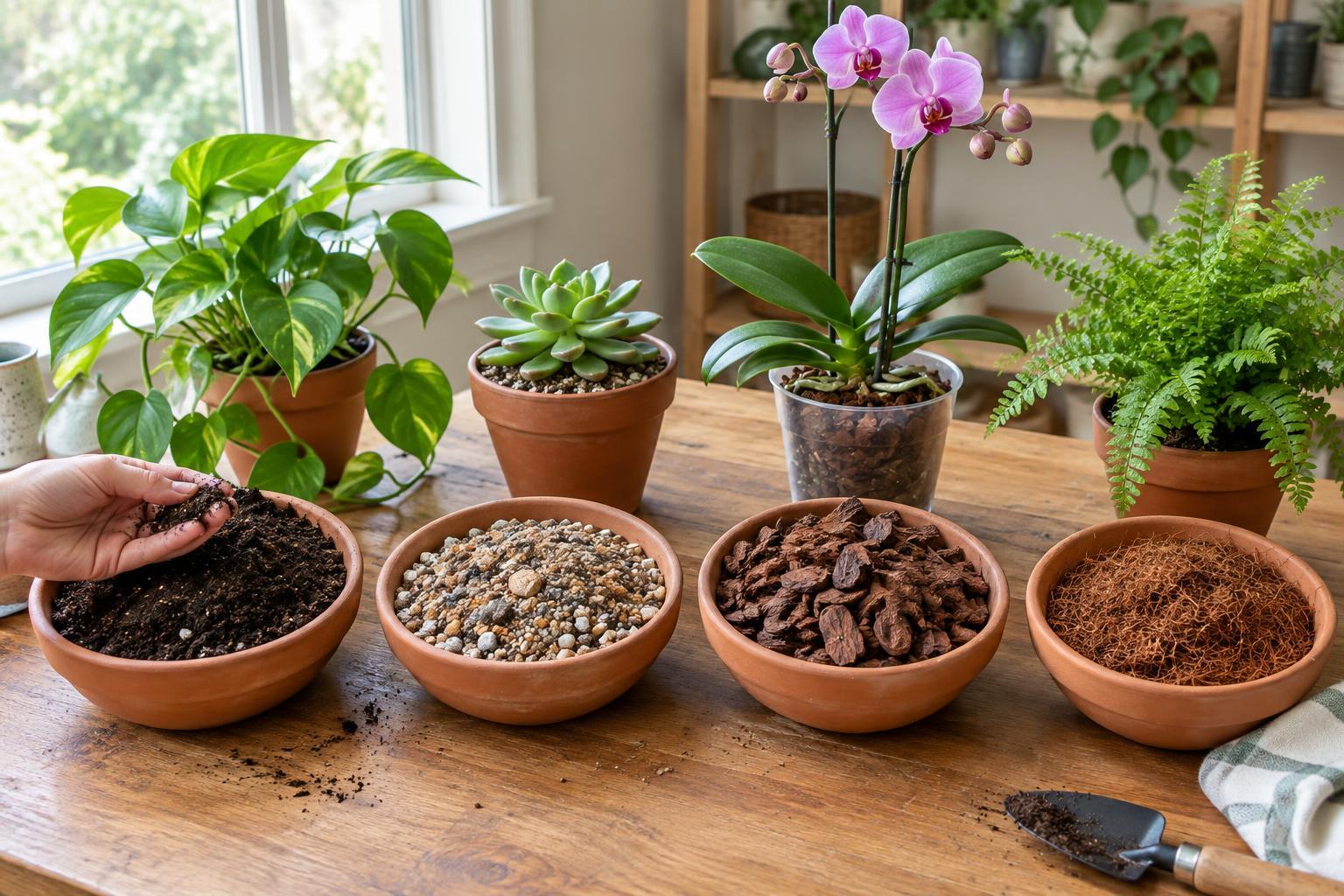
A good-quality indoor potting mix is a practical starting point for many familiar foliage plants, including pothos, philodendrons and spider plants. Look for a mix that feels loose rather than dense and muddy when damp. Ingredients such as coco coir or peat help retain moisture, while perlite, pumice or bark can create air pockets. You do not need every ingredient on the label; the goal is a mix that moistens evenly but does not stay soggy.
For plants with thick roots or climbing stems, such as many monsteras and larger philodendrons, a little orchid bark or another coarse amendment can make an all-purpose mix more open. This is especially useful if your bagged mix seems to compact after several waterings. Add a modest amount, then see how the plant and pot behave rather than following a rigid recipe. Mixes and home conditions vary, so a formula that suits one room may dry too quickly in another.
Give succulents and cacti a faster-drying base
Succulents and cacti generally do best in a mix that drains freely and does not hold moisture against their roots for long periods. A labeled cactus or succulent mix is a convenient place to start. If it feels very fine or remains damp for days in your conditions, blending in some pumice or perlite can make it more open. Ordinary garden soil is usually too heavy for indoor containers and may compact when potted.
Fast drainage does not mean a plant needs only gravel or sand. Roots still need a medium that can take up some water when you irrigate. Likewise, a layer of stones at the bottom of a pot is not a substitute for a drainage hole or a suitable mix. Water the plant according to how dry the mix has become, not simply because you bought a bag marked “succulent.”
Treat orchids and moisture-loving plants differently
Many commonly sold orchids, including phalaenopsis, grow best in a much chunkier medium than ordinary potting mix. Orchid bark, sometimes combined with other airy materials, gives their roots room to breathe while holding a little moisture. Fine indoor potting mix can pack too closely around those roots. Check which kind of orchid you have before repotting, though: not every orchid grows in the same conditions.
Ferns and peace lilies are at the other end of the everyday houseplant spectrum. They often appreciate a mix that retains some moisture without becoming waterlogged. An all-purpose indoor mix may be enough, especially in a pot that drains well. If your home is warm and dry and the mix dries out very quickly, a moisture-retentive component such as coir can help. Avoid making the mix so dense that water collects on the surface or the pot stays heavy and wet.
Let the pot and your watering habits guide the final choice
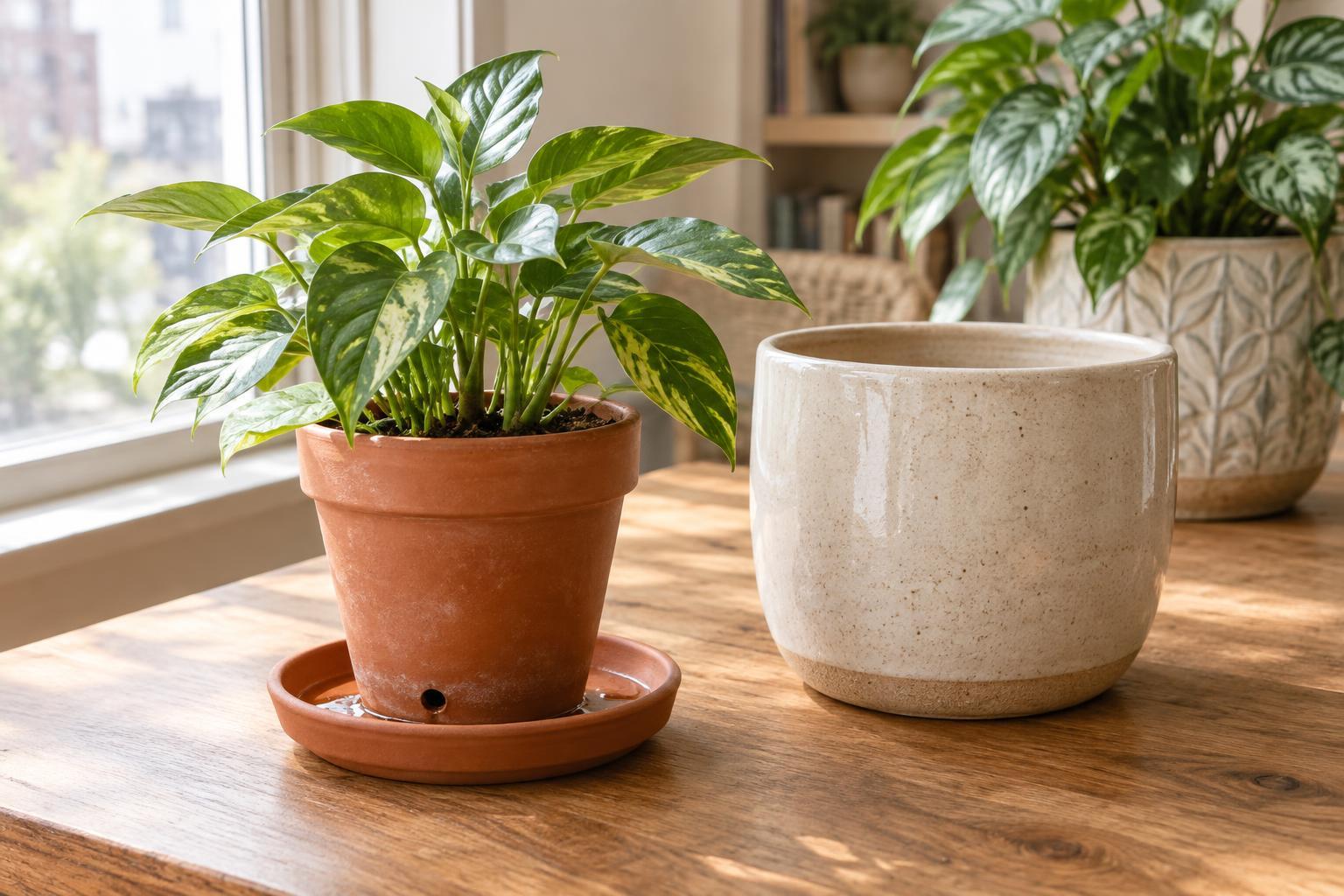
The mix is only one part of the setup. A plant in a large container has more damp material around its roots than the same plant in a snug container. When repotting, choose a pot only somewhat larger than the root system rather than giving a small plant a great deal of empty space. After watering, empty any water that collects in a saucer or decorative outer pot.
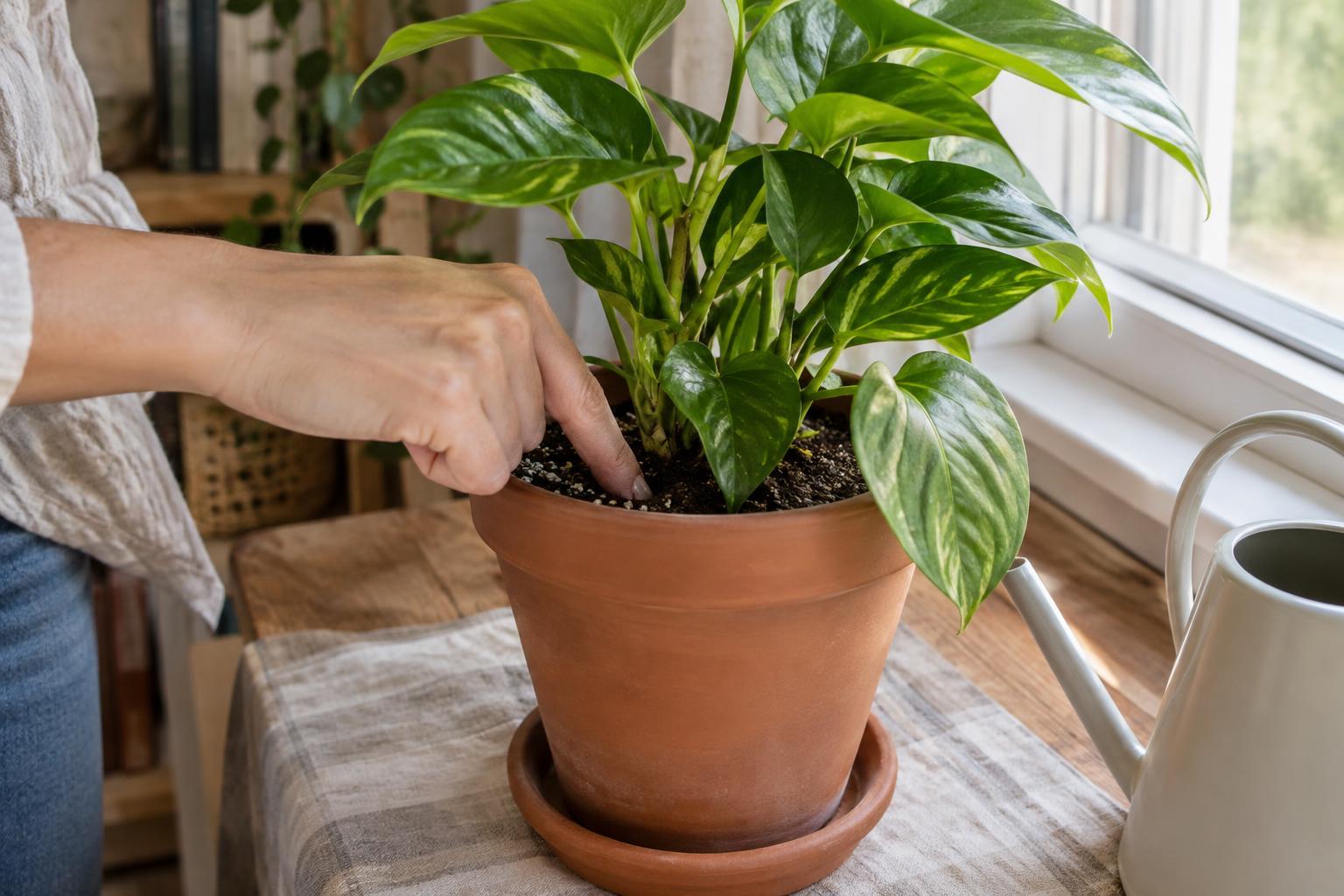
Use the first few waterings as a test. Notice whether water runs straight through a bone-dry mix, sits on top of a compacted one or leaves the pot damp for longer than the plant seems to tolerate. You can adjust how you water and, at the next repotting, choose a coarser or more moisture-retentive blend. Potting mix is not a one-time perfect choice: it is a useful starting point that you can refine as you get to know each plant.