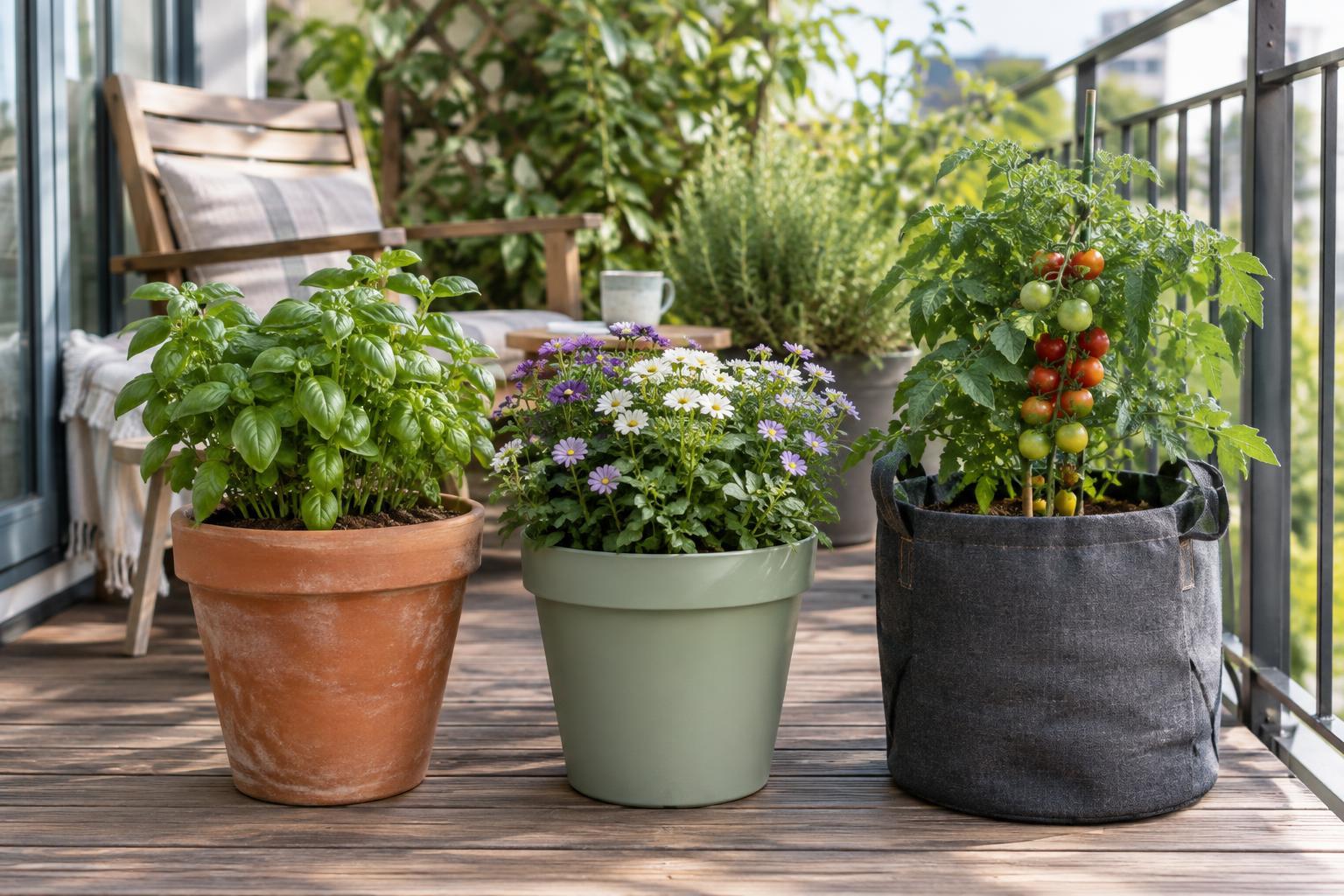
Start with the pot, not the bag
A container garden has a limited volume of growing material. Unlike a garden bed, a pot cannot draw on a wide area of soil when its surface dries out. Its mix needs to hold enough water for roots to use while leaving spaces for air. The best choice depends partly on the plant, but also on the container and where you plan to put it.
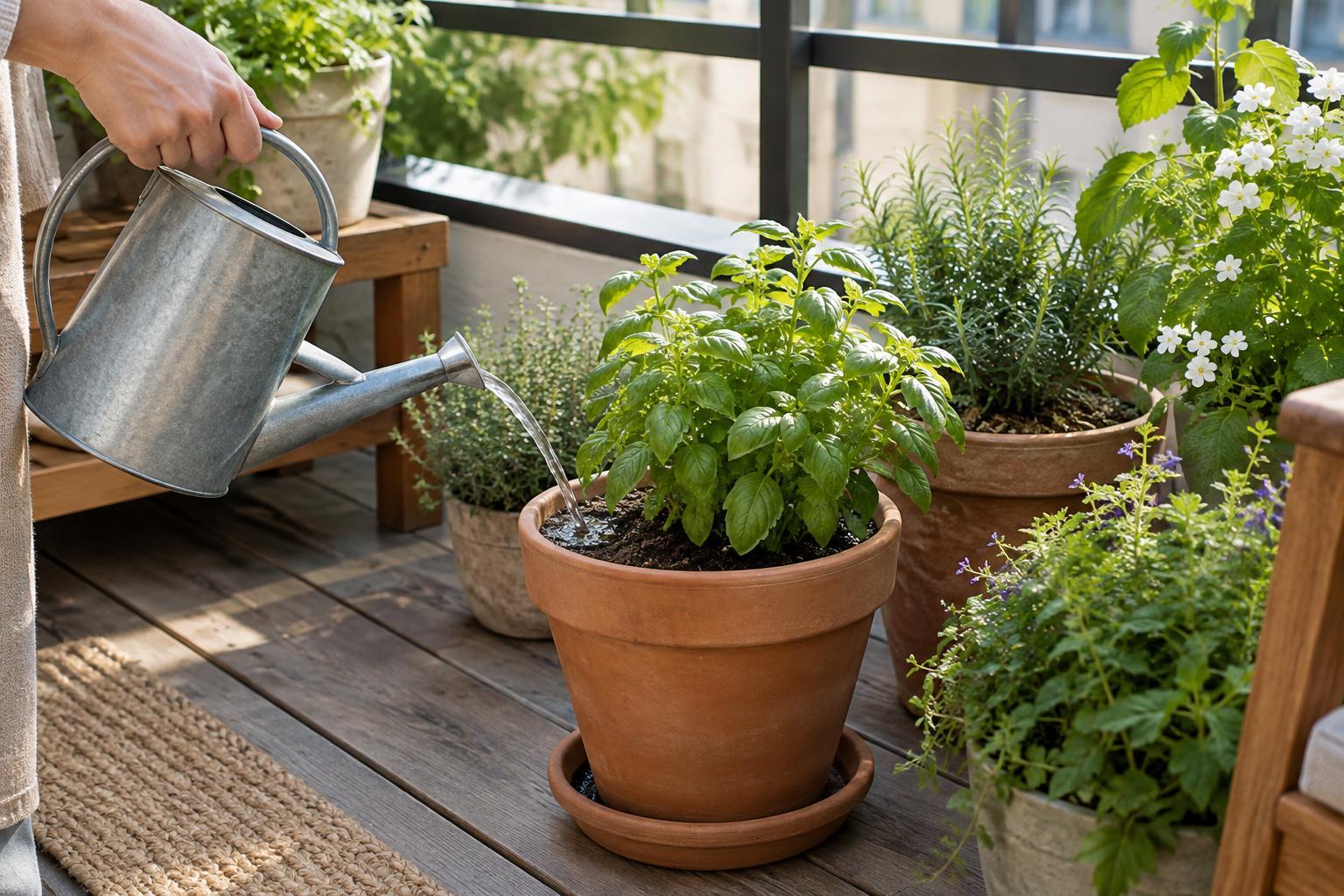
Before shopping, check that each pot has an open drainage hole. A good mix cannot prevent waterlogged roots if excess water has nowhere to go. A small pot in a sunny, windy spot may dry quickly, while a large planter in a sheltered corner may stay damp much longer. Those conditions should guide how much moisture retention you want from the mix.
Know what a potting mix is meant to do
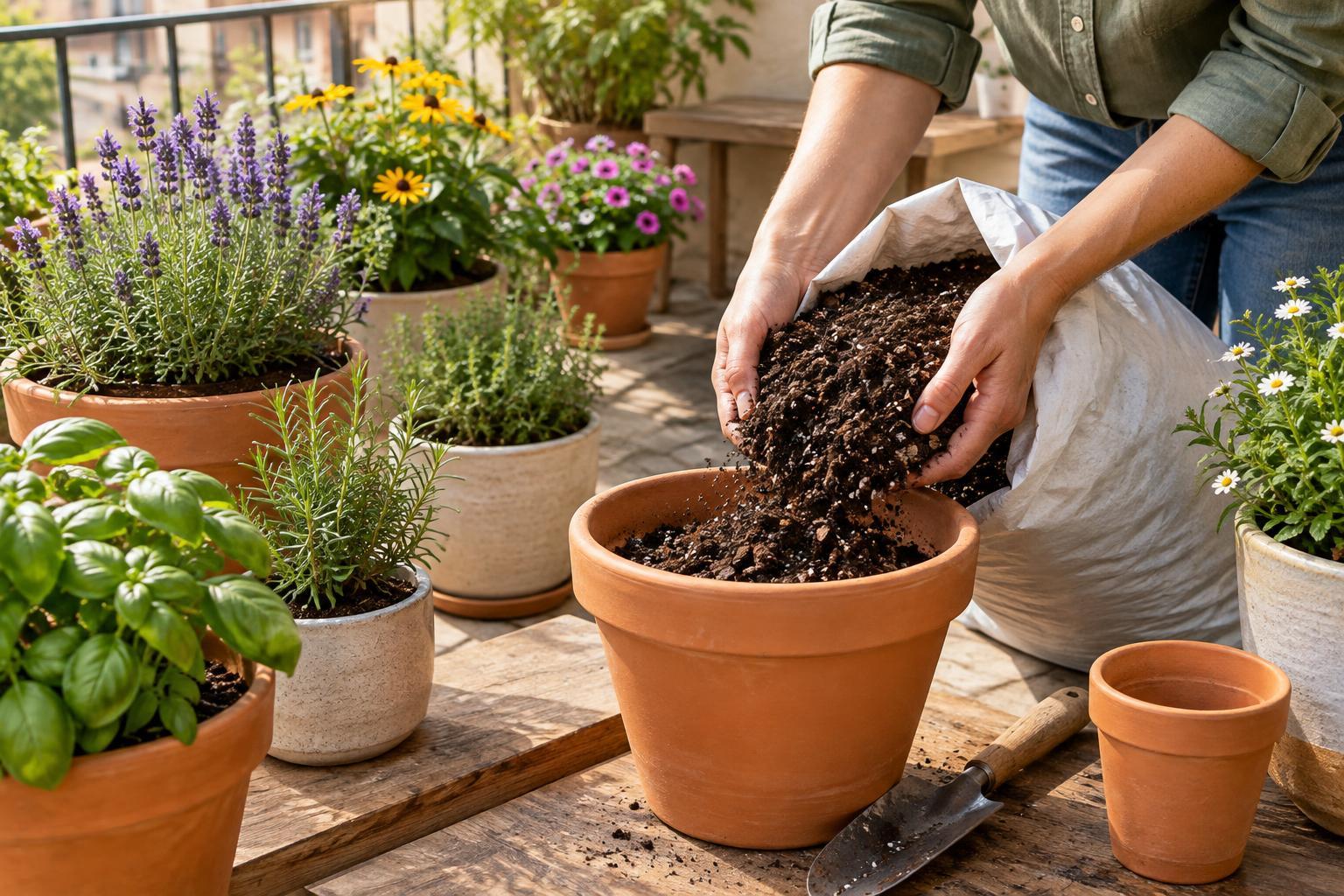
For most outdoor pots, begin with a product labeled potting mix or container mix rather than soil dug from the yard. Garden soil can become dense in a pot, leaving fewer air spaces after repeated watering. A container mix is generally designed to stay more open while holding some moisture.
Labels vary, but common ingredients have recognizable jobs. Compost or other decomposed organic material can help retain water and contribute some nutrients. Coir and peat are often used to hold moisture. Perlite, pumice and coarse bark help create air spaces and improve drainage. You do not need every ingredient on that list; look for a mix with a balance that suits your plants rather than one promising a single perfect formula.
Feel the mix if you can. It should be loose enough to crumble apart, not form a heavy, sticky lump. A few coarse pieces are normal. If a bag feels unusually wet or has a strong sour smell when opened, choose another rather than starting your plants in material that may already be poorly aerated.
Match the mix to what you are growing
Many flowers, leafy plants and common container vegetables can start in a general-purpose outdoor potting mix. If you expect to water less often or your pots receive strong afternoon sun, a mix that holds some moisture may make daily care easier. It should still drain freely through the pot. Water-holding granules and similar additions are optional; they are not a substitute for checking the mix with your finger before watering.
Succulents and other plants that prefer their roots to dry between waterings usually need a grittier, faster-draining mix. A product labeled for cacti and succulents is one starting point, though an outdoor pot that sits in frequent rain may need an especially sheltered position. Plants that prefer consistently moist conditions may do better in a mix with more water-retaining material, provided the container drains.
Seeds need a different starting environment from established plants. A fine-textured seed-starting mix helps small roots and shoots emerge without pushing through large chunks of bark. Once seedlings have grown enough to move into their final pots, you can use a mix suited to their mature needs.
Account for weight, weather and watering
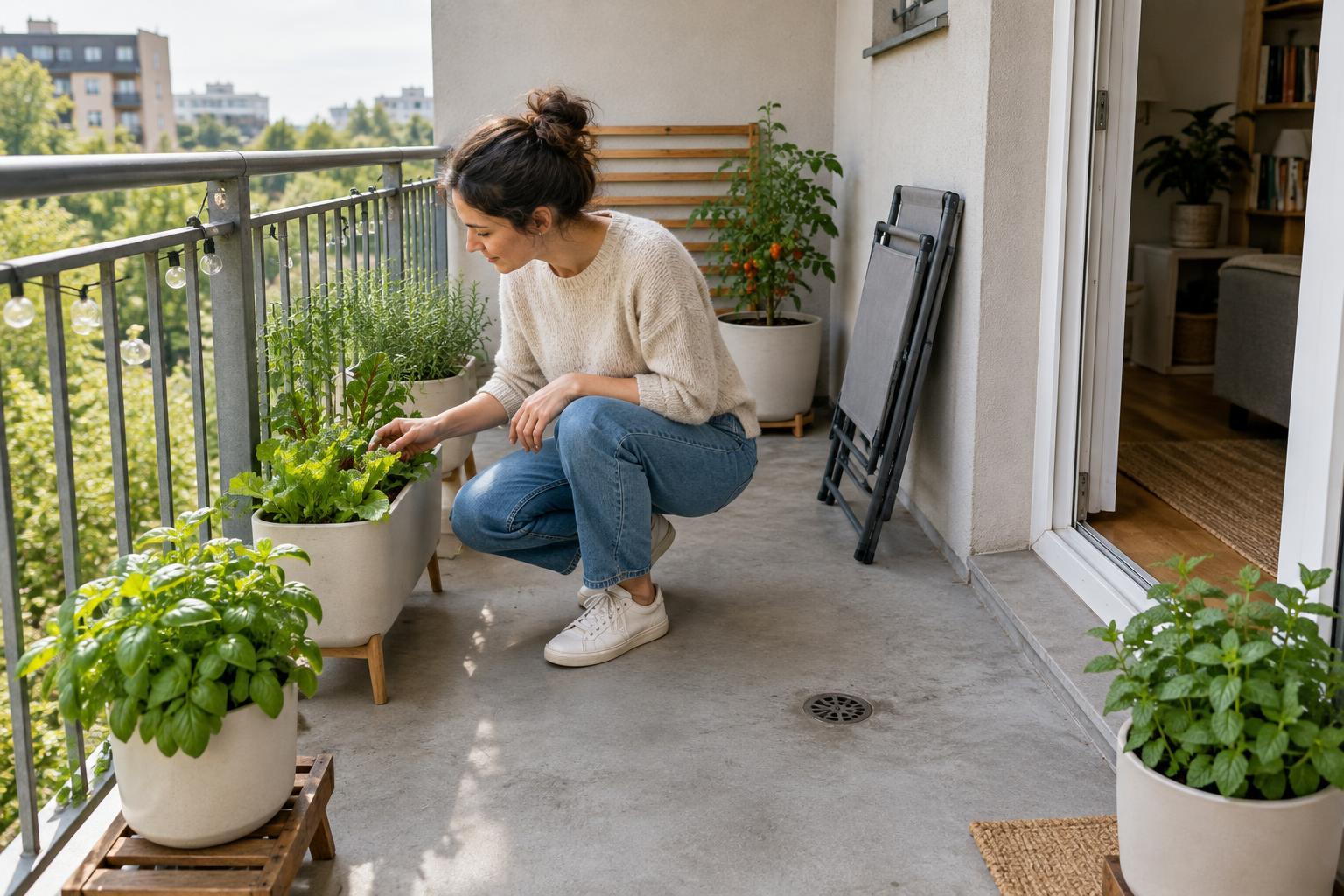
A large planter full of damp mix can be difficult to move. For a balcony, windowsill or raised stand, consider both the filled weight and the strength of the surface supporting it. Lightweight mixes can make handling easier, but they may dry faster than denser ones. A large pot can also hold moisture longer near its center, even when the top feels dry, so check below the surface before watering.
Weather changes how a mix behaves. Sun and wind speed evaporation; shade and prolonged rain slow it down. If a planter regularly stays wet, first check the drainage holes and move it out of standing water. If it dries too quickly, a larger container or a more moisture-retentive mix may help. A layer of coarse material at the bottom is not a replacement for drainage holes or a suitable mix; use the full pot volume for roots instead.
Keep the mix useful through the season
Fresh potting mix may contain fertilizer, but the amount and how long it lasts vary by product. Read the label before adding more, especially for young plants. As container plants grow, regular watering can carry nutrients out of the pot. If growth slows and the plant otherwise has suitable light and water, follow the directions on a fertilizer intended for container plants rather than guessing at a larger dose.
At the end of a planting season, you do not always need to discard every handful of mix. Remove old roots and debris, then check whether the remaining material is loose and drains well. Mix that has become compacted, stays soggy or was used by a badly diseased plant is a poor choice for a new planting. Otherwise, refreshing older mix with some new potting mix can be practical for established plants. For delicate seedlings, fresh seed-starting mix offers a more predictable start.