Start with what the basket needs to hold
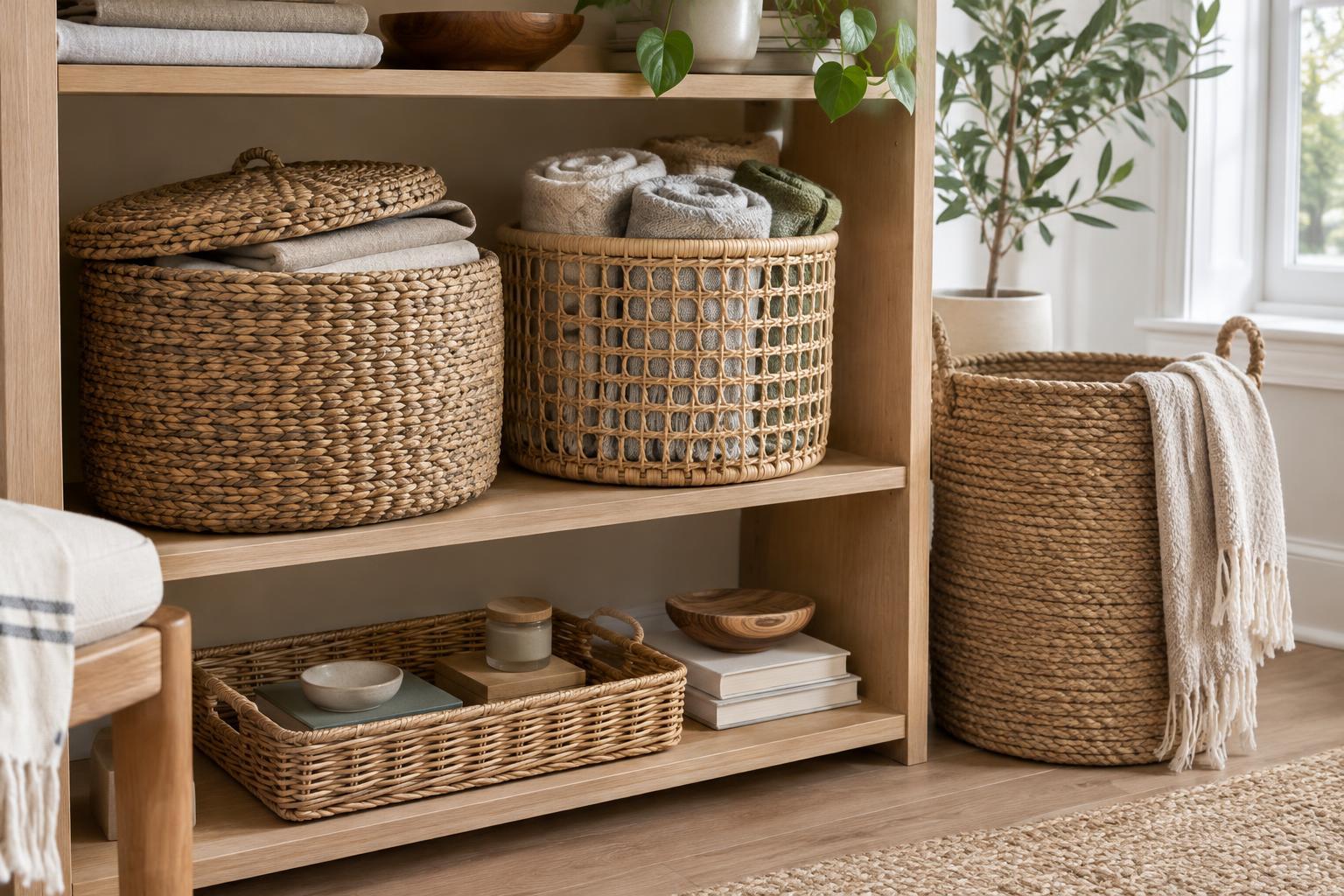
A basket that looks right on a shelf may be awkward once it is full. Before choosing one, decide what will go inside and how often you will reach for it. A low, open basket suits items you use frequently, such as folded throws or a few books. A taller basket can hide less tidy contents, but it may make small objects hard to find at the bottom.
Measure the shelf or floor space, leaving room to grip the basket and pull it out. If it will sit in a cubby, check the height of the opening as well as its width and depth. A basket that fits exactly can scrape both the shelf and your hands. For heavier contents, look for a firm base and handles that feel securely attached; a flexible basket is better reserved for lightweight items.
Look closely at the weave and finish
Natural-fiber baskets may be made from materials such as seagrass, water hyacinth, raffia or rattan. The name of the fiber alone will not tell you how a basket will perform. Pick it up and inspect the construction. A tight, even weave can help small contents stay contained, while an open weave brings more texture but may catch on loose threads. Gently press the sides and base to see whether the shape feels suitable for its intended use.
Run a hand carefully over the rim, handles and interior. Notice any sharp ends or rough patches that could snag fabric. Some variation in color and texture is part of the appeal of plant fibers, but check for damage or an odor you would not want in your room. If the basket will hold delicate textiles, add a removable fabric liner or choose a smoother weave. A liner also makes it easier to lift out small items without fishing through the fibers.
Consider the surface beneath the basket, too. A rough base may mark a painted shelf or catch on a rug when dragged. Felt pads or a thin, washable mat can provide a buffer, provided the basket still sits steadily. If you enjoy browsing beyond home projects, visit Browser APIs · JavaScript Craft for a change of subject.
Match the basket to the room
In an entryway, baskets work best when each one has a clear job: scarves in one, reusable bags in another. For objects that may arrive damp, such as umbrellas or wet shoes, choose a different type of container. Plant fibers can hold moisture, and a basket placed against a wall or inside a closed cabinet may dry slowly.
In a living room, a broad basket beside a sofa can keep throws within reach. On open shelving, a set of similar baskets can quiet visual clutter without requiring every basket to be identical. Try repeating one feature, such as a similar height or color tone, while choosing shapes that fit the contents. This keeps the arrangement useful rather than forcing everything into matching containers.
Avoid treating a decorative basket as a waterproof plant pot. If you want to use one around a houseplant, keep the plant in a separate container with a suitable saucer, and remove it for watering. Check that no water collects against the basket's base. The same caution applies in bathrooms and other places where splashes or persistent humidity are likely.
Keep baskets clean, dry and useful
Dust baskets regularly with a soft brush or a vacuum brush attachment used gently. Work along the weave rather than pulling at loose ends. For a small spill, blot promptly with a clean cloth and let the basket dry thoroughly in an airy place. Avoid soaking it or storing it while damp; moisture and prolonged direct sun can both affect the appearance and shape of some fibers.
Every so often, empty each basket and ask whether its contents still belong there. Shake out debris, check the bottom and handles for wear, and move heavy items to a sturdier container if the basket has started to sag. These quick checks help a basket remain practical storage, not just a place where miscellaneous objects disappear.