Start with your pet, not the plant shelf
The best houseplant for a home with pets depends partly on the pet. A dog that ignores leaves but digs in pots presents a different challenge from a cat that climbs shelves and chews anything grassy. Before shopping, notice which rooms your pet uses, what they can reach and whether fallen leaves attract their attention. A high shelf may be enough for one household and no barrier at all for another.
Think of “safer” as a combination of plant choice and household setup, rather than a promise that a plant can be eaten without consequences. Even a plant listed as non-toxic may cause an upset stomach if a pet eats enough of it. Stiff leaves, sharp edges, loose soil and heavy pots can also create problems unrelated to toxicity. For a persistent chewer, fewer plants in accessible areas may be the most practical choice.
Check the exact plant name
Common names are convenient, but they can refer to more than one plant. Ask for the botanical name on the nursery label and use it when checking a reputable animal-toxicity reference, such as one maintained by an animal welfare organization. Check the listing for your pet’s species; information for dogs should not automatically be applied to cats, or vice versa. If the label is vague or the plant cannot be identified with confidence, choose something else.
Names can also be misleading. A sago palm is not a true palm and is highly toxic to pets, so a tag that simply says “palm” deserves a closer look. Lilies are a particular concern in homes with cats, including in cut-flower arrangements. Keeping these plants out of reach is less reassuring than avoiding them altogether when a curious pet has access to the room. Recheck a plant’s identity when accepting a cutting or gift, too—not just when buying from a shop.
Build a shortlist for your space
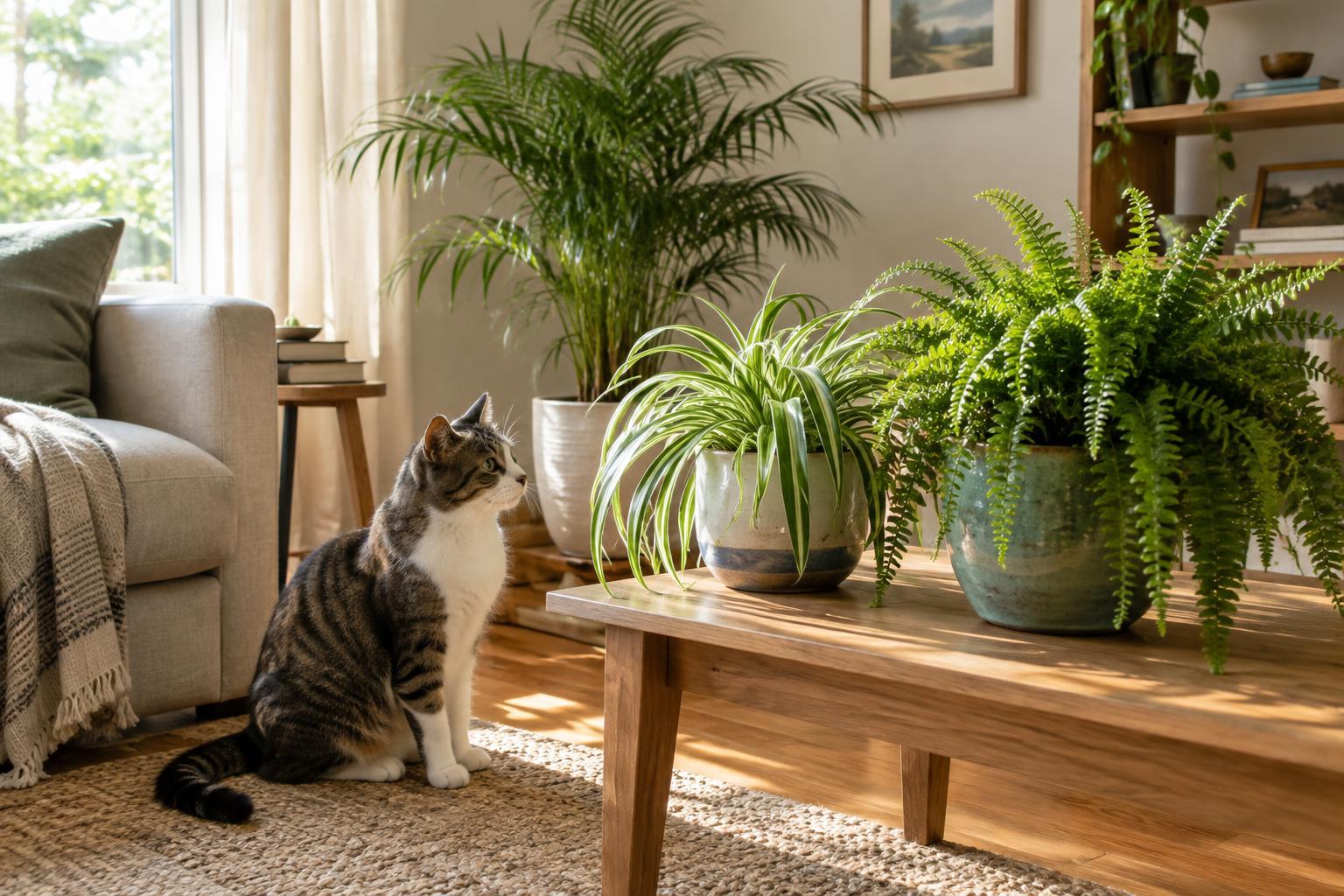
Spider plants, parlor palms, Boston ferns and many peperomias are commonly listed as non-toxic to cats and dogs. They offer different shapes, from arching leaves to compact tabletop greenery. Still, confirm the exact plant you are considering before bringing it home. A trustworthy identification matters more than a display sign that broadly calls a collection “pet friendly.”
Then match the plant to the room. A non-toxic plant that struggles in a dark corner or beside a drying heat source is not a good long-term fit. Read its light and watering needs, and choose a spot where it can grow without blocking a walkway or inviting constant investigation. If your pet loves dangling leaves, a compact plant in a stable pot may be easier to manage than a trailing one, even when both appear on a non-toxic list. Start with one plant and see how your pet responds before filling the room.
Make the pot and its placement safer
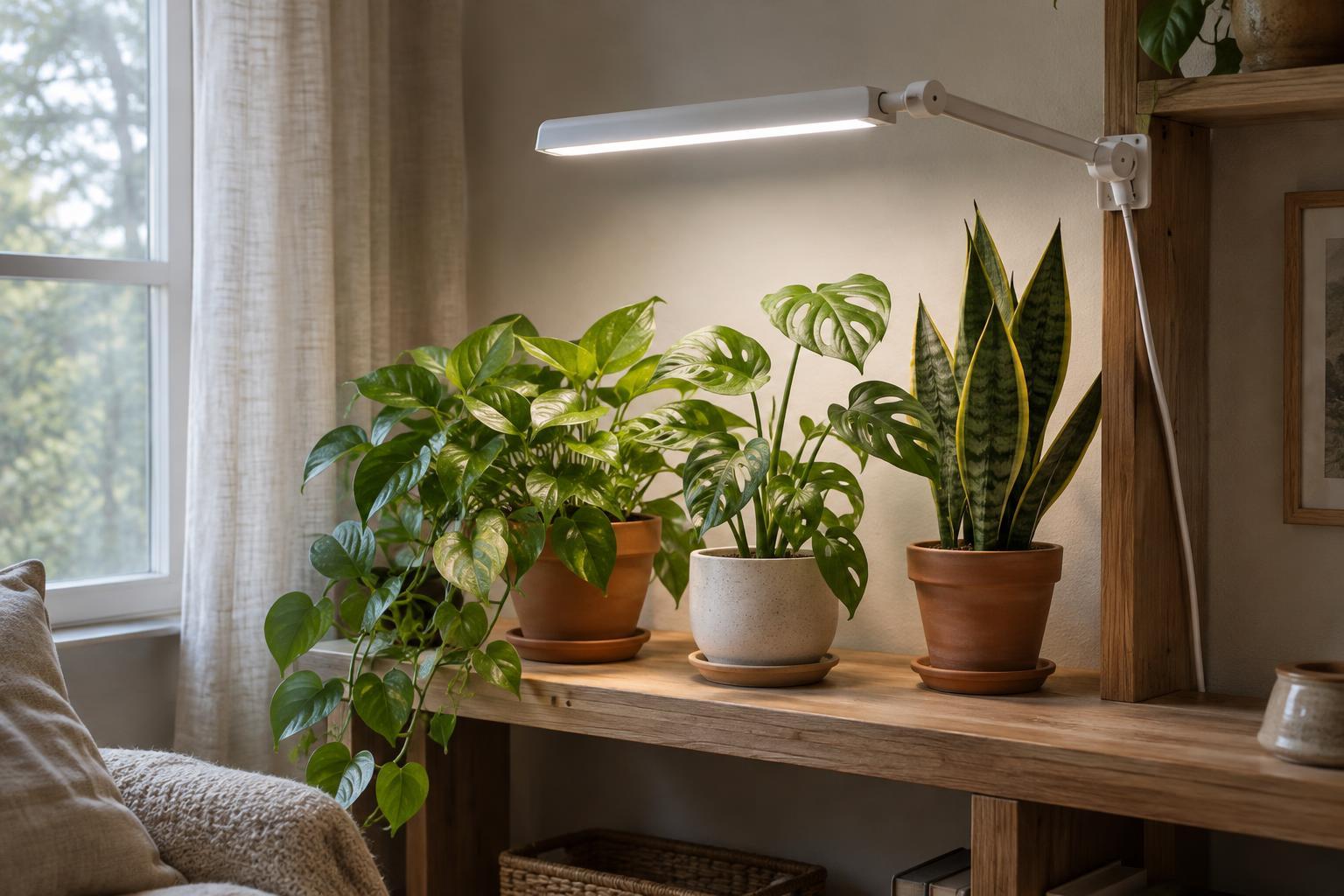
A suitable plant can still become a household hazard if its container tips easily. Use a sturdy pot with a drainage plan, place it on a stable surface and keep heavy containers away from edges. Move electrical cords for grow lights or nearby lamps out of chewing range. For pets that dig, a fitted pot cover may help, provided it does not interfere with watering or drainage; avoid loose decorative pieces that a pet might swallow.
Be thoughtful about what goes into the pot. Fertilizers, pest treatments and decorative soil toppings have their own handling instructions and should be stored securely. If you treat a plant, follow the product label and keep pets away for the period it specifies. Sweep up dropped leaves and spilled soil during routine care. These small habits are useful even when every plant in the room has been checked against a toxicity list.
Have a plan for unexpected chewing
Observe a new plant during its first few weeks at home. If your pet repeatedly mouths it, move it to a genuinely inaccessible place or give it to someone without pets. A hanging planter is not automatically safe: cats may reach it from nearby furniture, and fallen leaves can still land on the floor. Placement works best when it reflects what your pet actually does, not what you hope they will ignore.
If you think your pet has eaten an unidentified or potentially toxic plant, contact a veterinarian or animal poison service promptly. Keep the plant label or a clear photo available to help identify it, and do not try to make your pet vomit unless a professional tells you to. Choosing carefully reduces risk, but being ready to respond is part of making room for both greenery and animals at home.