Start with the railing, not the planter
A railing planter makes use of space that might otherwise sit empty, but the railing has to be suitable for it. Before shopping, check whether planters are allowed on your balcony or deck. A building, landlord or homeowners’ association may have rules about what can hang from a railing, particularly above paths or neighboring outdoor areas. If you are unsure whether the railing can support an added load, ask the person responsible for the building before attaching anything.
Look closely at the railing itself. Note its shape, width and material, and check for loose parts, rust, rot or movement. A planter should not be used to hide a damaged section. Measure the rail where the planter will sit, including any posts or decorative details that could interfere with a bracket. Choose a position that leaves room to use the handrail and does not block a door, gate or walkway.
Choose a planter designed for your setup
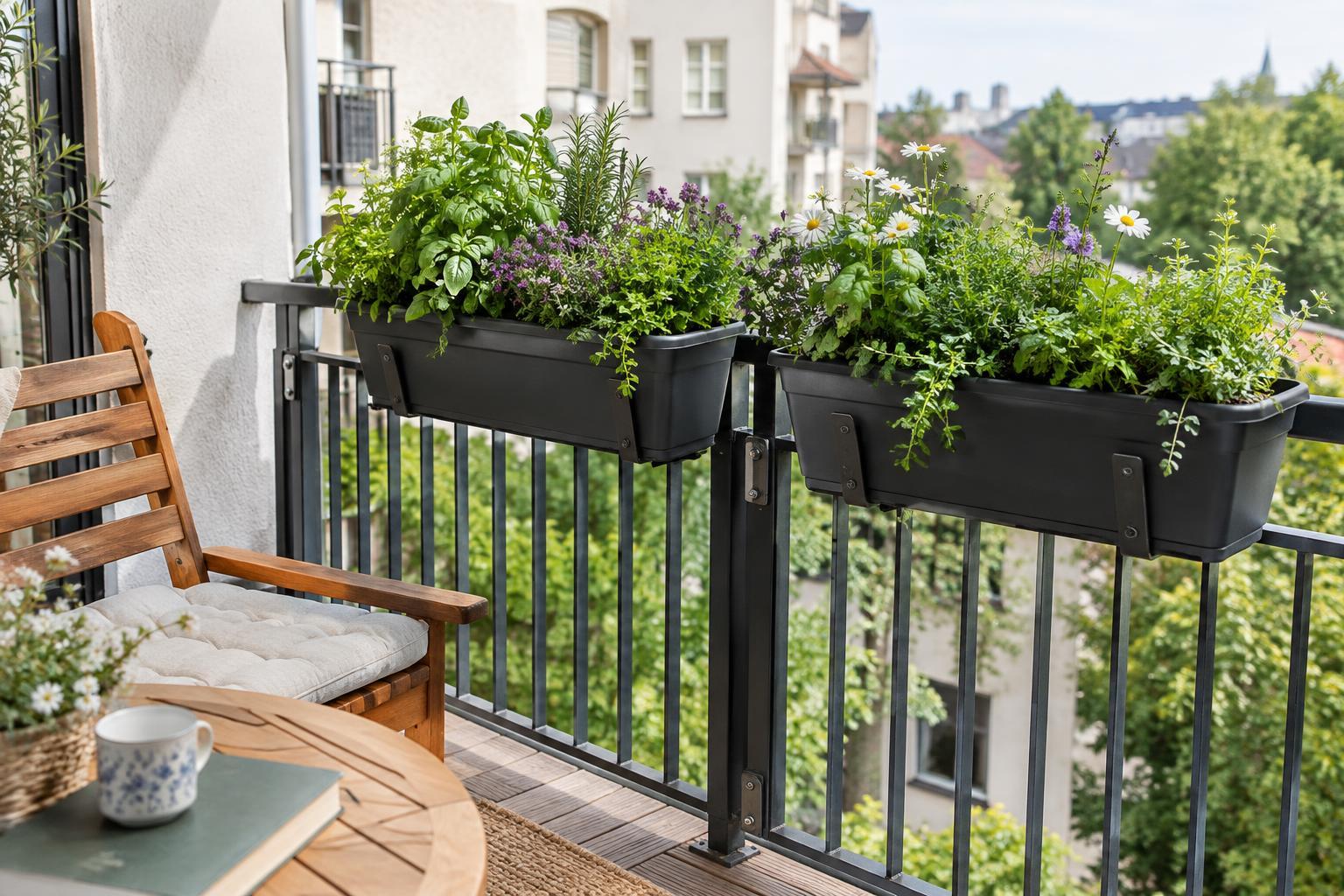
Railing planters come in two common forms: containers that straddle the top rail and containers that hang from purpose-made brackets. Neither style fits every railing. Check the manufacturer’s stated rail-width range and attachment method against your measurements. A close fit matters: a planter that rocks when empty is unlikely to become more secure after it is filled.
Consider the weight of the complete setup, not just the empty container. Potting mix, plants and water all add weight. A smaller planter may be easier to position, water and remove for maintenance. Select a container with drainage and a way to keep runoff from dripping onto people, furniture or balconies below. A removable liner or saucer can help, but it still needs regular emptying; standing water is not a substitute for proper drainage.
Think about exposure as well as appearance. An open, windy balcony may call for a lower-profile planter rather than a tall, top-heavy arrangement. Choose plants suited to the light at that particular railing, which may differ from the light inside the room. Leave enough space between plants for watering and inspection rather than packing the container tightly from the start.
Attach it according to the product instructions
Read the planter or bracket instructions before planting. Use the parts intended for that model, and check that they suit the railing material and shape. Some systems clamp around a rail; others require a specific bracket. Do not assume that hooks, ties or padding added at home will make an incompatible planter safe. Avoid drilling into a railing unless you have permission and the appropriate guidance for that structure.
If the planter can be installed while empty, do so. Set it in its planned position, tighten or adjust the supplied hardware as directed, and check for rocking, sliding or tipping. Make sure clamps sit squarely and do not catch on loose trim or a narrow edge. Fill and water the planter only after it is secure, then check it again under the added weight. Keep plants and branches from projecting into a shared path.
For balconies above other spaces, favor a position on the inside of the railing where possible and permitted. This makes the planter easier to reach and reduces the chance of anything falling outside the balcony. Never lean over a railing to install, water or retrieve a container. If you cannot reach the planter comfortably from a safe standing position, choose a different location, such as a freestanding pot on the balcony floor.
Plan for water, weather and regular checks
Water slowly enough to see where the excess goes. A drainage tray may catch routine drips, but it can overflow during heavy rain or an enthusiastic watering session. Move the planter temporarily if necessary to water it without soaking the area below, provided it can be removed and replaced safely. Check that wet soil does not keep the railing surface damp for long periods.
Wind, rain, plant growth and repeated watering can change how a planter sits. Inspect the attachment regularly and after strong weather, following the manufacturer’s maintenance advice. Look for loosened hardware, cracks, movement and signs of wear on the railing. Remove the planter if it no longer feels secure, and address the cause before putting it back. A railing planter works best when it is treated as a small, accessible garden that can be maintained—not as a set-and-forget decoration.