Understand what an air plant needs
Air plants, or Tillandsia, are often sold in bowls, on shelves and in hanging displays because they grow without soil. Their roots mainly help them attach to a surface; they take in water and nutrients through their leaves. That makes them flexible decorating companions, but it does not mean they can live on air alone. A healthy indoor setup provides suitable light, regular watering and enough airflow for the leaves to dry.
Not every air plant needs exactly the same care. Plants with soft, greener leaves may appreciate more frequent watering, while silvery plants with thicker leaves are often better suited to drier conditions. Treat those differences as a starting point rather than a fixed rule. The warmth, light and humidity of your room will also affect how quickly a plant dries.
Choose a bright place with room to breathe
Most air plants do well in bright, indirect light. A spot near a window can work if the plant is protected from harsh direct sun, particularly through glass. A dim corner may look appealing as a display, but it can make long-term care difficult. If leaves develop pale, scorched-looking patches, move the plant away from strong sun. If growth becomes weak or dull, consider a brighter position.
Airflow matters as much as the view. An open shelf, loose hanging display or uncovered vessel allows moisture to evaporate after watering. Avoid packing plants tightly into a closed terrarium or setting their bases in a container that holds water. Keep them away from blasts of hot or cold air from vents, and choose a position where you can easily remove them for watering.
Water thoroughly, then let the plant dry
Indoor air is often too dry for misting alone to be a reliable watering method. A more thorough approach is to immerse the plant in room-temperature water, then remove it and shake out excess water gently. You can also rinse it well under a gentle stream. Start by checking it about once a week, but adjust your routine to the plant and the room rather than following a rigid calendar. A warmer, drier spot may call for more frequent watering than a cool, humid one.
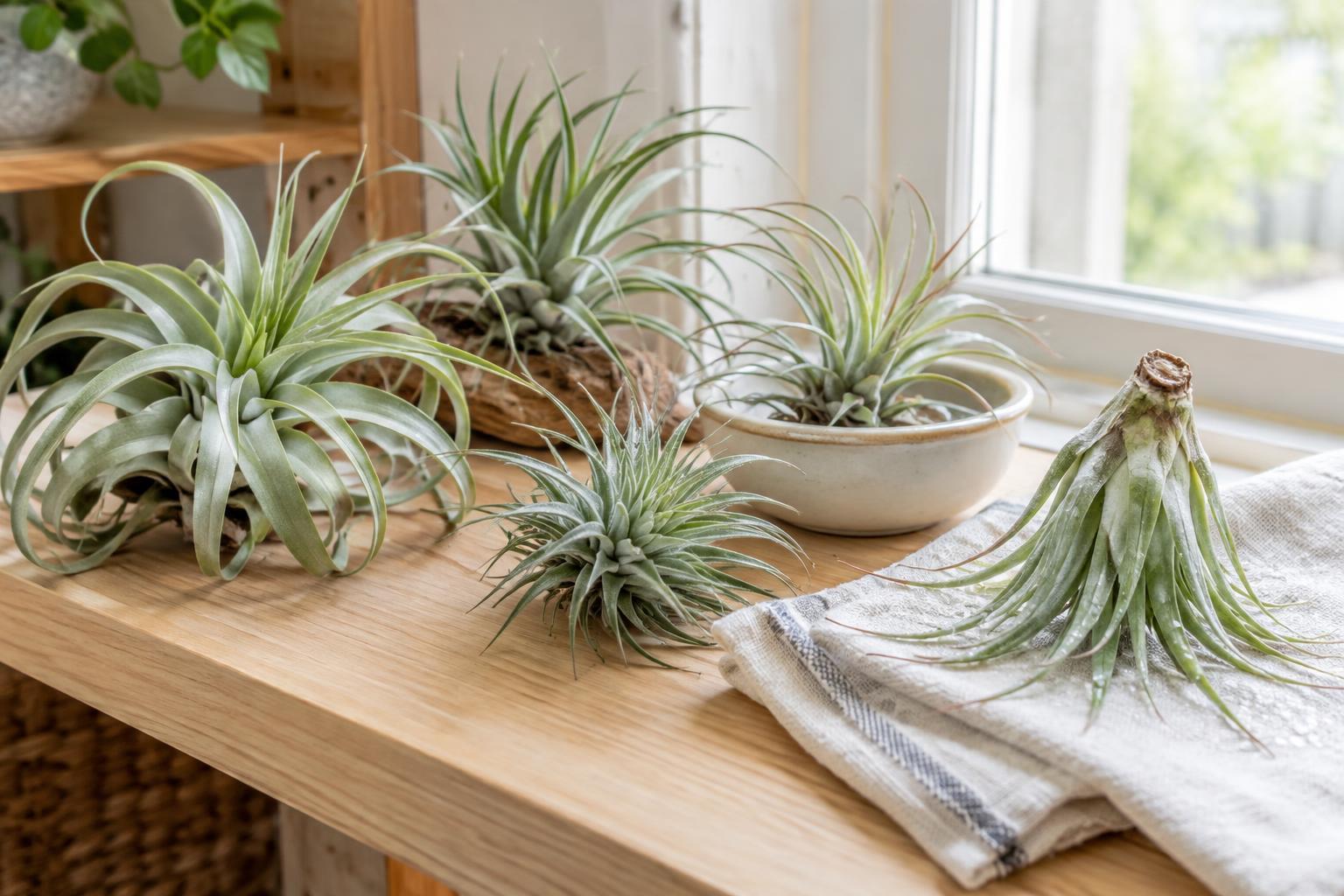
After watering, place the plant upside down or on its side on a towel in a bright, airy spot. Pay particular attention to water caught between the leaves or near the base. Let it dry fully before returning it to a bowl or holder; leaving it wet in an enclosed display can encourage rot. If your tap water is very hard, collected rainwater or another suitable low-mineral water may help reduce mineral buildup. Avoid water from a household softener.
A thirsty plant may have leaves that curl inward or feel unusually dry, although leaf shape varies by species. A soft, darkening base or leaves that detach easily can suggest that moisture has lingered too long. When in doubt, look at the whole setup: how thoroughly the plant was watered, how quickly it dried and whether air can move around it.
Make a display that supports easy care
Air plants pair naturally with wood, stone, ceramic and other simple materials. Try placing one on a shallow dish, tucking it into an open wall fixture or suspending it where it can be lifted out without pulling at its leaves. You do not need to plant it in soil. If you use moss or decorative gravel, keep the plant from sitting against material that stays damp.
A display is easiest to maintain when you can see the plant from several angles. That makes it simpler to notice trapped water, damaged leaves or a change in color. Give each plant a little space rather than crowding several into a small container. If you want to use a glass vessel, leave it open and make sure the plant is completely dry before putting it back.
Watch for new growth and adjust gently
Air plants grow slowly, and some produce small offshoots, often called pups, near their base. You can leave these attached for a fuller cluster. If you prefer to separate one, wait until it has grown substantially and comes away without force. Flowering is another normal part of an air plant’s life, though the timing varies. Continue providing light, water and airflow rather than making a sudden change to its routine.
Fertilizer is optional for a simple indoor setup. If you choose to use one, select a product intended for air plants or bromeliads and follow its directions conservatively. The most useful habit is regular observation: pick up the plant, check its leaves and base, and notice how it responds to your room. Small adjustments to light, watering and drying conditions are usually more helpful than searching for one perfect schedule.