Start with the project, then ask about the wood
A shelf, wall panel or tabletop may need very different boards. Before visiting a salvage yard or seller, note the dimensions you need and whether the wood will be decorative, handled often or exposed to damp conditions. Buy a little extra for trimming around cracks, fastener holes and uneven ends. For a load-bearing project, do not rely on appearance alone: use material suitable for that purpose and get appropriate building guidance.
Ask where the wood came from, how it was stored and whether the seller knows its species or previous use. A clear answer can help you judge what further checks are needed, but an unknown history is common. Treat labels such as “barn wood” or “weathered” as descriptions, not proof that a board is clean, dry or ready to install. If possible, choose pieces you can inspect on all sides rather than boards bundled tightly together.
Look past the patina for damage
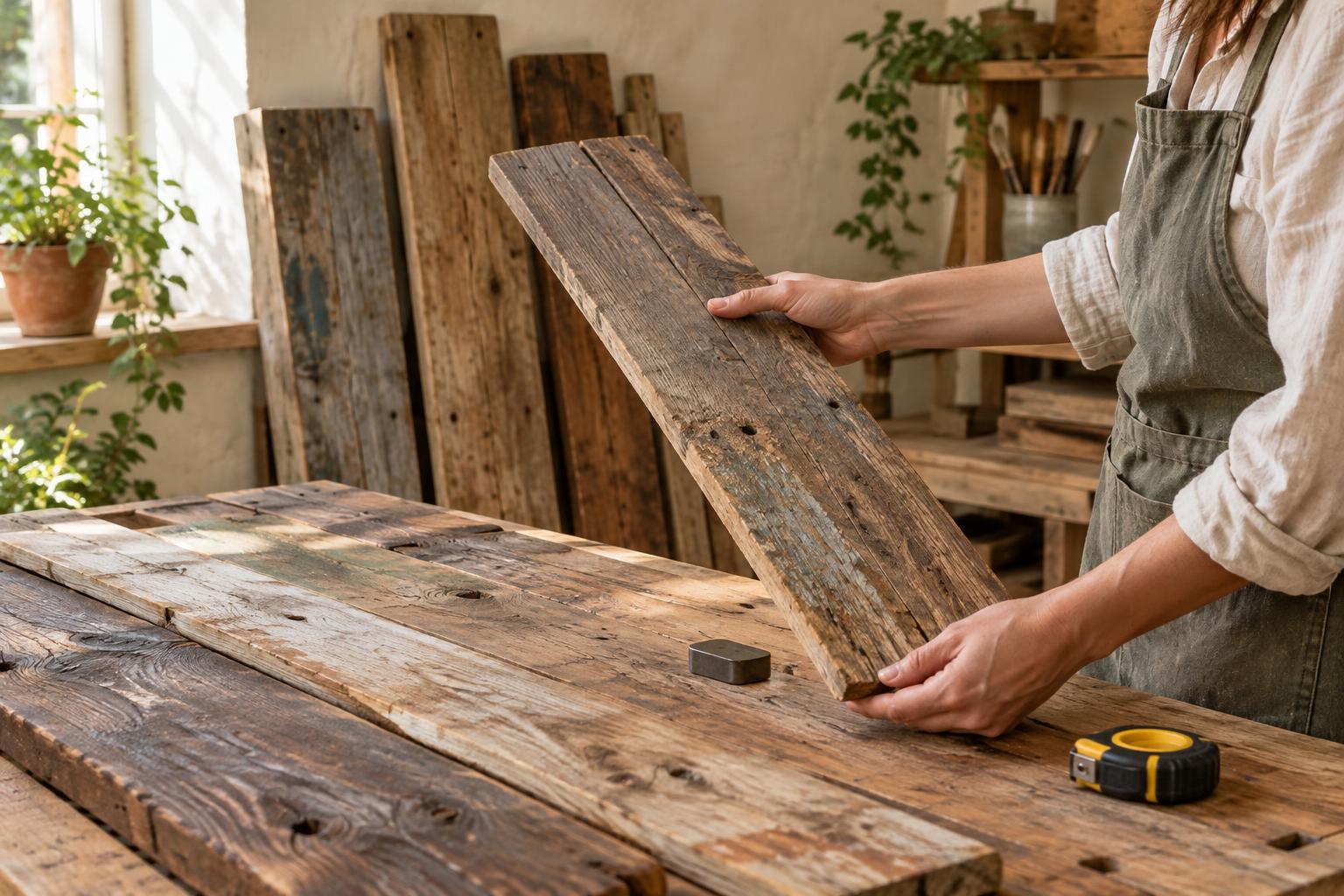
Turn each board over and examine its ends and edges. Surface scuffs and shallow dents may suit a rustic finish; soft spots, deep splits and sections that crumble under light pressure are harder to work around. Check for twisting, cupping or a pronounced bow by sighting down the length. A board need not be perfectly straight for a small decorative project, but the more you must flatten or force it into place, the less of its original character you may keep.
Look for clusters of tiny holes, loose powder or other signs that insects may have been present. Old holes do not necessarily mean an active problem, but fresh-looking debris or insects are good reasons to set a piece aside until its condition can be assessed. Also watch for persistent musty smells, visible mold and damp patches. Wood stored in a wet place may change shape as it dries indoors. If you have access to a moisture meter and know how to use it, readings can help you compare boards, though they do not replace checking how and where the wood was stored.
Treat old coatings as an unknown
Paint, stain and clear finishes can hide defects and complicate preparation. Examine coated areas for peeling, chalky residue, sticky patches and stains that appear to have soaked into the wood. Ask whether the seller knows what was applied or whether the wood came from a setting where it could have been exposed to chemicals. A coating’s color or age cannot reliably tell you what it contains.
Be especially cautious with painted boards of uncertain origin. Disturbing an old coating by sanding, scraping or cutting can create dust or chips that you do not want in your home. Do not plan to “sand it clean” as a shortcut. If you cannot identify a coating or assess it safely, consider using the board without disturbing that surface in a suitable location, seeking qualified help, or choosing uncoated wood instead. For surfaces that will regularly touch food, select material and a finish appropriate for that use rather than assuming reclaimed wood is suitable.
Check for metal and plan for preparation
Reclaimed boards may contain nails, screws, staples or broken fasteners below the surface. Inspect both faces and the edges, paying attention to dark marks and filled holes. A handheld metal detector can help locate pieces you cannot see, particularly before cutting or planing. Hidden metal can damage tools and create a safety hazard, so allow time to remove it or cut around it.
Think through how much preparation the project will require. A rough board may need cleaning, drying, trimming and gentle smoothing before it can become a shelf or headboard. Wear suitable protection for the task and control dust when working with wood whose history you understand; if its coating remains uncertain, avoid processes that disturb it. Sometimes a less dramatic board is the better purchase because it needs fewer risky or wasteful steps to become useful.
Make the final choice in context
Before paying, lay out the boards as you intend to use them. Check that you have enough sound length after removing damaged ends and enough thickness for any planned trimming. Compare color and texture if the boards will sit side by side, and decide whether existing holes and marks will be visible in the finished piece. Ask about the return policy if you cannot inspect every face at the point of sale.
The best reclaimed wood is not necessarily the oldest-looking piece. It is the wood whose condition, history and preparation needs make sense for your project. When damage, dampness or an unidentified coating leaves too many questions, passing on a board can save work later—and leave room to find one you can use with confidence.