Plan a cover that fits your patio
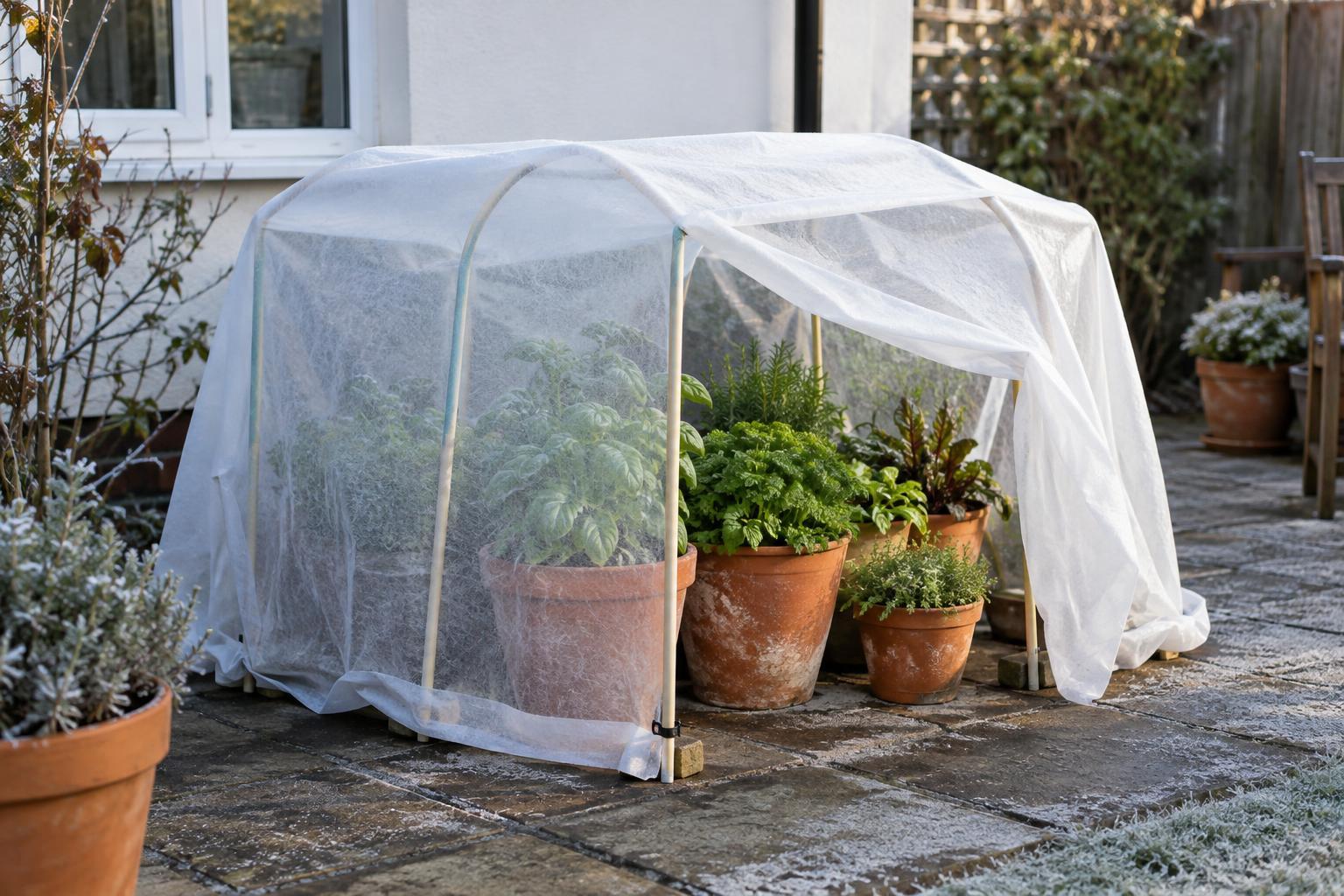
A frost-cover frame creates a small sheltered space around a planter without laying fabric directly on its leaves. It can help protect some established plants during brief, light frosts, but it is not a heated shelter. Tender tropical plants, young seedlings, and plants in small pots may need to move indoors or to a more protected spot when a hard freeze is expected.
Before buying supplies, group the planters you want to cover and measure their combined width, length, and height. Leave a few inches between the tallest foliage and the proposed top of the frame. Keep the footprint small enough that you can reach every pot to check the soil and lift the cover. On a narrow patio, a frame for one or two containers may be easier to manage than one large structure.
Gather simple, removable materials
For a freestanding frame, use four sturdy garden stakes or wooden dowels, lightweight bamboo poles or narrow timber for the top rails, and garden twine or reusable ties. Choose supports tall enough to stand above the plants while leaving a secure length inside each pot. If the containers are too shallow to hold stakes firmly, place the uprights in separate heavy pots filled with gravel or use a stable freestanding plant-support frame instead.
For the cover, choose breathable horticultural fleece or frost cloth large enough to drape over the top and reach the ground on every side. Have clips or clothespins ready to fasten it to the rails, plus bricks or other weights to hold down the lower edges. Avoid relying on thin plastic sheeting laid against foliage: where it touches leaves, it offers little separation from the cold and may trap excess moisture. If you use plastic as an outer rain layer, keep it raised above the plants and make ventilation easy.
Build the frame around the planters
Set the planters in their winter positions first. A spot beside a sheltered wall may be less exposed to wind than an open patio corner, provided the plants still receive the light they need. Put one upright near each corner of the group. If a stake goes into a planter, work it carefully into the soil near the rim to avoid damaging major roots. Check that each upright stands firmly before adding the top pieces.
Tie a pole between each pair of uprights along the long sides, then add shorter poles across the ends. Pull the ties snug and gently test the frame for wobbling. For a longer group of pots, add a middle upright and crosspiece so the cloth cannot sag onto the foliage. The aim is a light structure that supports fabric, not a roof built to carry snow. In an exposed spot, make the frame smaller or move the containers somewhere more sheltered.
Cover plants without sealing them in
Drape the frost cloth over the frame in the late afternoon, before temperatures drop. Let it reach the ground rather than stopping at the pot rims; covering the containers as well as the leaves can help reduce their exposure to cold air. Clip the fabric to the upper rails, then weight its edges so gusts cannot lift it. Keep the cloth clear of foliage where you can, and leave enough slack that a clip will not tear the fabric when it moves.
On milder days, open or remove the cover so plants receive light and fresh air and do not stay damp unnecessarily. Check the potting mix before watering: covered containers can dry at a different pace than uncovered ones. Refasten the cloth before another chilly night, and inspect clips and weights after windy weather. If heavy snow or strong wind is forecast, take down a lightweight frame rather than expecting it to bear the load.
Make it easy to reuse
When the cold spell passes, let the cloth dry before folding it. Untie the rails, bundle the supports, and label the pieces if their lengths differ. Reusable ties make the next setup quicker and let you adjust the frame as plants grow or planters move.
The most useful frost cover is one you can put on, check, and remove without disturbing the plants. Keep its shape simple, secure its edges, and treat it as one part of seasonal care. Plant choice, a sheltered position, and knowing when to bring vulnerable pots inside matter just as much as the frame itself.