Choose a container and a trellis shape
A bamboo trellis lets peas grow upward rather than spread across a patio or doorstep. Start by checking the seed packet for the variety’s expected height. A compact pea may need only a short support, while a climbing variety needs longer canes and enough clear space above the pot. Choose the support to suit the plant, not just the space you hope it will occupy.
A broad, sturdy container is a better base for a trellis than a narrow, top-heavy pot. Look for drainage holes and room for the roots as well as the bamboo. A pot around 30 cm (12 inches) deep and wider than it is tall is a practical starting point for several plants, though container needs vary by variety. If the pot will stand in a breezy spot, choose a heavier one or place it where the frame is sheltered without blocking the peas’ light.
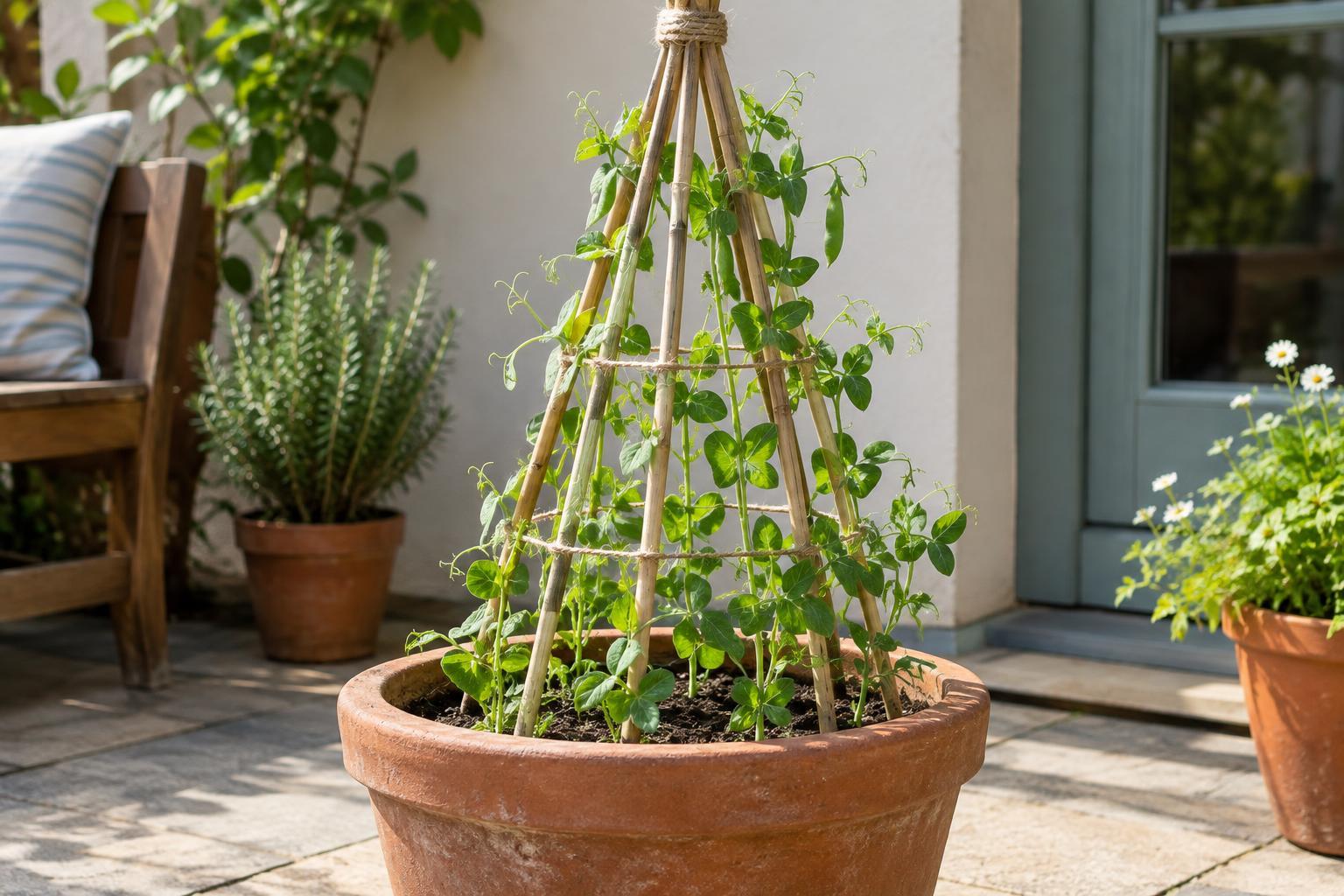
For one container, a teepee is an approachable shape: three or four canes lean together and meet above the center. It occupies little floor space and gives tendrils several paths upward. Gather bamboo canes, soft garden twine and scissors before filling the pot. Reused canes are fine if they are sound and free of sharp splits.
Build the frame before sowing
Fill the container with potting mix, leaving a little space below the rim for watering. Set the canes evenly around the inside edge of the pot, angling their tops toward one another. Push each cane firmly into the mix, taking care not to block the drainage holes. Building the frame now is easier than trying to insert canes later among growing roots.
Gather the cane tops and wrap them several times with twine, then tie a secure knot. The canes should feel steady when gently nudged. If the frame shifts, adjust the cane positions or use a broader container; extra string alone will not make an unstable pot safe in wind. Keep the pointed ends of tall canes away from eye level in a place where people regularly pass.
Pea tendrils hold best when they have thin material to grasp. Starting near the lower part of the frame, run twine between the canes to form horizontal links, spacing them roughly a hand’s width apart as you work upward. Tie the twine to each cane rather than winding one loose spiral around the whole teepee. Leave the links taut enough to stay in place but not so tight that they pull the canes out of position.
Sow peas where they can reach the support
Sow seeds near the outside edge of the teepee so emerging shoots can find a cane or twine link. Follow the seed packet for sowing depth and spacing, since varieties differ. Water gently after sowing so the mix settles without washing seeds toward the rim. If spring weather is still harsh where you live, use the packet’s temperature guidance rather than relying on the calendar alone.
Place the container where the peas receive good light and you can reach all sides to water and harvest. Check the pot regularly: container mix can dry unevenly, particularly as the plants grow and the weather warms. Water when the upper layer begins to dry, applying enough that moisture reaches the roots and excess can drain away. Avoid leaving the pot standing in water for long periods.
Once the seedlings are tall enough, guide any wandering stems toward the nearest twine link. Handle the tender tips lightly; pea tendrils usually take hold on their own when a support is close. As the plants fill out, check that no stems are trapped beneath a tight tie.
Keep the trellis useful through the season
A quick weekly check helps the structure last until harvest. Retie any slipping links, look for loose canes after windy weather and remove broken twine before it tangles in the plants. If stems reach the top while still growing strongly, avoid piling heavy new extensions onto an already crowded teepee. Next time, choose taller canes or a shorter pea variety for that spot.
Pick pods as they become ready for the variety you planted, supporting the vine with one hand so a pull does not shake the frame. When the plants have finished, cut the stems near the soil rather than yanking the whole plant against the canes. Untie the frame, let the bamboo dry and store sound canes for another project. The simple design is easy to rebuild and adjust as you learn what fits your container and outdoor space.