Start with jars that suit the table
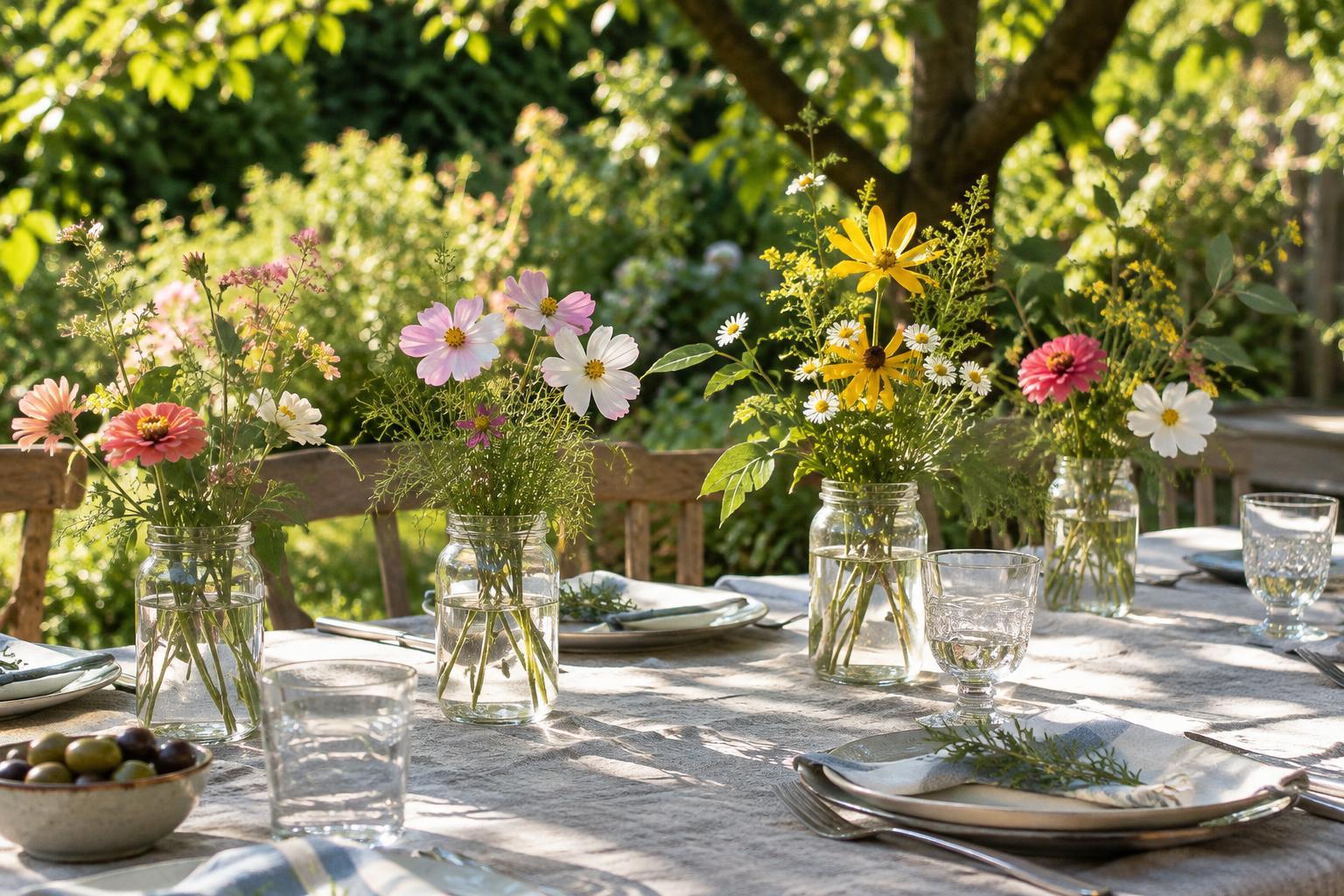
A row of small jars can feel more inviting on an outdoor table than one tall centerpiece. Guests can see across them, and you can move individual jars aside when it is time to serve food. Gather a few clean food jars in similar sizes, or mix short and medium-height jars for a looser look. Remove labels if you like, but do not worry about making every container match.
Choose jars with broad, level bases that sit securely on the table. Check rims for chips and avoid any jar that wobbles. A jar with a narrow opening will hold a handful of stems upright; a wider one gives you more room but may need more flowers to look full. Before arranging, wash the jars well, rinse away any soap and fill each one partway with cool, clean water.
Think about where the flowers will go before you cut a stem. Low arrangements work best near plates and serving dishes, while a slightly taller jar can sit at the end of the table. Leave enough open space for glasses, shared food and hands reaching across.
Gather flowers and useful extras
You do not need a large bouquet. A few focal blooms, smaller flowers and some airy foliage can fill several jars when divided into little groups. Choose stems that look firm and fresh, and consider how their shapes work together: one rounded flower, a few upright stems and something soft that spills gently over a rim. Repeating one or two colors across the jars helps the whole table feel connected.
If you are cutting from your own garden, take only what you can spare and check stems for insects before bringing them to the table. Use clean snips or scissors. Strip off leaves that would sit below the waterline; submerged leaves can cloud the water as they break down. Keep cut stems in water while you decide where each will go.
Set out a towel, your snips and a small bowl for discarded leaves. This makes arranging at the table easier to manage, though you can also work at a kitchen counter and carry the finished jars outside. Keep pets and young children in mind when choosing flowers and placement, since some plants can be harmful if eaten.
Build each arrangement a few stems at a time
Begin with your largest bloom or most interesting stem. Hold it beside a jar to judge the height, then trim it so the flower sits comfortably above the rim without towering over seated guests. Add two or three supporting stems at slightly different heights. Turn the jar as you work rather than arranging only the side that faces you.
Let each jar have a little open space. In a narrow jar, three to five stems may be enough; a wide jar might need more, depending on the flowers. If stems lean too far, shorten them or transfer them to a narrower container instead of packing the jar tightly. A few stems angled outward can give the arrangement a relaxed shape without spreading into someone’s place setting.
For a set of jars, vary the contents rather than making identical miniature bouquets. One might hold a single generous bloom with foliage, another a loose cluster of smaller flowers. Repeat a color or leaf shape in each jar so they still belong together. Step back to see the group at table height, then move or trim anything that blocks conversation.
Set the jars out for an outdoor meal
Place the jars down the center of the table with gaps between them. A runner or tray can visually gather mismatched glass, but neither is essential. If the table is uneven, test each jar with a gentle touch before guests arrive. On a breezy day, use shorter stems and heavier, wider jars, or bring the flowers indoors if they will not stay secure.
Keep flowers away from candles, grills and the edges of the table. Give serving platters priority: the advantage of several little arrangements is that they can be shifted as the meal unfolds. If you have enough jars, put a single low arrangement near each end of a long table instead of filling every available inch.
Refresh them after the gathering
Summer warmth can be hard on cut flowers, so place the finished jars in shade when possible and put them out close to the start of the meal. Check the water level before guests arrive. If a flower droops or drops petals, remove it rather than letting it spoil the rest of the arrangement.
Afterward, bring the jars inside, change the water and trim a little from the ends of stems that still look good. Separate fading flowers from those with life left in them; a small surviving cluster can brighten a windowsill or bedside table for another day. Once the flowers are finished, wash and dry the jars so they are ready for the next summer gathering.