Decide what the room needs to do
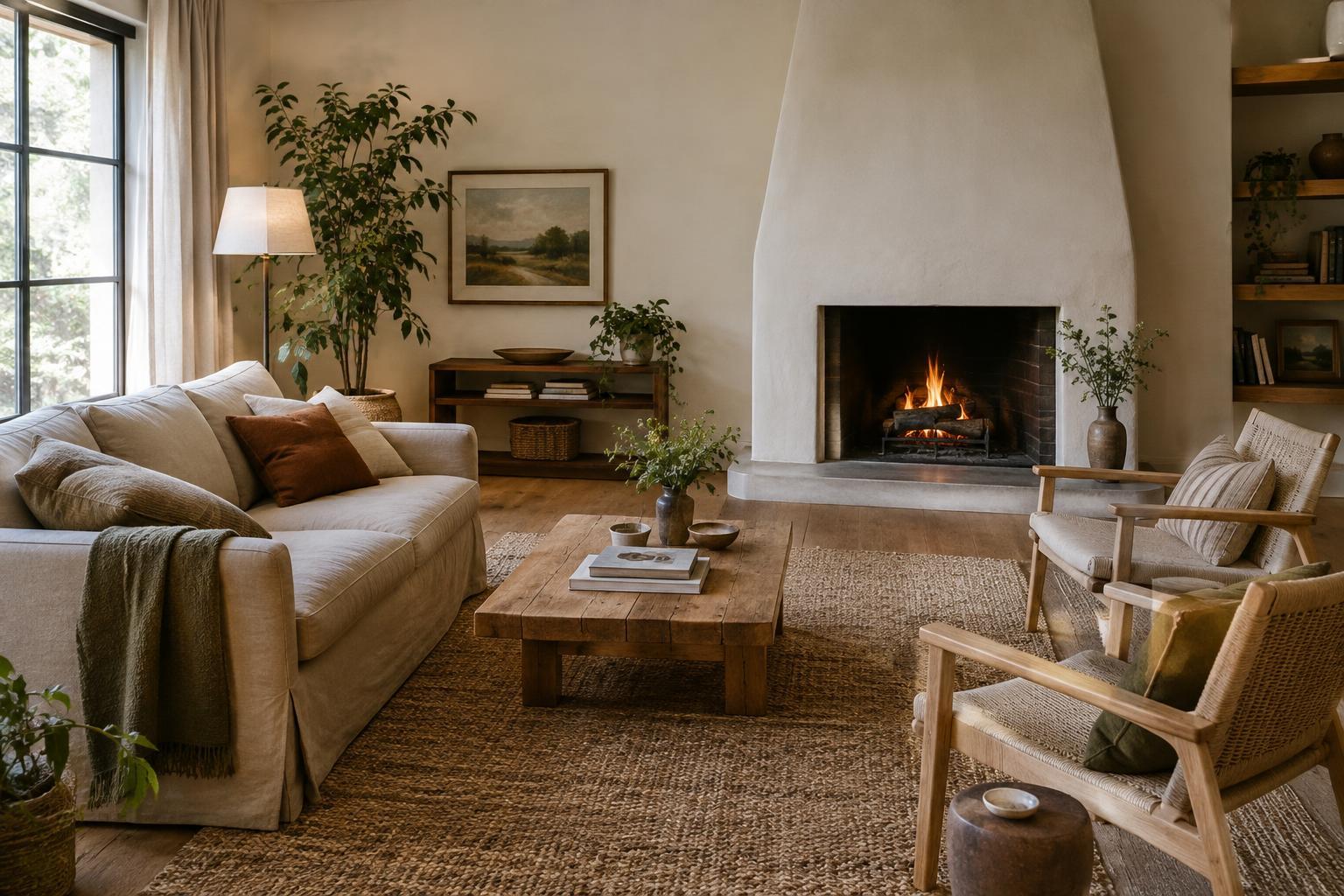
An off-center fireplace can make a living room feel as though it has two competing middles: the hearth and the open space beside it. Before placing furniture, decide where people will actually spend their time. Is this mainly a room for conversation, reading or watching television? The fireplace can be a feature without being the focal point of every seat.
Sketch the room’s fixed elements, including doors, windows, the fireplace and any built-in storage. Then mark the route people take across the room. This simple step helps you avoid a common frustration: a sofa that looks well positioned from the doorway but forces everyone to walk through the seating area. Keep an especially clear route to any door used often.
Build the seating group around people, not the hearth
Start with the largest seat and place it where it supports the room’s main activity. A sofa does not have to face an off-center fireplace directly. It might face a pair of chairs, sit perpendicular to the hearth or look toward another feature. Turn a chair slightly toward the fireplace if you want to acknowledge it without shifting the whole arrangement.
Use a coffee table, rug or small side tables to bring the seats together visually. These pieces can establish a clear center for the conversation area even when the fireplace sits to one side. If a rug would leave one seat stranded beyond its edge, try a different size or adjust the furniture before buying anything new.
Pay attention to how each seat is reached. Someone should be able to sit down, stand up and reach a table without squeezing between the hearth and another piece of furniture. The most successful layout is not necessarily symmetrical; it is the one that feels easy to use.
Give the fireplace its own breathing room
Treat the space immediately around the fireplace as a distinct part of the plan. Avoid filling every gap beside it simply to make the wall look balanced. Leave enough open floor for people to approach the hearth and for any doors or fireplace components to operate as intended. Follow the fireplace manufacturer’s guidance and any applicable local requirements when positioning furnishings or other items nearby.
If there is a wide blank area on one side, a low cabinet or a single substantial piece may work better than several small objects. On the narrower side, let the wall stay quiet. A lamp, artwork or carefully placed chair can make the two sides feel related without pretending they are identical. Keep loose textiles, plants and stored items away from heat.
Balance the room with height, light and greenery
Visual balance does not require matching furniture on both sides of the fireplace. Instead, compare the overall weight of each area. A tall bookcase on the wider side, for example, may call for a floor lamp or artwork elsewhere in the room. Keep the arrangement varied enough that the eye can move around it rather than stopping at one crowded wall.
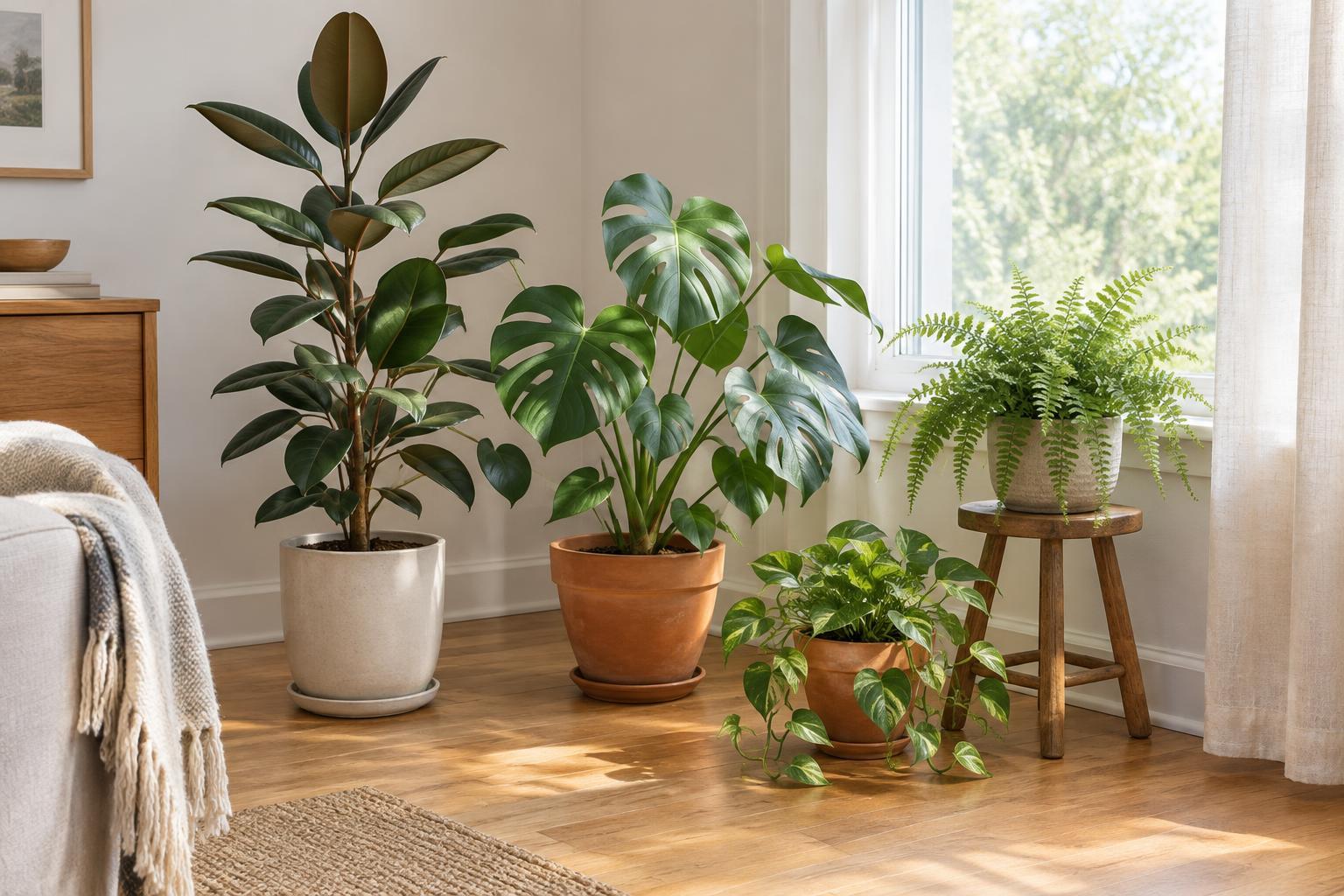
Plants can soften the hard lines of a hearth, but choose their positions for growing conditions and daily use, not just appearance. A plant beside a window may be healthier and easier to care for than one tucked next to the fireplace. Check that leaves, pots and trailing stems will not be exposed to heat or obstruct a walking route. A small plant on a side table can provide the same touch of green without occupying floor space.
Test the layout before making it permanent
Once the major pieces are in place, live with the arrangement for a few ordinary days before adding more furniture. Notice where people naturally walk, which seat gets used and whether lamps illuminate the places where someone reads or relaxes. Move lightweight pieces first: a chair, side table or lamp may solve a problem without requiring a new position for the sofa.
Finally, view the room from each doorway as well as from the seats. An off-center fireplace often looks less awkward when the seating group has a clear purpose and the space around the hearth is uncluttered. Let the room’s shape guide the arrangement rather than trying to disguise it.