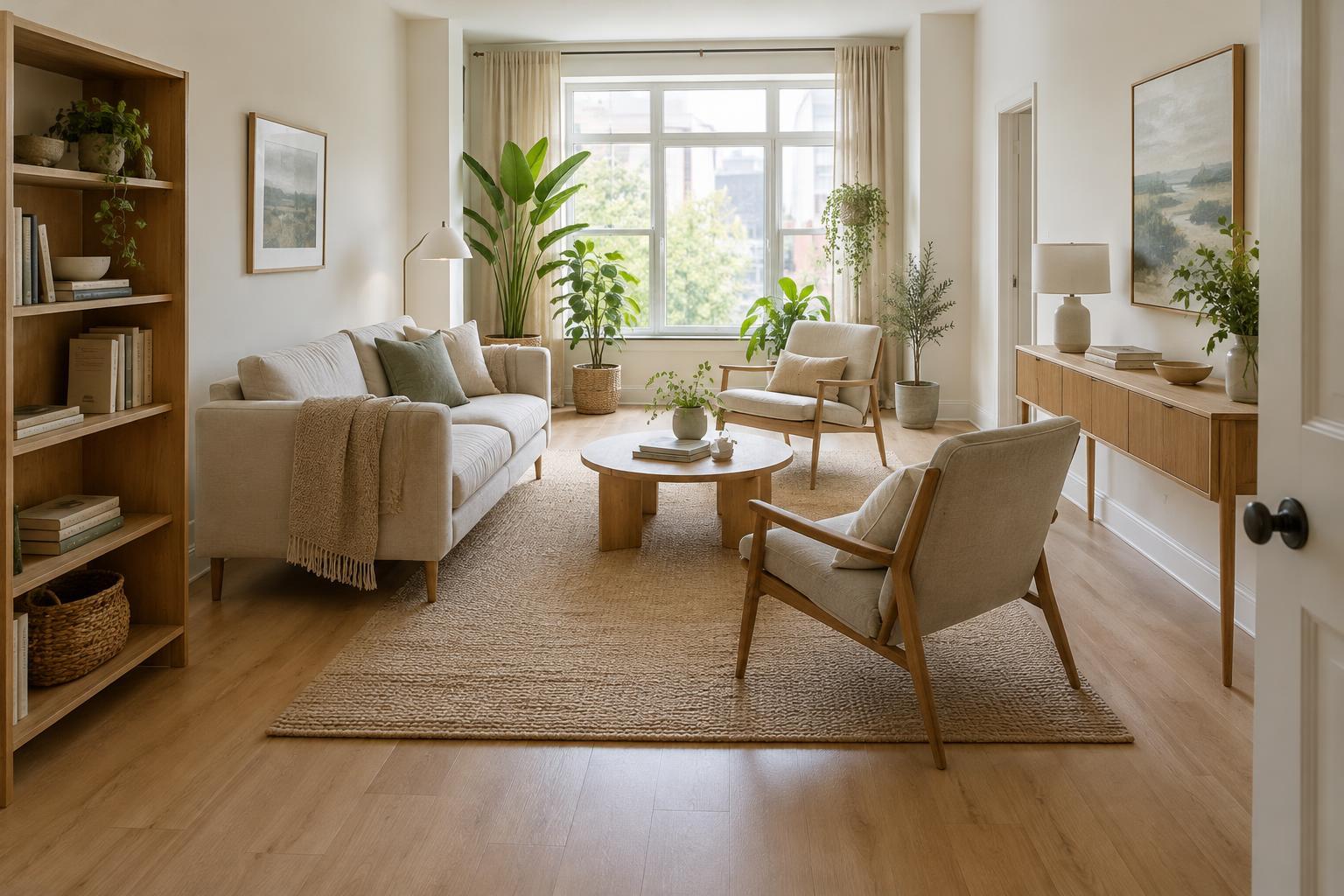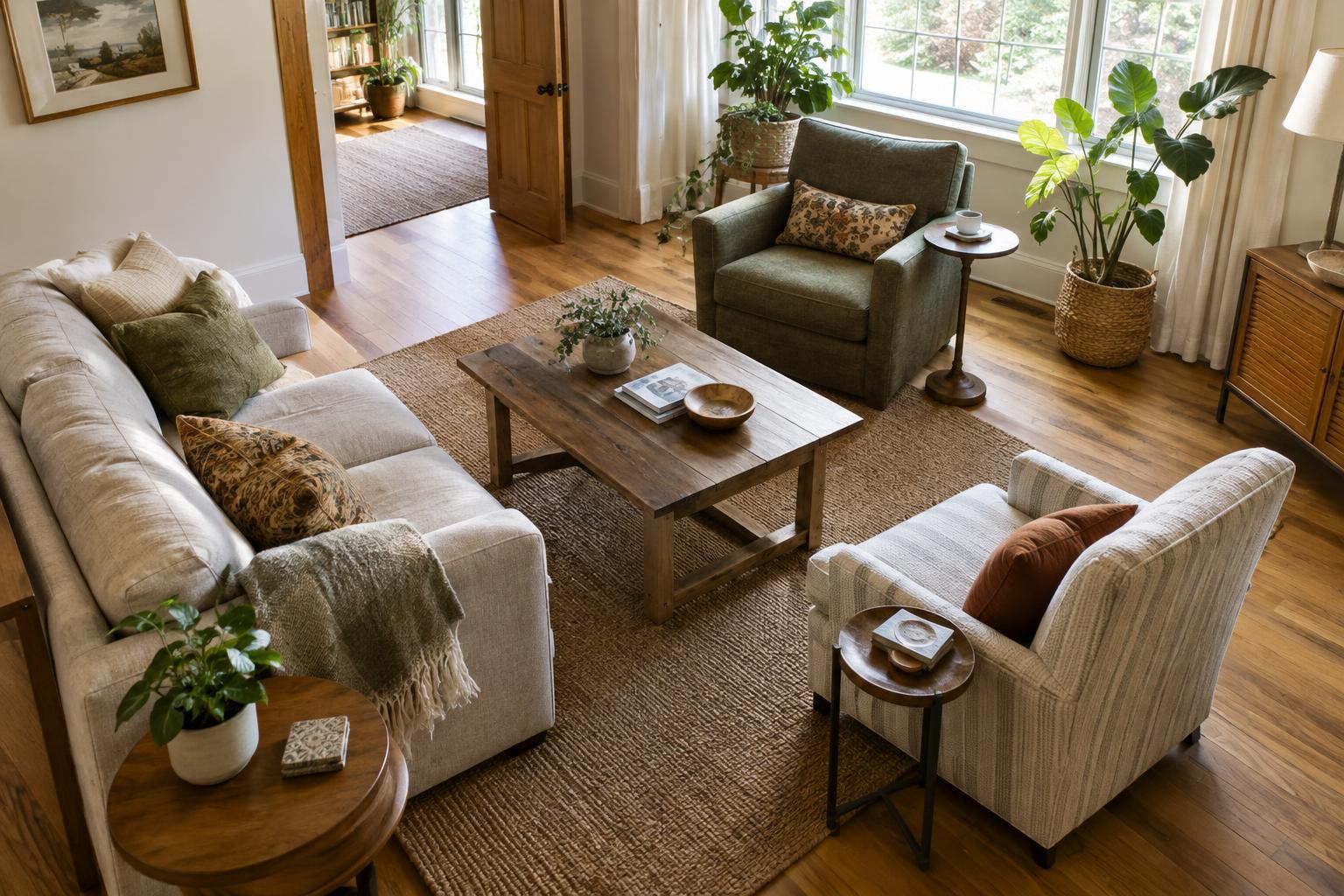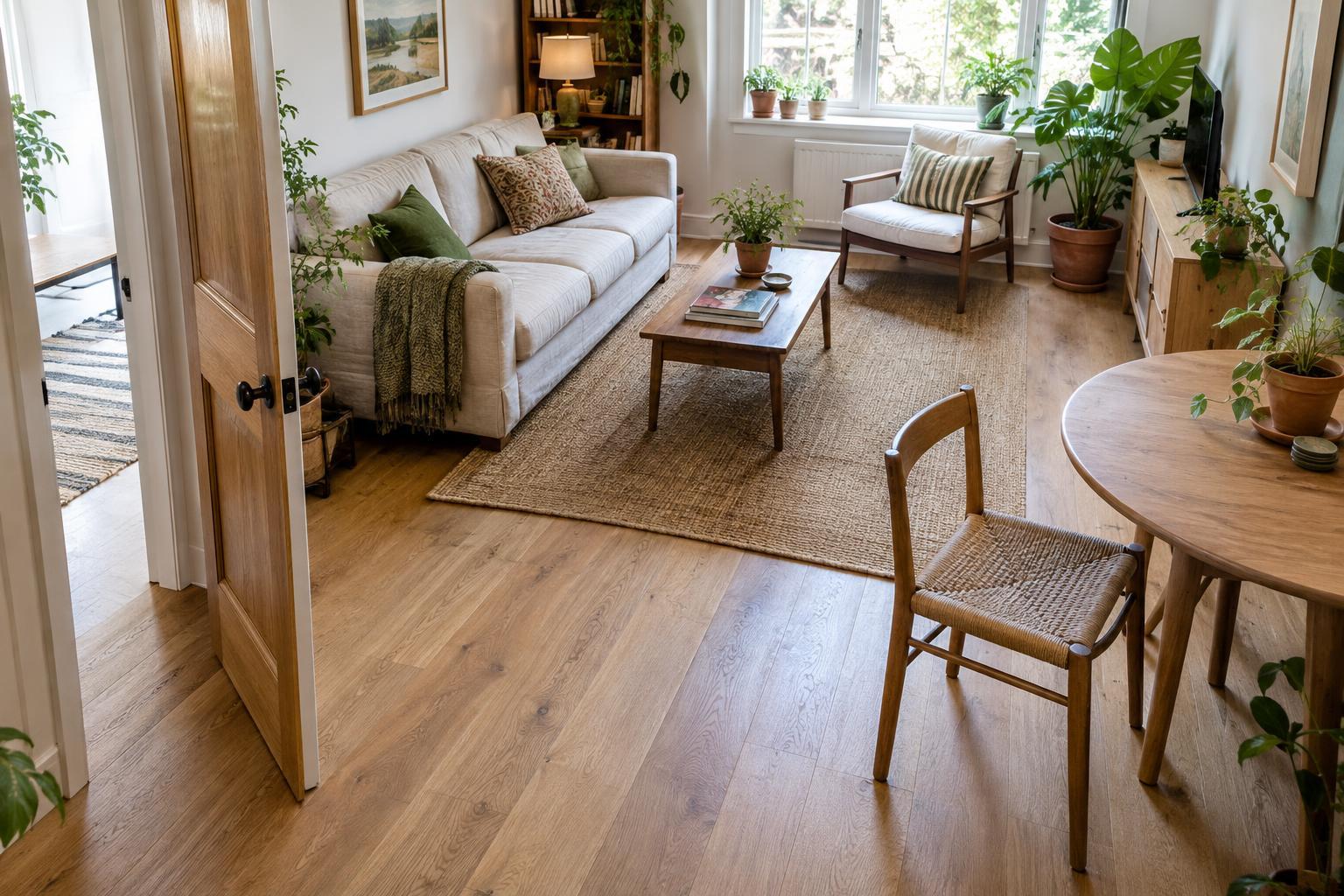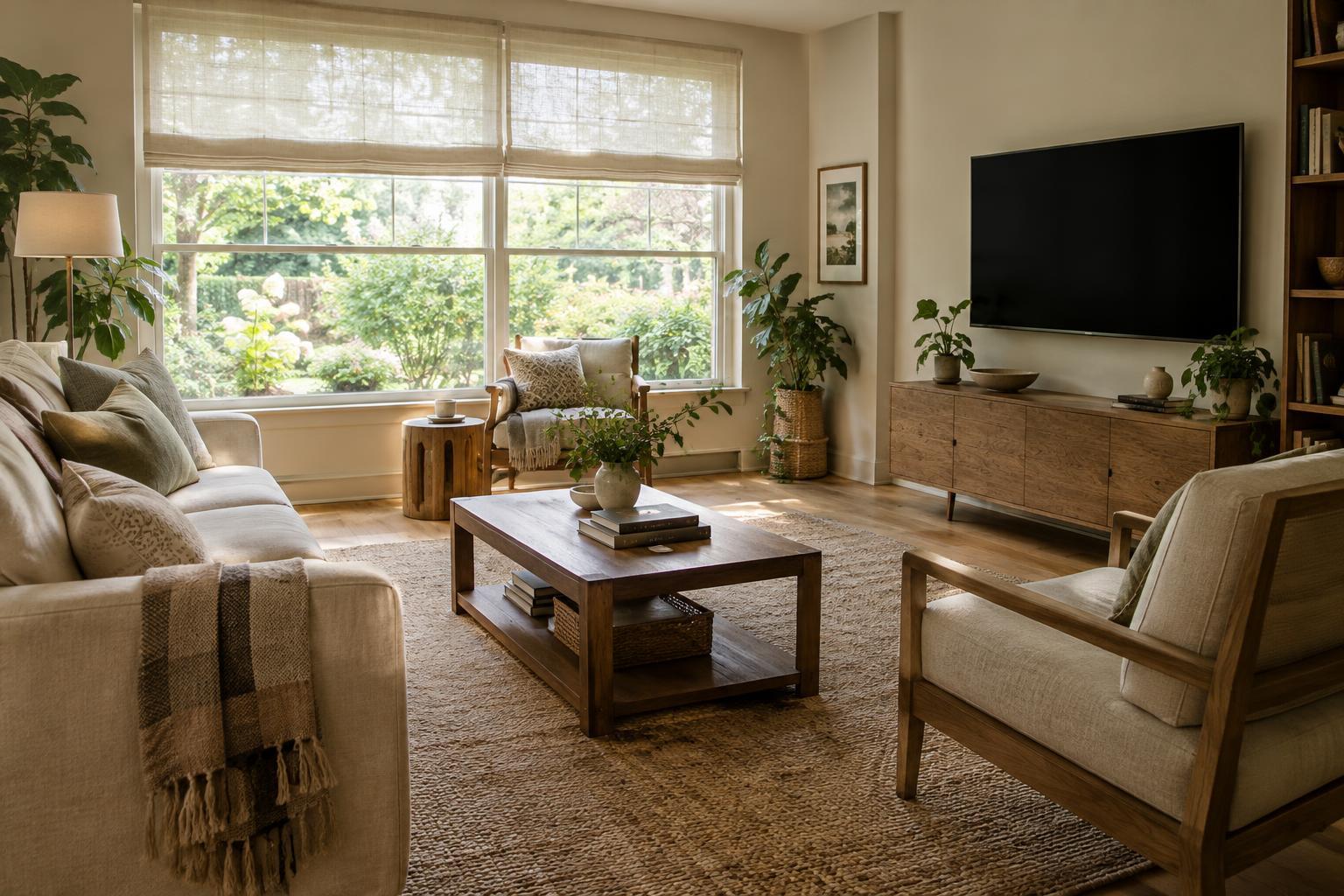
Start with the room, not the screen
A window and a television ask for different kinds of attention. The window brings in light and offers a view; the screen works best when it is easy to see without reflections or an awkward turn of the head. Before moving furniture, notice where people enter the room, which seats they use most, and how the light falls at the times they usually watch television.
Choose the view you want to preserve. It might be the view from the main sofa, or simply the feeling of openness when you walk into the room. Then mark the routes that need to stay clear, such as the path to a balcony door or the space needed to open curtains. These everyday needs provide a better starting point than centering every piece of furniture on a single wall.
Find a television position that respects the window
A wall perpendicular to the window is often worth trying first. It can keep the screen out of the window’s direct line while allowing a sofa to face the television and still enjoy some daylight. Check the position from your actual seats before committing to a wall mount or heavy media unit: a screen that looks well placed on an empty wall may require an uncomfortable neck turn once the sofa is in place.
If the television must sit opposite the window, reflections may be more noticeable during the day. Try the arrangement with the screen off and look for bright shapes on its surface from each seat. If it must go beside the window, keep enough space for curtains or shades to move freely. Placing a television directly in front of a window can block light and make both the screen and the view harder to enjoy, so treat it as a last resort.
Arrange seating for conversation and viewing
The sofa does not have to sit flat against the wall. Floating it farther into the room can give it a more comfortable angle toward the television while leaving a route behind it to the window. In a smaller living room, a compact sofa and one movable chair may be more useful than a large sectional that fixes every seat in one direction.
Aim for a seating group that still works when the television is off. A chair angled toward the sofa can serve conversation, reading, or a glance at the view. A coffee table or smaller side tables should be reachable without squeezing the walking path. If one seat has the best screen view, let the others favor flexibility rather than forcing the whole room into a rigid row.
Control glare without losing daylight
Window coverings let the room change with the day. A light-filtering shade can soften bright light while keeping a sense of the outdoors; a more opaque curtain may help when reflections are especially distracting. If you use both, you can adjust them separately instead of keeping the window covered all the time. Test how the room feels with the coverings open, partly closed, and fully closed before deciding that furniture needs to move.
Small adjustments can also help. Turning a chair slightly, shifting a screen along the wall, or moving a reflective lamp may improve the view. Avoid relying on the television’s brightness to solve every lighting problem. The goal is a room that remains pleasant for ordinary daytime activities, not just one that works during a film.
Give the window a purpose of its own
Once the main furniture is placed, make the window area somewhere you want to spend time. A slim chair, a small side table, or a plant stand can establish a quiet spot without crowding the glass. Choose plants for the light the window actually receives, and leave room to reach them for watering and to operate the window or coverings.
Finish by checking the arrangement in use. Walk through the room, sit in each seat, open the curtains, and watch the screen for a few minutes at different times of day if possible. Tuck cords out of walking routes and keep furniture clear of doors and vents. A successful layout does not make you choose between a view and a television; it gives each a place in the room without letting either take over.