Decide what the light needs to do
Start with the plants and their position, not the lamp. A grow light can supplement a window that provides some daylight, or it can be the main light source on a shelf away from windows. Those are different jobs. A single compact lamp may help one plant in a dim corner, while a shelf of plants usually needs a fixture that spreads light across the whole growing area.
Group plants with similar light preferences before shopping. A foliage plant that tolerates modest light may need less help than a succulent or a plant you hope will flower. “Low light” does not mean no light: if a plant is producing small, widely spaced leaves or leaning strongly toward a window, its current position may not be working. Moving it closer to daylight may be simpler than adding a fixture.
Choose a fixture that fits the space
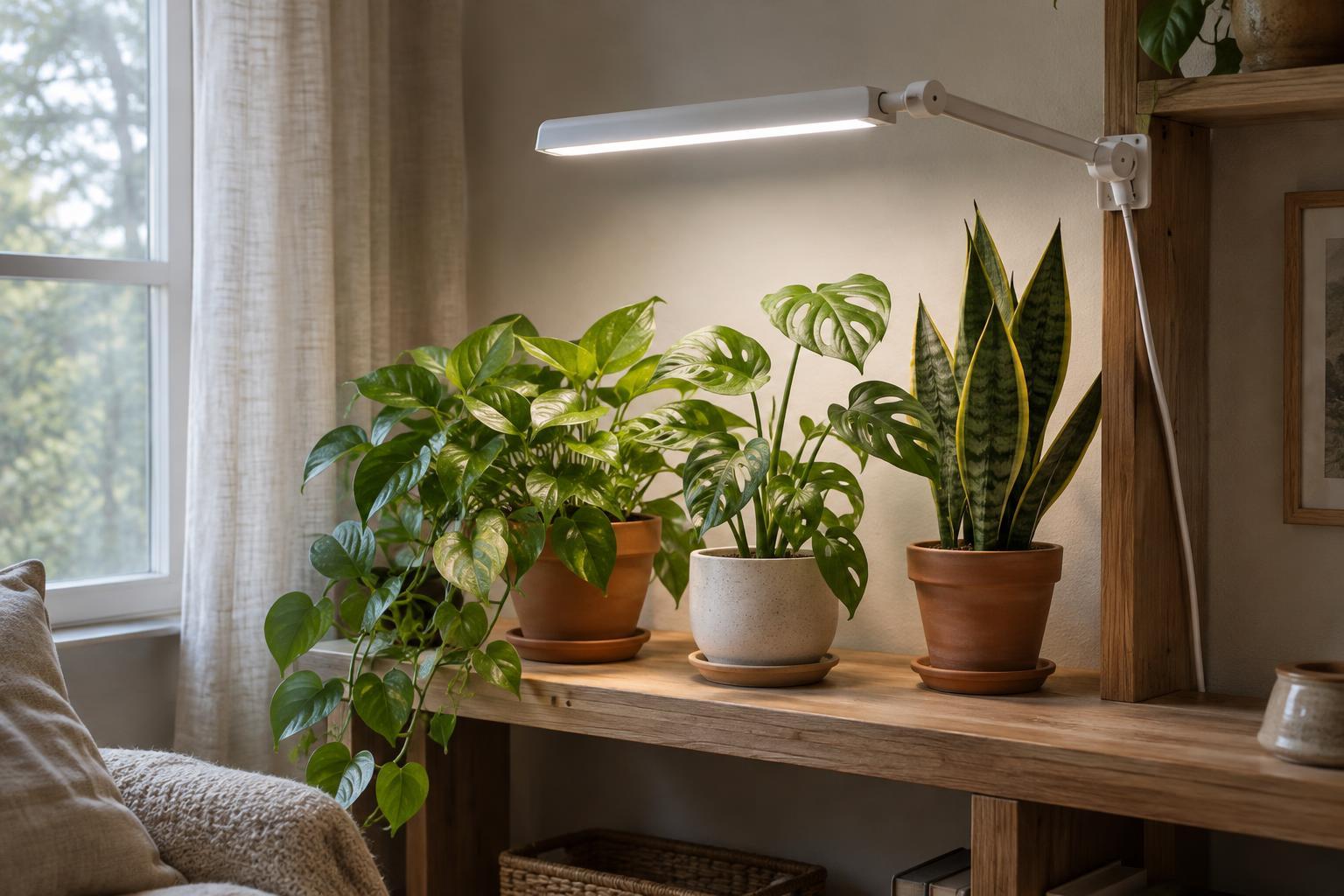
For most home setups, an LED grow light is a practical starting point because it is available in shapes that fit lamps, shelves and hanging fixtures. A bulb suits a single pot if the lamp can point down toward the leaves. A bar or panel is often easier to use over a row of plants. Check the fixture’s dimensions and stated coverage area against the space you want to light, remembering that the edges of the coverage area may receive less light than the center.
Look for useful placement guidance from the maker, including a suggested hanging distance. Labels such as “full spectrum” can help narrow the options, but they do not tell you on their own whether a lamp will adequately cover your plants. If comparable light-output or intensity information is provided, consider it alongside coverage and distance. Also check that the bulb is compatible with its lamp, that the fixture can be mounted securely, and that its light color is comfortable in a room you use every day.
Place the light where leaves can use it
Position the light above the foliage when possible, rather than shining it across the room. Keep the leaves within the fixture’s recommended distance range, and use the maker’s instructions as your starting point. A light placed too far away may do little for the plant; one placed too close can cause stress or uneven growth, depending on the fixture. If the directions are unclear, begin with more space between the lamp and leaves and adjust gradually while watching the plant.
Arrange pots so that taller plants do not shade smaller ones. As plants grow, raise the fixture or lower the pots to maintain roughly the same distance. If a plant beside a window leans in one direction, rotating its pot occasionally can encourage more even growth, though rotation will not make up for inadequate light. Keep cords tidy and away from watering spills, use fixtures only in locations suited to their electrical rating, and avoid trapping heat against leaves or furnishings.
Set a schedule with a dark period
Consistency is more useful than switching the light on only when you remember. A plug-in timer or a fixture with a built-in timer makes the routine easier. For many foliage houseplants, about 10 to 12 hours of combined daylight and grow-light time is a reasonable starting point. Plants receiving little natural light, or plants with greater light needs, may benefit from a longer lit period, often around 12 to 14 hours. These are starting ranges rather than rules for every species or fixture.
Give plants a regular dark period instead of leaving the lamp on all night. If the fixture supplements a window, run it during the day so the plant has an ordinary day-and-night rhythm. If it is the main light source, choose hours that suit your household and repeat them daily. A stronger light used for fewer hours and a weaker light used for longer are not always interchangeable, so follow species-specific guidance when available and change one part of the setup at a time.
Watch the plant, then make small adjustments
Allow time for new growth to show how the setup is working; older leaves may not change much. Compact, healthy new growth is an encouraging sign. Persistent leaning, long gaps between leaves or unusually small new leaves can suggest that the plant needs more usable light. Pale patches or leaves that look stressed directly beneath a lamp may signal that it is too close or too intense. Check water, temperature and pests too, since light is not the only cause of these symptoms.
More light can change how quickly potting mix dries, so check the soil rather than keeping the same watering schedule automatically. Reassess the setup when you move a plant, add pots to the shelf or change the room’s natural light. The aim is not to create the brightest possible display; it is to give each plant a steady, suitable amount of light in a setup you can comfortably maintain.