Start with the texture, not a perfect pattern match
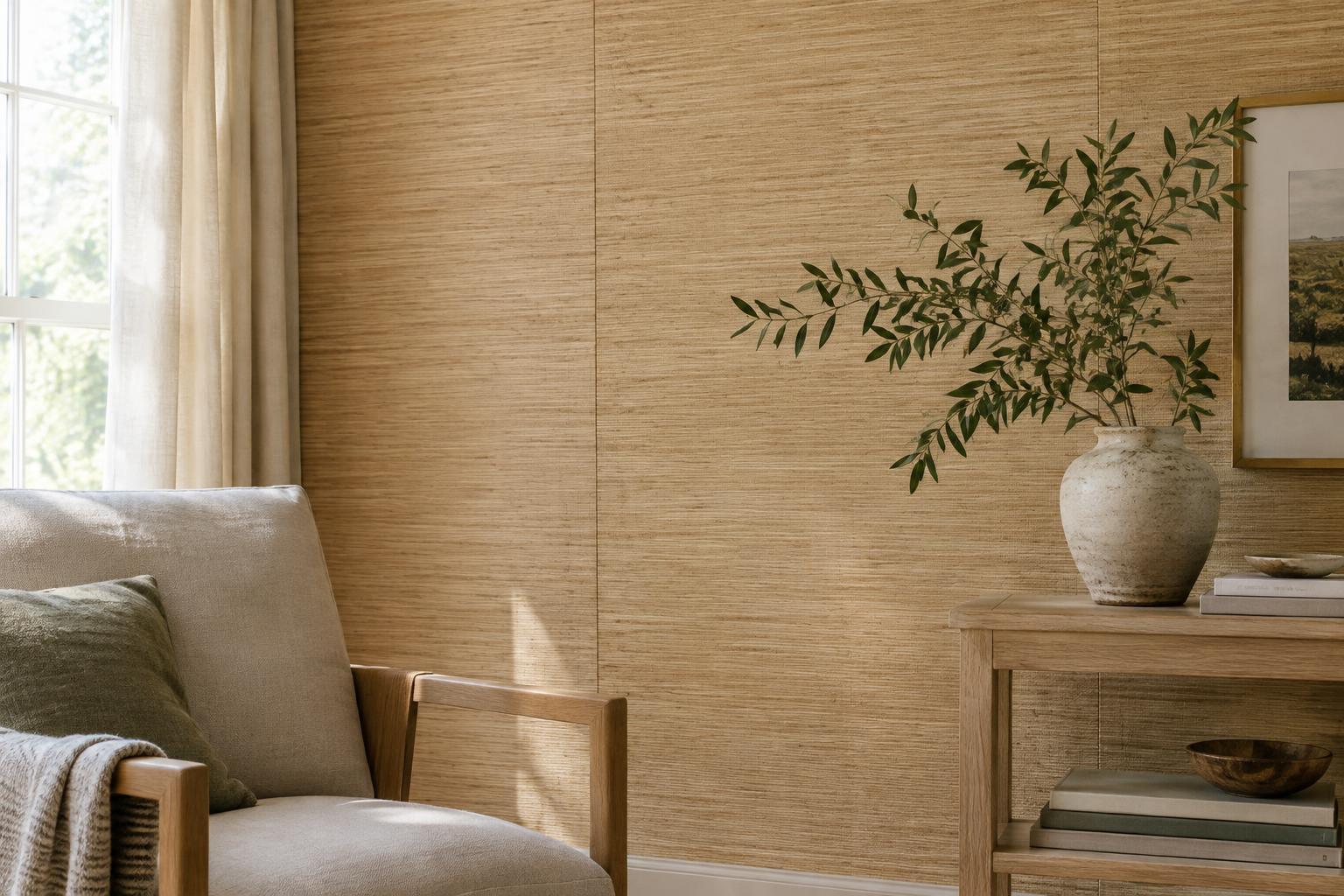
Grasscloth wallpaper is made with woven natural fibers, often mounted on a backing that allows it to be hung on a wall. The fibers give it depth that a printed imitation may not have: light catches raised strands, and the color can shift slightly across a panel. That variation is part of its appeal, especially in a room with wood, linen or other natural materials.
It also means grasscloth will not look as uniform as paint or a printed wallpaper. Before ordering, look at a generous sample in the room where it will go, both by daylight and under the lamps you use at night. A small swatch can show the texture, but it may not show how several widths look side by side. Check the product description, too: fiber, backing, finish and care instructions can differ.
Expect visible seams
Where two lengths meet, grasscloth usually shows a seam. Individual fibers may not line up across it, and neighboring panels may have slightly different tones. Even careful installation cannot turn a woven material into a continuous sheet. If an uninterrupted surface is important to you, a printed grasscloth-look wallpaper may be a better fit.
Placement can make seams feel less prominent. On a feature wall, consider where the eye first lands and how furniture or artwork will sit against the finished surface. Good planning also helps avoid an awkwardly narrow strip at a highly visible edge. Follow the manufacturer’s hanging directions rather than assuming every roll should be installed the same way; guidance on panel order, trimming and adhesive may vary.
Natural fibers can be easy to mark during installation, particularly if paste reaches the front. If you are hiring an installer, ask whether they have worked with the specific type of grasscloth you have chosen. If you plan to hang it yourself, read the instructions before cutting any lengths and allow time to prepare a smooth, clean wall.
Treat stains as a prevention problem
Many grasscloth surfaces are absorbent and cannot be wiped down like washable vinyl wallpaper. Water may leave a ring, while rubbing can roughen fibers or spread a mark. For that reason, grasscloth is often better suited to walls away from cooking splashes, muddy hands and places where drinks are set down.
For routine dust, use a soft brush attachment on a vacuum at low suction, moving gently in the direction of the weave. If a spill occurs, consult the product’s care guidance before applying water or cleaner. Blotting a fresh spill with a clean, dry cloth may help limit it, but it may not remove a stain. Test any suggested cleaning method in an inconspicuous spot first, and avoid scrubbing.
Think about daily use when choosing a wall. A headboard, a dining chair or a frequently used doorway can put repeated contact in the same place. A grasscloth-covered wall that is admired more than touched is likely to be easier to live with.
Be selective about humidity
Natural fibers and their backing can react to changes in moisture. In a persistently damp room, you may see problems such as lifting edges, changes in appearance or staining. A bathroom with frequent showers is therefore a more demanding location than a dry bedroom or living room. An extractor fan or an open window helps manage moisture, but neither makes an unsuitable wallcovering waterproof.
Consider the whole wall, not just the room name. A surface near a sink faces splashes; an exterior wall with an existing damp problem needs that problem addressed before it is covered. Check whether the particular wallpaper and adhesive are approved for the space you have in mind. If you want woven texture in a high-humidity area, a more moisture-tolerant alternative may be the simpler choice.
Choose a spot that lets it age well
Grasscloth works best when its visible joins and subtle irregularities feel intentional. It can add warmth to a quiet bedroom wall, texture behind a reading chair or contrast alongside painted walls. Using it on one considered surface can give the material room to stand out without placing it everywhere daily wear is likely.
Keep a little extra material from the same order if possible, since a later replacement may not match the original panels exactly. Most importantly, choose grasscloth for what it is: a tactile, variable natural surface. Accepting its seams and protecting it from moisture and stains will make the finished room more satisfying than expecting it to behave like a wipe-clean wall.