Choosing furniture before planning how you move
A sofa may fit along a wall and still make the room awkward to use. Before settling on a layout, notice the paths you take from each doorway to the places you use most: a chair, a window, a shelf or a door to the outdoors. If a coffee table forces you to turn sideways or a chair sits where people naturally cross the room, the space will feel tighter than its dimensions suggest.
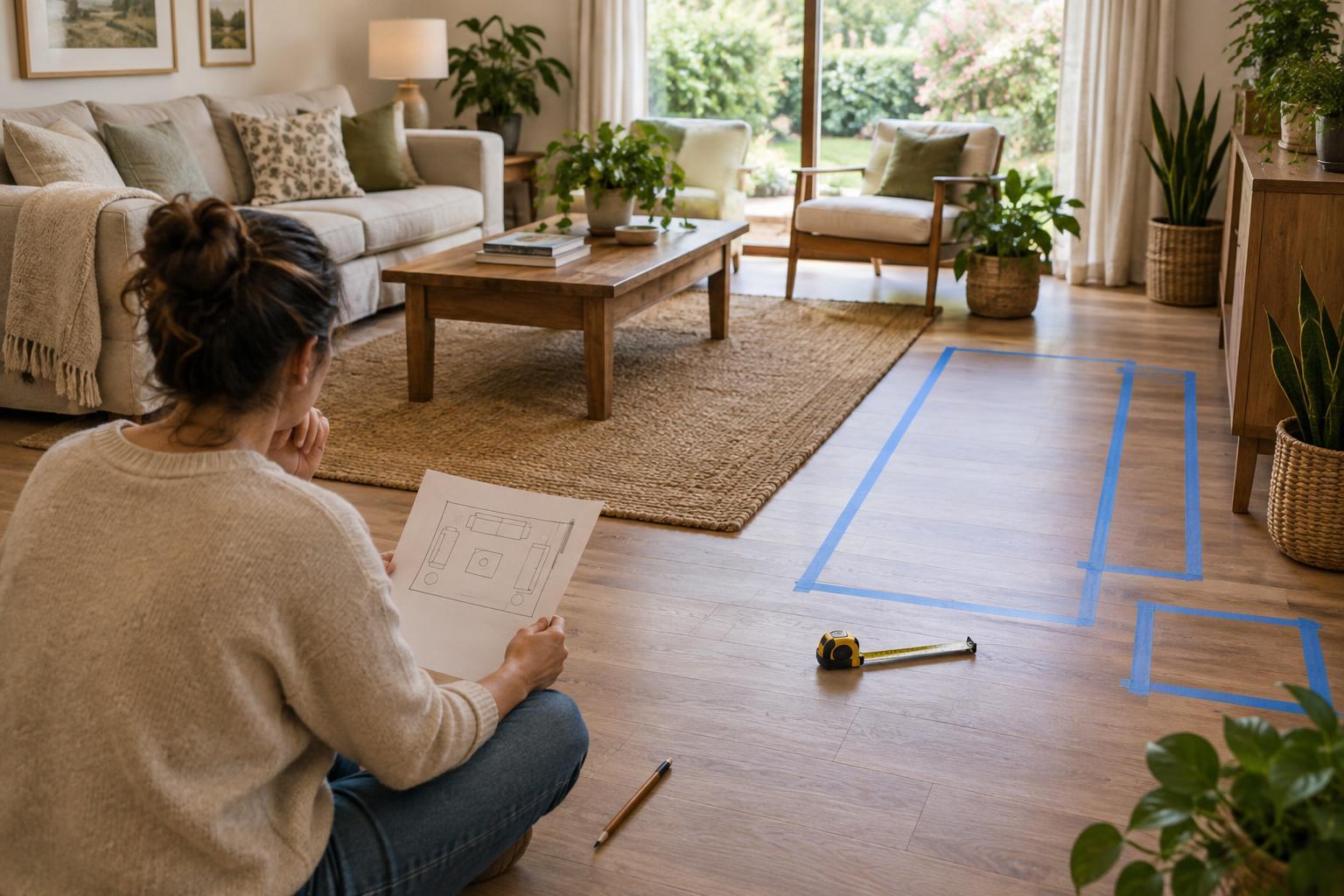
Try clearing the floor on paper first. Sketch the room, mark doors and windows, then draw the main walking routes before adding furniture. In the room itself, you can use painter’s tape or movable objects to test a footprint. Leave enough space for doors and drawers to open and for someone to pass without shifting a chair. A clear route is often more valuable than one extra piece of furniture.
Using too many pieces at the same scale
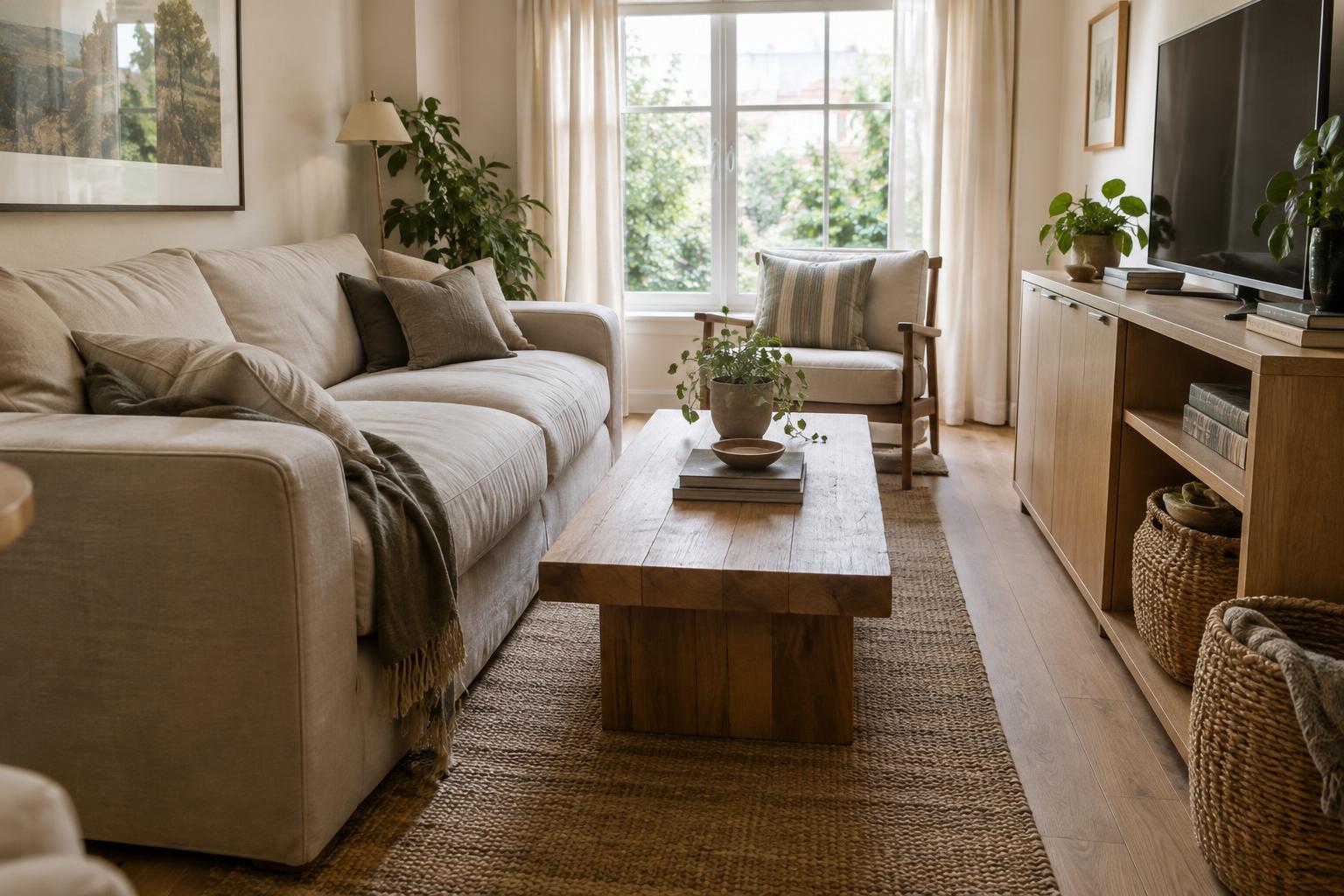
A room filled with similarly bulky furniture can look crowded because every piece competes for attention and floor space. A deep sofa, wide armchair, large coffee table and solid side tables may each be useful, but together they can overwhelm a modest living area. Conversely, adding several tiny pieces to replace one useful piece can create visual clutter and more corners to navigate.
Choose the most important item first, then give the supporting pieces distinct jobs. A compact side table might replace an oversized coffee table if people mainly need somewhere to set a drink. An open-legged chair can provide seating without looking as heavy as a fully upholstered one. Check the furniture’s usable size, not just its appearance: a table should be close enough to reach, and a seat should suit the people who use it.
Pushing everything against the walls
Moving every item to the perimeter seems like an obvious way to create space. Sometimes it works, especially where the center of the room is an important route. But it can also leave an empty middle and make seats too far apart for comfortable conversation. The result is a room that feels disconnected rather than open.
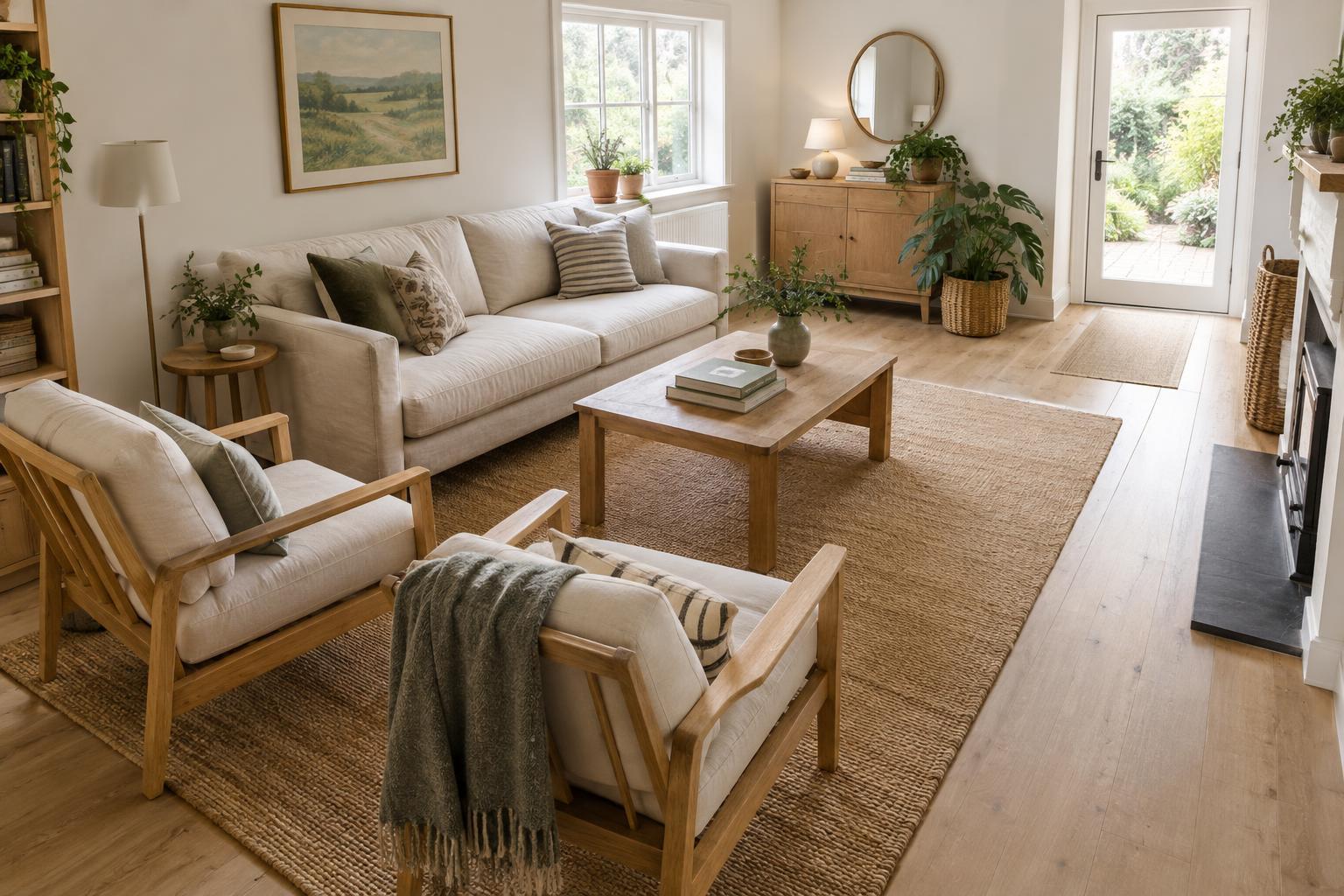
Consider a small seating group instead of treating each wall separately. Pulling a sofa or chair slightly inward can make the arrangement feel intentional, provided the walkways remain clear. An area rug can help define the group without adding another obstacle; aim for a size that connects the main seats rather than one that looks stranded between them. If the room has a view or a favorite plant by the window, angle a seat toward it while keeping access to the window easy.
Blocking light and sightlines
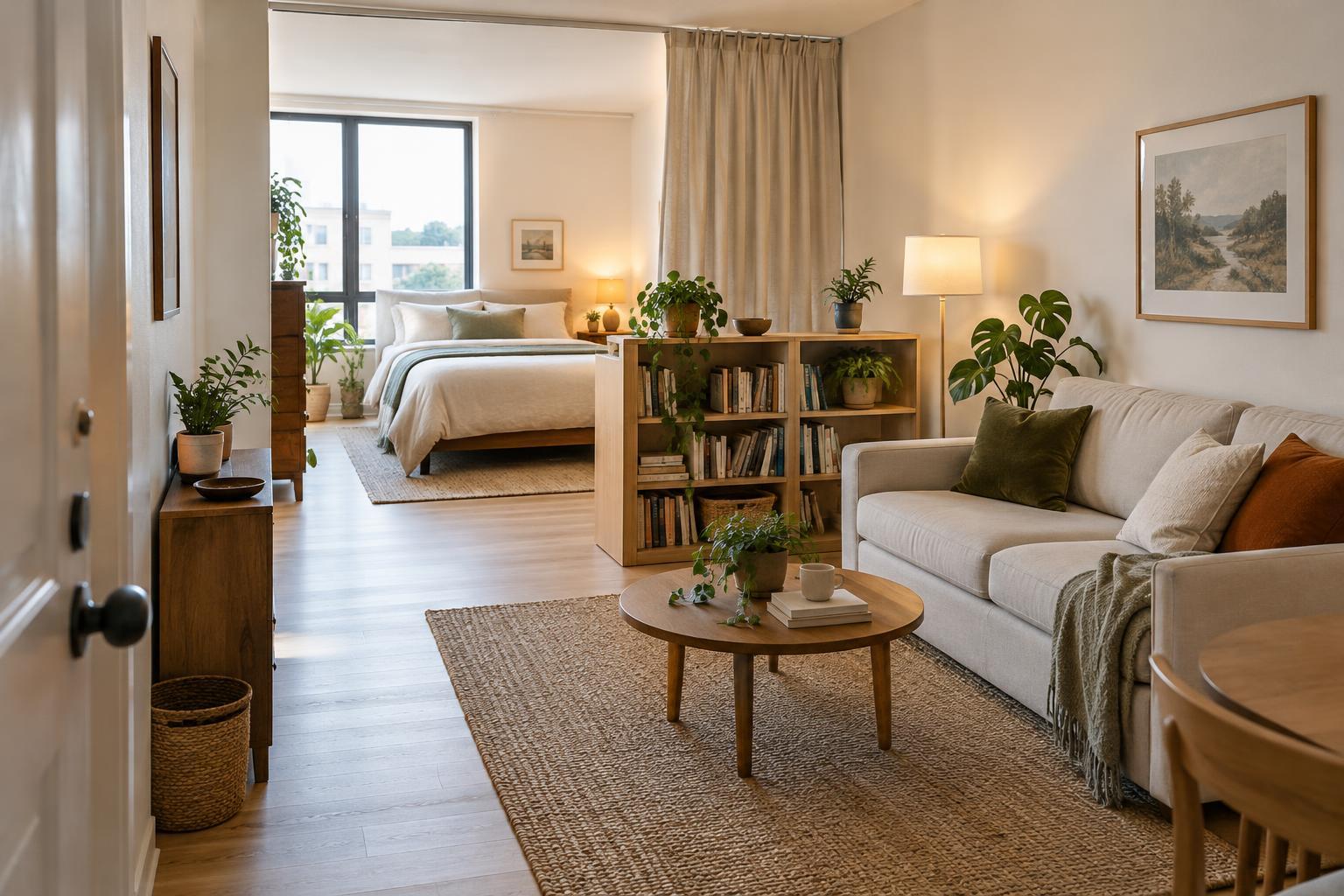
Tall or solid furniture placed near a window, doorway or the entrance to a room can make the space feel closed off. Even when there is enough physical room to walk, a blocked view makes it harder to take in the whole space at a glance. A large shelving unit beside a narrow doorway, for example, may feel more imposing there than it would against a less prominent wall.
Stand at the room’s entrance and notice what you see first. If a high-backed chair or storage piece dominates that view, try a lower item in its place or move the taller piece farther into the room. Keep plants where they can enjoy suitable light without crowding the window or the route to it. A plant on a slim stand can add greenery while taking up less visual space than a broad cabinet topped with several pots.
Forgetting the space needed to use and store things
A layout is not finished when every item fits. You also need room to pull out dining chairs, open cabinets, care for plants and put everyday belongings away. Furniture that blocks those actions can lead to bags on chairs and small items gathering on every available surface. That clutter may seem like a storage problem, but the layout can be part of the cause.
Walk through a typical day as a final test. Sit in each seat, open each drawer and carry something through the main route. Move a piece if using it requires repeated shuffling. Keep frequently used storage easy to reach, and give items such as watering cans or throws a convenient home. The goal is not a room with as little furniture as possible; it is a room where each piece earns its space and daily routines can happen comfortably.