Start with the room, not a rule
Placing every piece of furniture against a wall can make a room feel open at first glance. Pulling a sofa or chair inward, often called floating furniture, can make the same room feel more inviting. Neither approach is automatically better. The useful question is what the floor space needs to do: provide a clear route through the room, support conversation, leave room for another activity, or simply offer a place to stretch out.
Before moving anything, identify the doors and the paths people use most often. Notice where daylight enters and whether a window, fireplace, bookcase or garden view deserves attention. Then choose a main activity for the room. A space used primarily for watching television may need a different arrangement from one used for reading and conversation. If the room serves several purposes, furniture placement can help give each one a distinct area.
When floating furniture works well
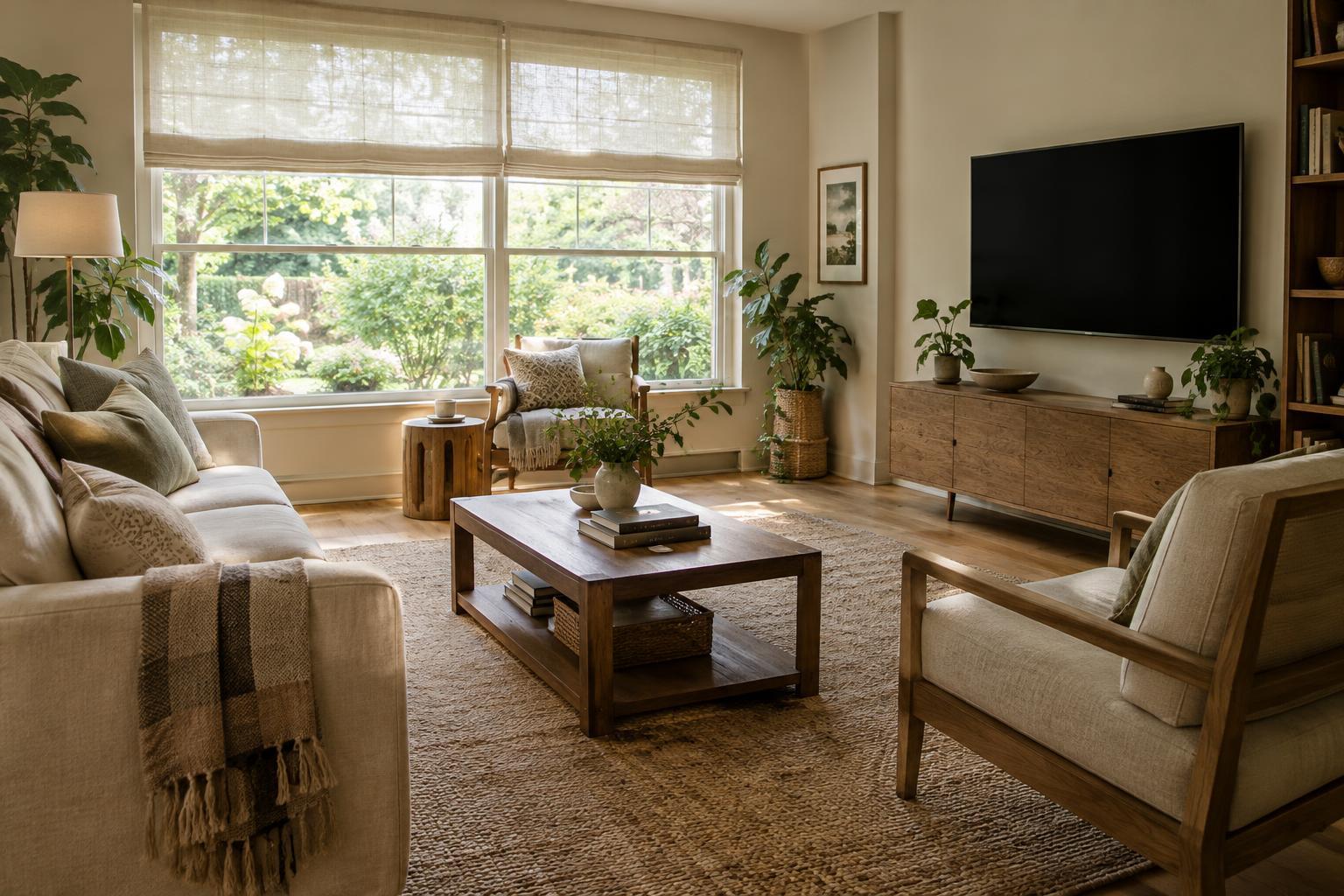
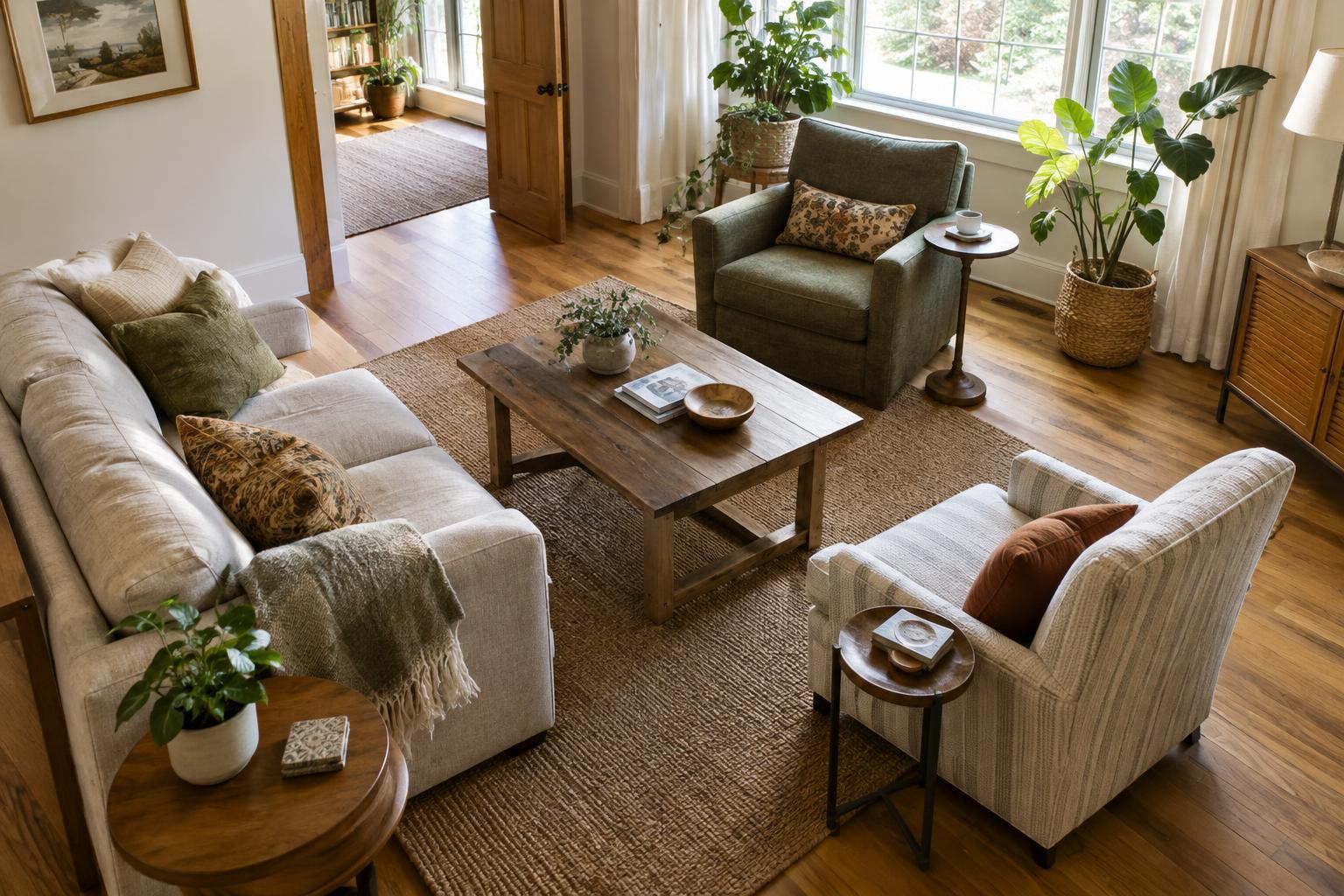
Floating a sofa or a pair of chairs can create a defined seating area without adding walls. In a large room, this helps prevent people from sitting so far apart that conversation feels awkward. In an open-plan space, the back of a sofa can mark the edge of a living area while leaving the kitchen or dining area visually connected. A rug can reinforce that boundary, especially when at least the front legs of the main seating pieces rest on it.
This approach also lets furniture face what matters most. Chairs can turn toward a window and each other rather than lining the perimeter. A low table behind a sofa may provide a spot for a lamp or a few plants, provided it does not narrow a walkway or block access to a door. When furniture is away from a wall, its back becomes part of the view, so choose pieces that look tidy from more than one side and keep cords out of walking paths.
When the walls do more useful work
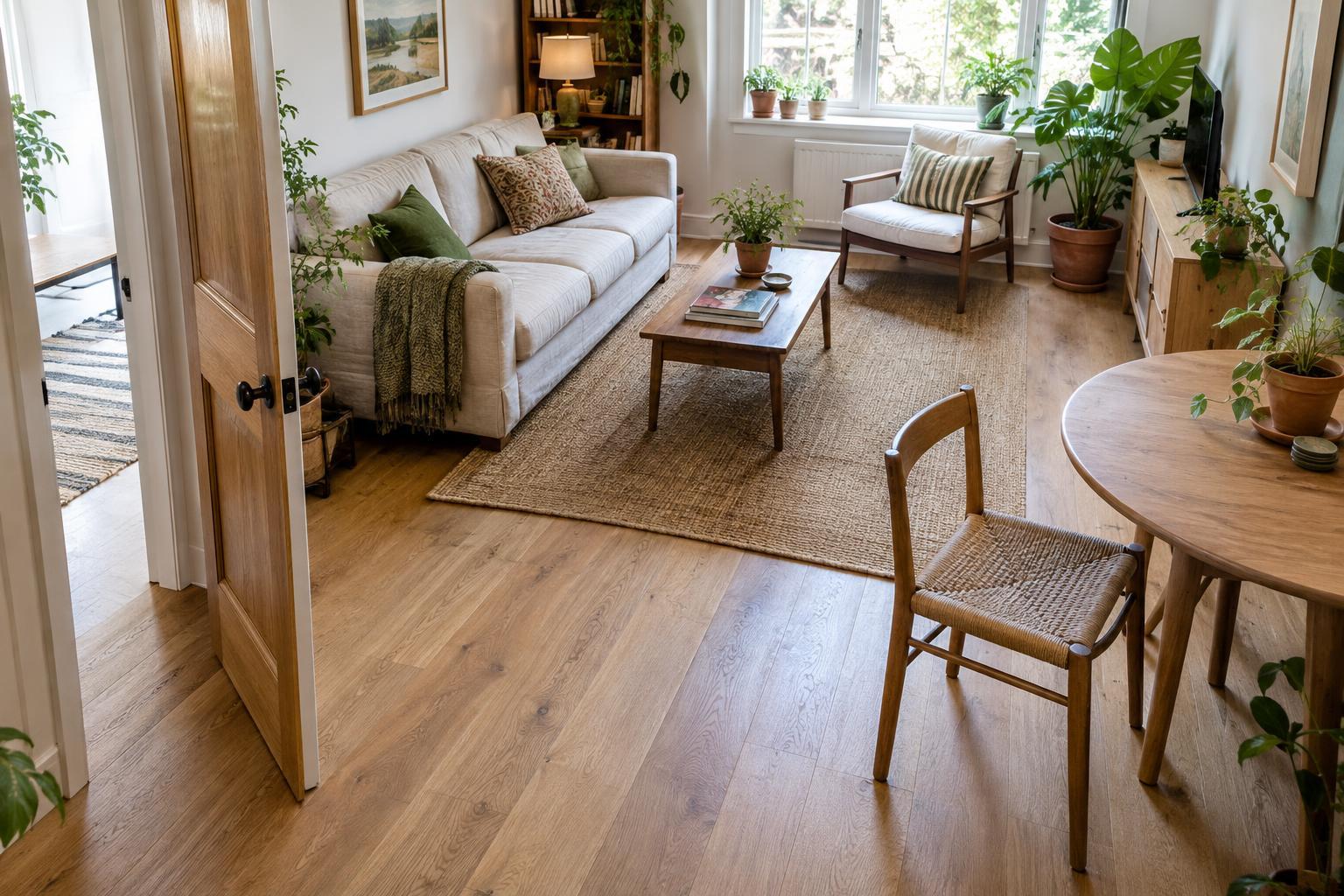
Wall placement is often the simpler choice in a narrow room or one with several doorways. A sofa along a long wall can protect the central route, while shallow storage against another wall keeps everyday items close without scattering obstacles across the floor. It can also make space for activities that need open floor, such as playing with children or rolling out a project.
Pushing furniture outward does not mean every piece must hug the edges. A chair angled slightly into the room or a small table within reach can keep the arrangement from feeling like a waiting area. Be careful with the common idea that wall placement always makes a small room feel bigger: if seating ends up too far apart or every corner is filled, the result may feel disconnected and crowded. Keep only the pieces the room genuinely uses.
Try a hybrid layout in a smaller space
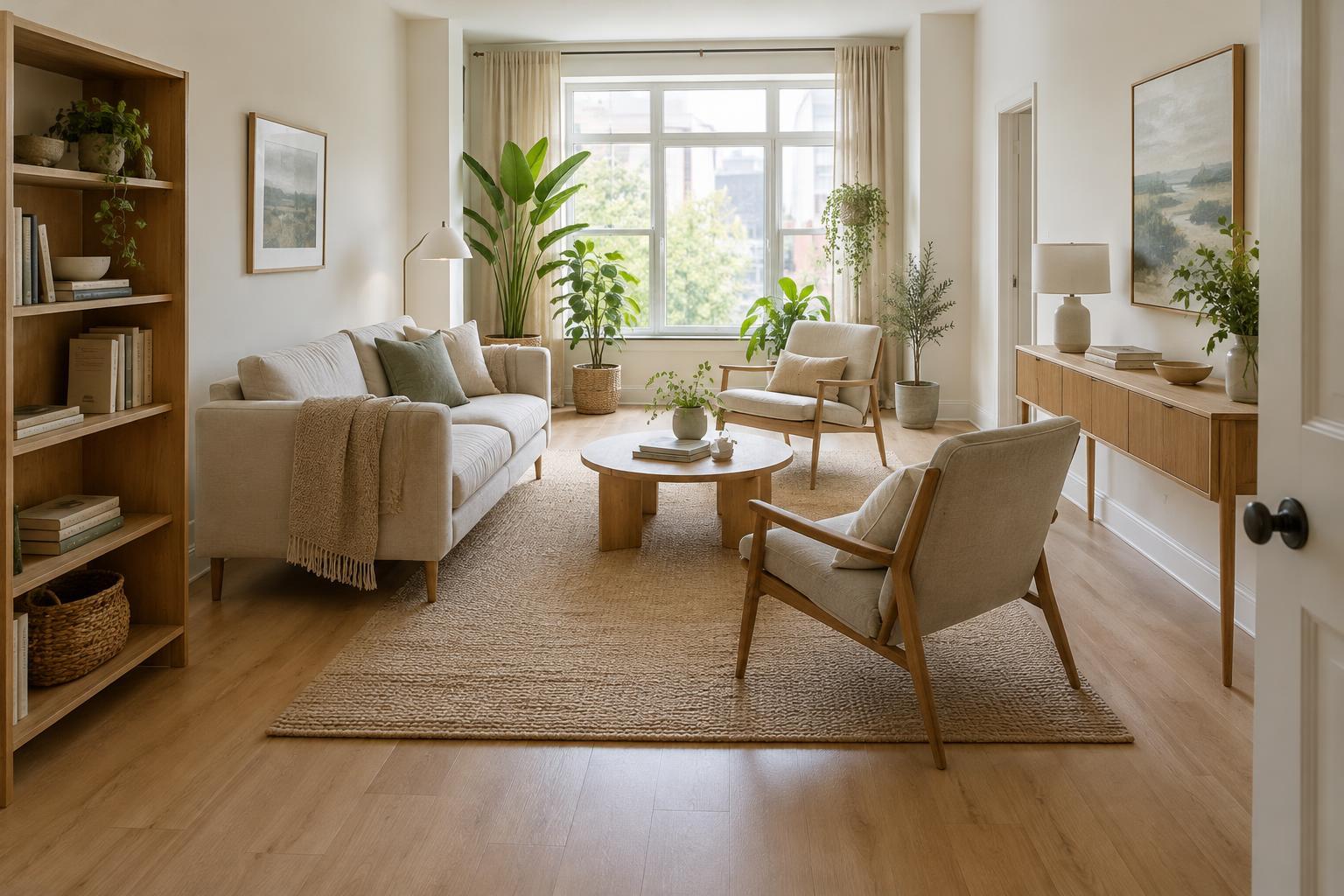
Many rooms work best with one substantial piece against a wall and one or two lighter pieces floating. For example, place the sofa along the wall, then bring an armchair closer to form a conversation area. A movable side table can serve the chair without committing floor space to a large coffee table. In a studio, the sofa might float just far enough from a desk or dining area to suggest a boundary, while its ends remain clear for circulation.
Test the layout with what you already own before buying anything. Move one piece at a time, then walk the usual routes while carrying something, such as a laundry basket. Check that chairs can be pulled out comfortably, drawers can open, and people can pass without turning sideways. If you have to squeeze through a gap every day, the arrangement is asking too much of the room, however good it looks from one angle.
Leave room for light and living things
A layout that makes space for plants should also let you reach them for watering and cleaning. Avoid trapping pots behind a sofa or arranging leaves where they will be brushed each time someone passes. Grouping a few plants near suitable light can create a gentle focal point, but their individual light needs still matter. If a large plant stands beside a floating chair, leave enough space for both the chair and the plant to grow or move without crowding the walkway.
Make the final decision by living with the arrangement for a few days. Notice where people naturally sit, where belongings accumulate and which routes feel effortless. Float furniture when it improves connection or defines a useful zone; use the walls when they free up space you will actually use. The strongest layout is not the one that follows a design rule most closely. It is the one that makes the room comfortable to move through and pleasant to spend time in.