Start with a way for excess water to leave
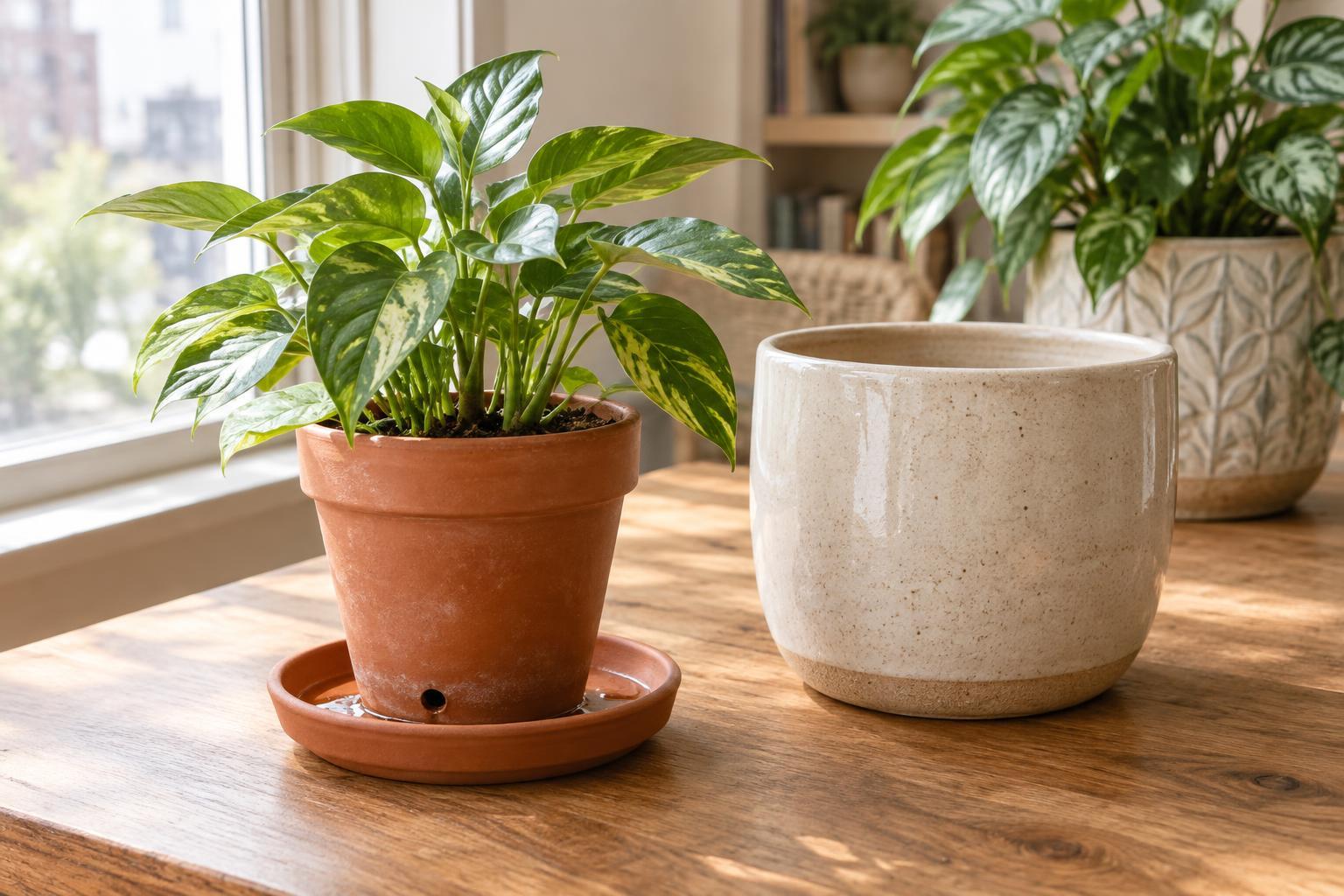
For most indoor plants, a pot with a drainage hole is the easiest choice. After watering, excess water can leave the pot rather than collecting around the roots. A hole does not prevent overwatering on its own, but it makes it easier to water thoroughly and see when the potting mix has had enough. The plant still needs a suitable potting mix and time to dry to a level that suits its needs.
If a decorative container has no hole, consider using it as an outer cover instead of planting directly into it. A layer of pebbles at the bottom of a holeless pot is not a substitute for drainage: water can still sit beneath the planting mix. If you do plant directly into a container without an outlet, you will need to measure watering more carefully and have no simple way to flush out excess water.
Use a saucer to protect the surface below
A saucer sits under a pot with drainage holes and catches runoff before it reaches a shelf, table or floor. Choose one that extends beyond the pot’s base so small spills are less likely to escape. On surfaces that are easily marked by moisture, a waterproof tray or mat beneath the saucer adds protection. Check the underside occasionally; a saucer can be dry inside while condensation or a spill has dampened the furniture below.
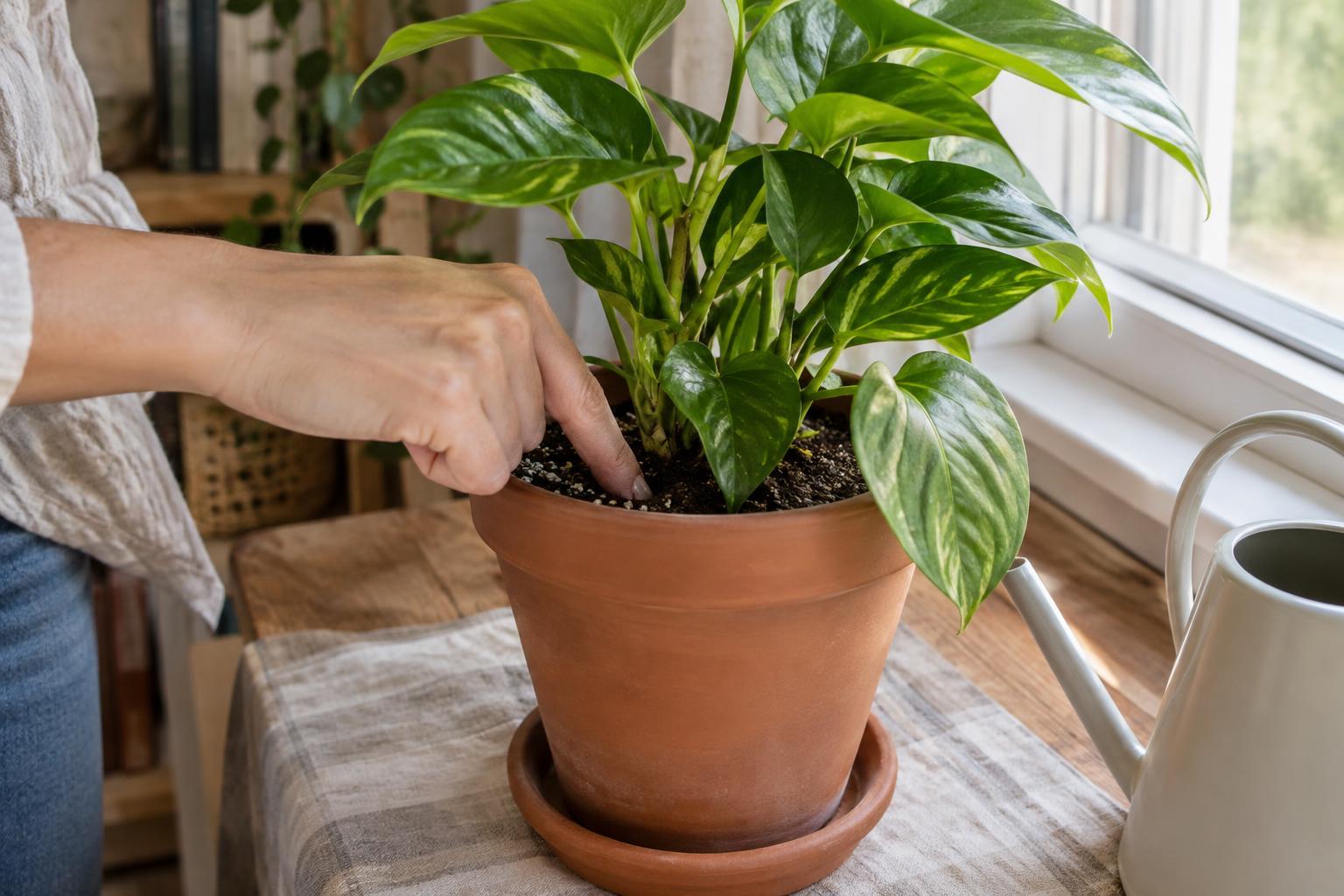
After watering, let the pot drain, then empty water left in the saucer. This keeps the pot from standing in runoff for long periods. If lifting a large plant is awkward, a small removable tray or an absorbent cloth can make cleanup easier. The aim is a setup you can manage every time you water, not just one that looks tidy on planting day.
Let a cachepot do the decorative work
A cachepot is an outer container that hides a smaller growing pot. It lets you keep a plant in a nursery pot with drainage while choosing a look that suits the room. To use one, check that the inner pot fits without being wedged tight. A little room at the sides makes it easier to lift the plant out and notice water collecting at the bottom.
There are two straightforward watering routines. You can remove the inner pot, water it over a sink, allow it to drain and return it to the cachepot. Or you can water it in place, then check the outer container and pour away any runoff. The first approach is often simpler for small plants; the second may be more practical for large ones. Either way, treat the cachepot as a cover, not a reservoir, unless the plant and container are part of a setup specifically designed for that purpose.
If the inner pot sits flush against a solid base, a stable, waterproof riser can keep it above a little accidental runoff. It does not replace emptying the cachepot, but it may give you a clearer margin while you finish watering other plants.
Choose a size and material you can live with
When a plant needs repotting, choose a new growing pot only modestly wider than the root ball. A much larger pot holds more mix that roots have not yet occupied, which can make it harder to judge when to water again. If the current pot still gives the roots room and the mix is in good condition, a new cachepot may refresh the look without changing the growing pot at all.
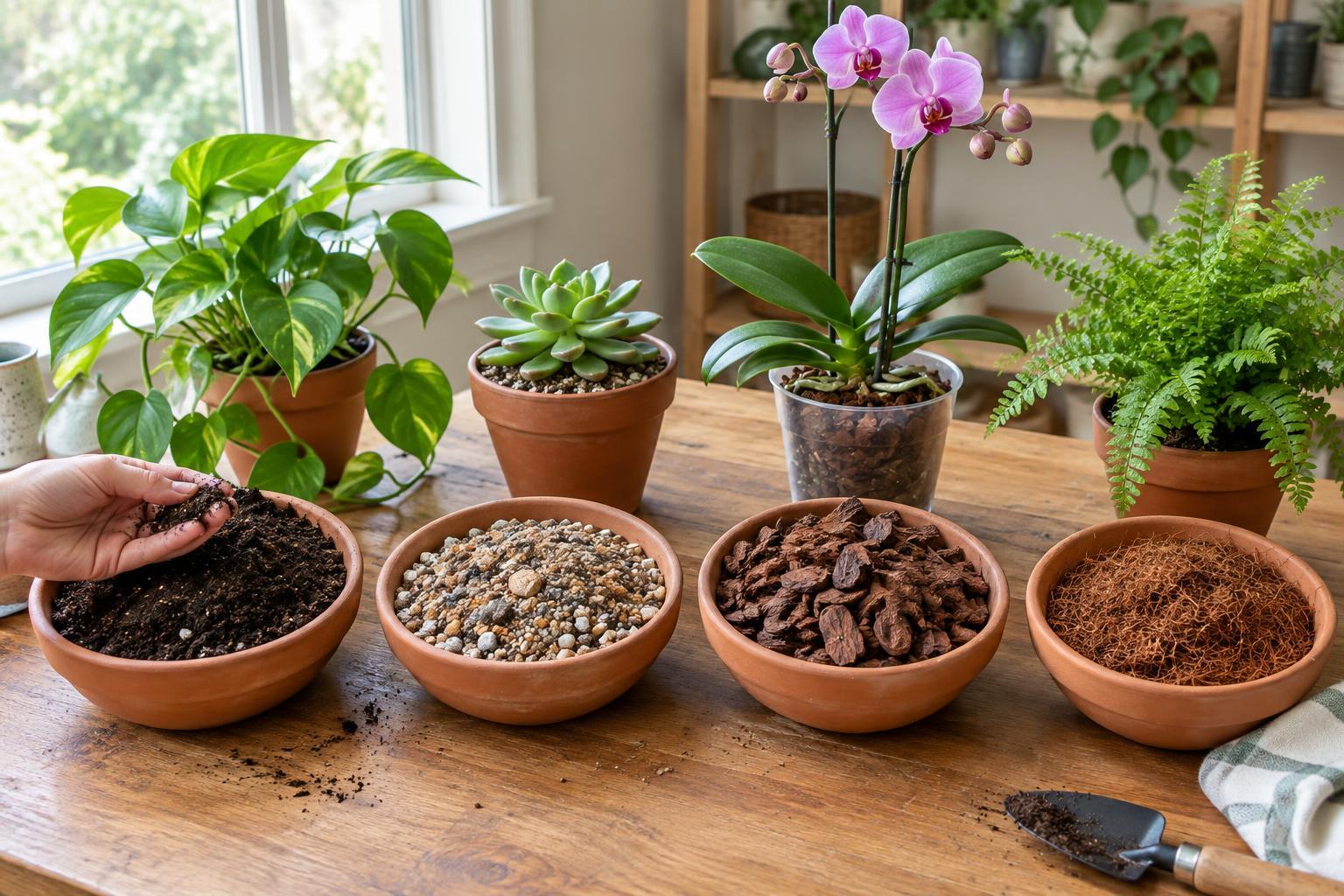
Container material affects both handling and watering. Porous terracotta can allow moisture to leave through its walls, so its mix may dry faster than mix in a glazed or plastic pot. Plastic is light and easy to move; ceramic can add weight and stability but may be harder to lift for draining. These are tendencies, not watering schedules. Check the mix rather than assuming two plants in similar-looking pots will dry at the same rate.
Build a container setup around your routine
Before buying a pot, picture its place in the room and its next watering. Can you reach it comfortably? Is there space to remove an inner pot, or would a saucer be easier? Will you be able to see and empty collected water? A plant on a narrow bookcase may need a different arrangement from one on a tiled floor, even if both plants have similar needs.
A reliable starting setup is a growing pot with holes, a well-fitting saucer or removable cachepot, and a surface protected from spills. Water according to the plant and the condition of its mix, let excess water drain, and clear what collects below. That small routine gives you freedom to choose containers for their shape and texture without asking them to solve every watering problem.