What cork flooring feels like
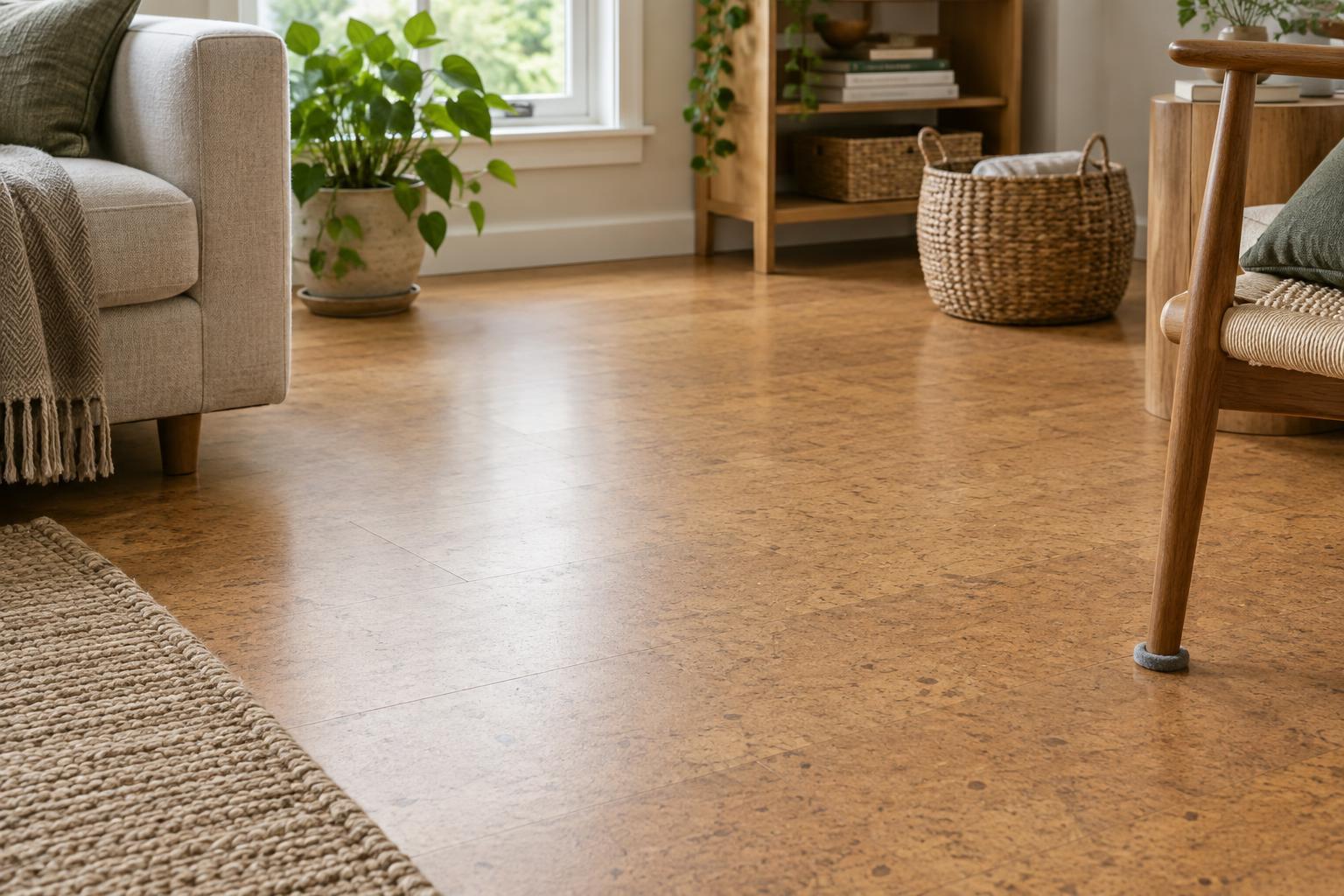
Cork flooring is made from cork bark and sold in several forms, including tiles and layered planks. Its surface has a gentle give that can feel more forgiving underfoot than a hard tile floor. Its varied grain and warm color also make it an easy companion for wood furniture, woven rugs and other natural materials. Some products look distinctly like cork, while others use printed or stained finishes for a more uniform appearance.
Before choosing a style, look beyond the color sample. Products differ in thickness, construction, surface finish and installation method. Some are glued down; others click together as a floating floor. These differences affect how the floor should be installed, cleaned and repaired. Ask for the care instructions for the exact product you are considering, rather than assuming all cork floors behave alike.
Choose rooms with moisture in mind
Cork can be a comfortable choice for living rooms, bedrooms, home offices and other spaces where spills are occasional and can be wiped up promptly. It may also appeal in a kitchen if you want a softer surface where people often stand. In that setting, pay particular attention to the product’s moisture guidance, the finish and the seams. A tipped glass is manageable; water left along an edge or under a mat is a different concern.
Bathrooms, laundry areas and damp entryways call for more caution. Cork itself can resist some moisture, but water may reach seams, edges or the material beneath the finish. Repeated wet shoes, leaks or standing water can cause damage, depending on the flooring and its installation. If a room regularly gets wet, check whether the manufacturer recommends that specific product for it. Do not treat a protective finish as a substitute for keeping the floor dry.
Plan the installation before you buy
A cork floor needs a suitable base. Uneven areas can show through or interfere with the fit of planks, while moisture in a subfloor can create problems that cleaning from above will not solve. Follow the flooring maker’s requirements for subfloor preparation, moisture checks, underlayment and expansion space. If the project involves a concrete floor or a room with a history of dampness, settle those questions before ordering materials.
Think about daily traffic as well as the room’s dimensions. Note where chairs roll, pets turn corners and people come in from outdoors. A sample viewed upright in a store may look different laid across a room in natural light, so bring samples home and check them at different times of day. Ask whether the chosen floor can be refinished or whether a worn section would need replacing; the answer varies by product.
Build a simple cleaning routine
Grit is one of the easiest problems to prevent. Sweep or vacuum with a floor-appropriate setting to lift dust and small particles before they are dragged across the finish. Use a mat at an exterior door, but choose one that will not trap moisture against the cork or discolor its surface. Shake out mats and check beneath them regularly, especially during wet weather.
For routine washing, use a lightly damp mop and a cleaner approved for your floor’s finish. Avoid soaking the surface, letting puddles sit, or using abrasive tools that could dull the coating. Wipe spills promptly, then dry the area. Strong cleaning products and steam mops may harm some finishes, so follow the product’s instructions rather than relying on a general floor-cleaning recipe.
Protect the finish in everyday use
Cork has some resilience, but heavy furniture, sharp grit and repeated friction can still leave marks. Put protective pads under furniture legs and replace them when they collect dirt or wear thin. Lift furniture rather than dragging it, and use a floor protector suited to the product beneath a rolling desk chair. Rearranging a room occasionally can also keep the same patch of floor from taking every step and chair movement.
Daylight can change the appearance of many flooring materials over time, cork included. Rugs and large furniture may leave covered areas looking different from exposed ones, so consider moving them now and then. If the finish begins to look worn, consult the maker’s guidance before applying a new coating: a treatment that suits one cork floor may not suit another. With the right placement and modest upkeep, cork can be a welcoming part of a room rather than a surface you have to worry about constantly.