Start with the job the furniture will do
A dining table, a bedside shelf and a hallway bench meet very different kinds of wear. Before choosing a wood species, picture where the piece will stand and what will touch it each day. Will plates be slid across it? Will bags land on it? Is it near a bright window or a damp doorway? These questions are more useful than looking for a single “best” wood.
For a surface that takes frequent knocks, a harder wood may make dents less likely. For a lightly used shelf, a softer wood can be a sensible choice, especially if you like its appearance or plan to paint it. No species is immune to scratches, stains or changes in appearance. Construction, finish and everyday care matter alongside the wood itself.
Read the grain, not just the color
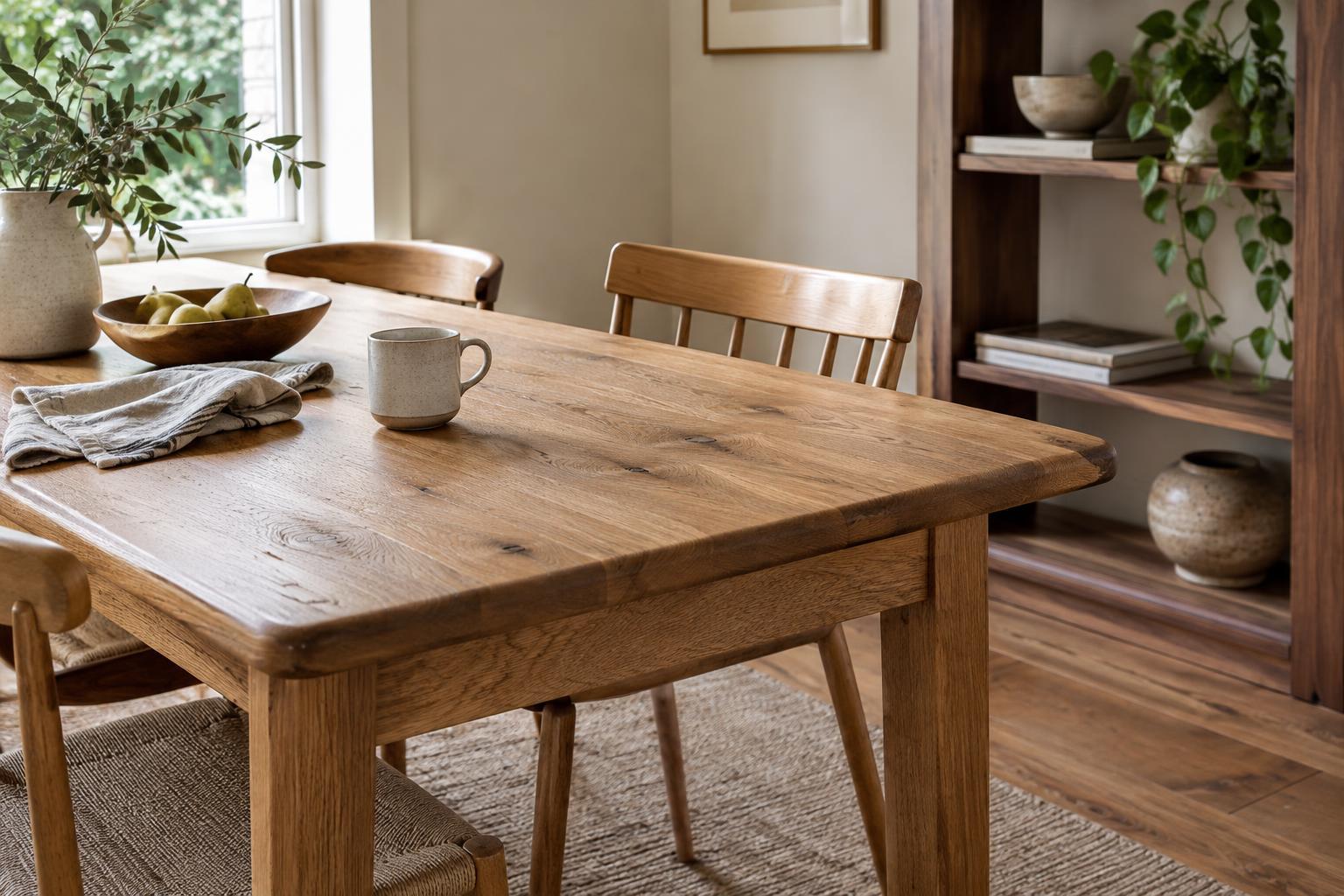
Grain is the visible pattern formed by the wood’s growth. Oak often has a prominent, open-looking grain that gives a large tabletop plenty of texture. Ash can show a similarly lively pattern, often with a lighter overall look. Maple tends to appear smoother and quieter, which can suit simple shapes and rooms where other natural textures take the lead. Walnut commonly brings darker tones and flowing figure, while cherry can offer a warmer, subtler pattern.
There is variation within every species. Two boards from the same tree may look quite different, and the way a board is cut changes the lines you see. A photo of one finished table is therefore only a starting point. If a consistent appearance matters, look at the actual boards or at several samples together. If you enjoy variation, knots, shifts in tone and irregular grain can become part of the furniture’s character.
Color can also change with light and time, though the degree varies by wood and finish. Choose a species for a range of tones you can live with, rather than for one exact shade in a sample. A finish sample viewed in the room, at different times of day, is more helpful than judging wood under showroom lighting alone.
Understand what hardness can—and cannot—tell you
Wood hardness describes resistance to indentation. Dense hardwoods such as maple and oak are often chosen for furniture that sees regular use. Softer woods such as pine can dent more readily, but that does not make them poor furniture woods. Pine may be a good fit for a painted cabinet or for a piece whose small marks will feel at home in a relaxed room.
Hardness is not the same as scratch resistance or stain resistance. Grit dragged across a hard tabletop may still leave a mark, while a spilled drink can affect wood if the finish offers little protection. Dark, even surfaces may show pale scratches clearly; a more varied grain can make minor wear less noticeable. If a flawless-looking surface is important to you, think about how visible wear will be as well as how easily it occurs.
Also consider the whole piece, not only its top. Strong joints, stable panels and a design that suits the wood are important to how furniture holds up. A thin, unsupported shelf can sag regardless of how attractive its grain looks. Ask how a piece is built and where it needs support, particularly for long shelves and frequently moved furniture.
Match the finish to your tolerance for upkeep
Finish changes how wood feels and behaves in daily use. An oil or wax finish may leave the grain feeling close to natural wood, but it can need periodic attention and prompt cleanup of spills. A film-forming finish creates more of a barrier between daily life and the wood. Its performance depends on the particular product and application, and damage may be more noticeable or less straightforward to touch up.
Ask for care instructions before buying, especially for a dining or coffee table. Use coasters or mats where heat, water and repeated rubbing are likely, and wipe spills rather than leaving them to sit. These habits help with any species. If you are making furniture yourself, test your chosen finish on an offcut: it may deepen the color or bring out grain more strongly than you expect.
Make a choice you will enjoy living with
For a busy family table, you might favor oak or maple with a finish you are comfortable maintaining. For a statement cabinet, walnut’s darker figure may matter more than maximum dent resistance. For an informal bench or painted storage piece, pine may offer exactly the character you want. These are starting points, not rules: the best choice is the one that balances appearance, use, upkeep and budget for your home.
Solid wood is not the only option. A well-made veneered panel can provide an appealing wood surface over a stable core, particularly for broad, flat areas. If considering reclaimed wood, look closely at its condition and how it has been prepared; old marks may be attractive, but a furniture piece still needs sound construction. Whatever you choose, spend time with a real sample, imagine its likely wear, and allow room for the material to look lived-in.