Start with the balcony’s permitted use
A balcony can look like an empty space waiting for pots, but its appearance does not tell you how much weight it can safely support. Before buying planters or bags of soil, check your lease, building handbook, owners’ association rules or other documents that apply to your home. Look for restrictions on planting, stored items, hanging baskets and anything attached to the railing. If a weight limit is listed, confirm what it covers rather than assuming it is a separate allowance for plants.
If the information is missing or unclear, ask the building owner, manager or another responsible contact for guidance specific to your balcony. Balconies vary in construction and condition, so a limit quoted for another home is not a reliable substitute. If you are considering heavy containers, a raised bed or a substantial planting scheme, get appropriate professional guidance before proceeding. A visual check or an online calculator cannot establish a balcony’s safe capacity.
Count everything that shares the space
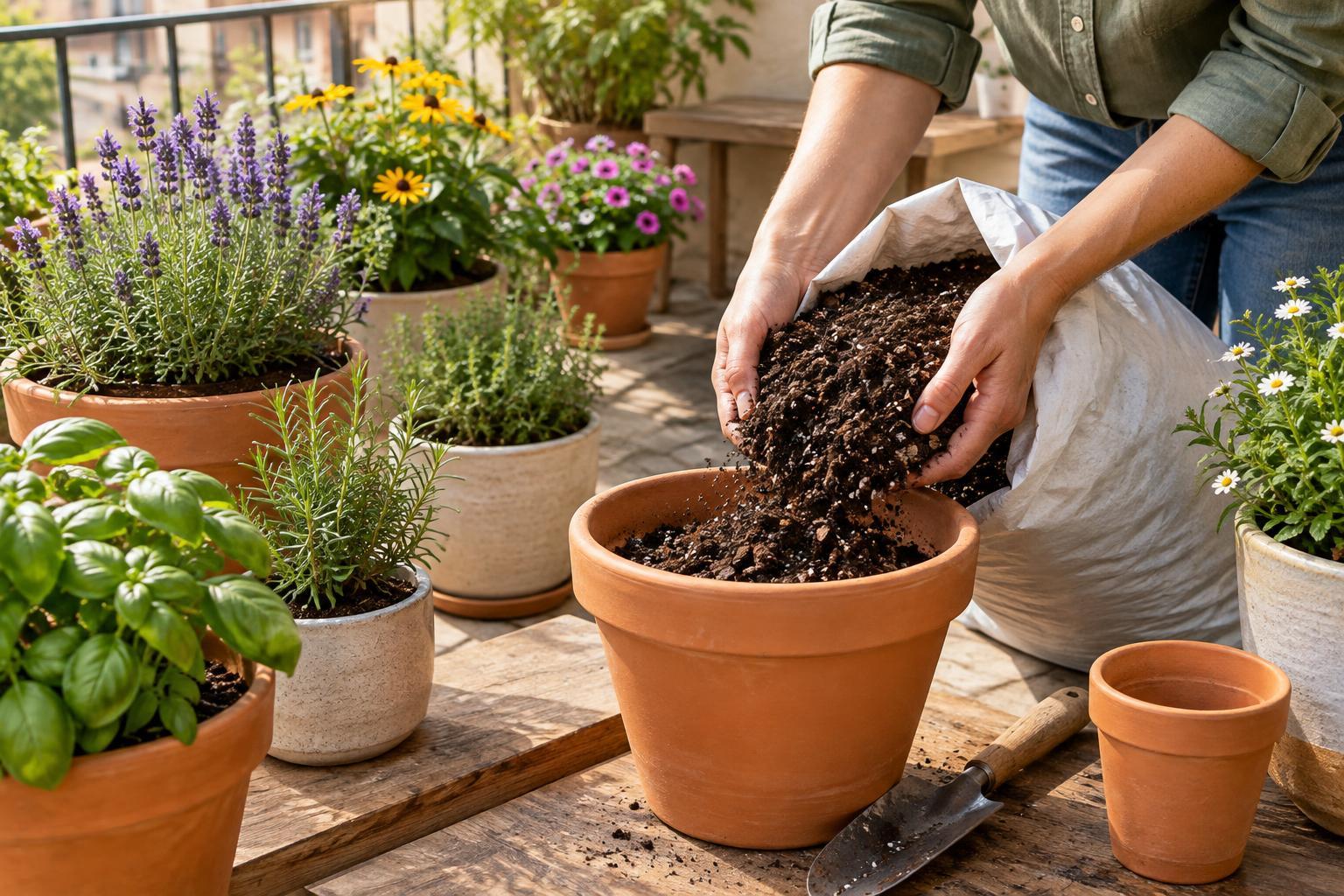
Planters are only part of a balcony’s load. People, chairs, tables, storage boxes, watering cans and other items all occupy the same space. For each proposed pot, consider the container, growing mix, plant and any stones or decorative top dressing. Water adds weight too: soil may be much heavier after thorough watering or rain than it feels when a bag is dry.
It helps to make a simple inventory before you shop. Note what is already on the balcony, what you want to add and whether several people might use the space at once. Product weights and bag labels can help you compare options, but they do not replace a verified limit or a professional assessment. Where details are uncertain, resist treating an estimate as permission to fill the remaining space.
Watch for concentrated loads
Weight is not just a question of the total number of pots. A row of large containers crowded into one corner may place a concentrated load in a small area. So can a tall planter, a storage bench filled with soil supplies or a raised bed. Do not assume that positioning everything against the building wall makes it safe; the right placement depends on the balcony’s design.
Railings need separate attention. They may be designed as barriers without being suitable supports for heavy hanging planters. Avoid attaching pots or shelves unless the building rules and the railing’s specifications permit it. Wind can move loose objects or strain attachments, so secure any allowed containers as directed and keep them from projecting over people below.
Build a lighter garden
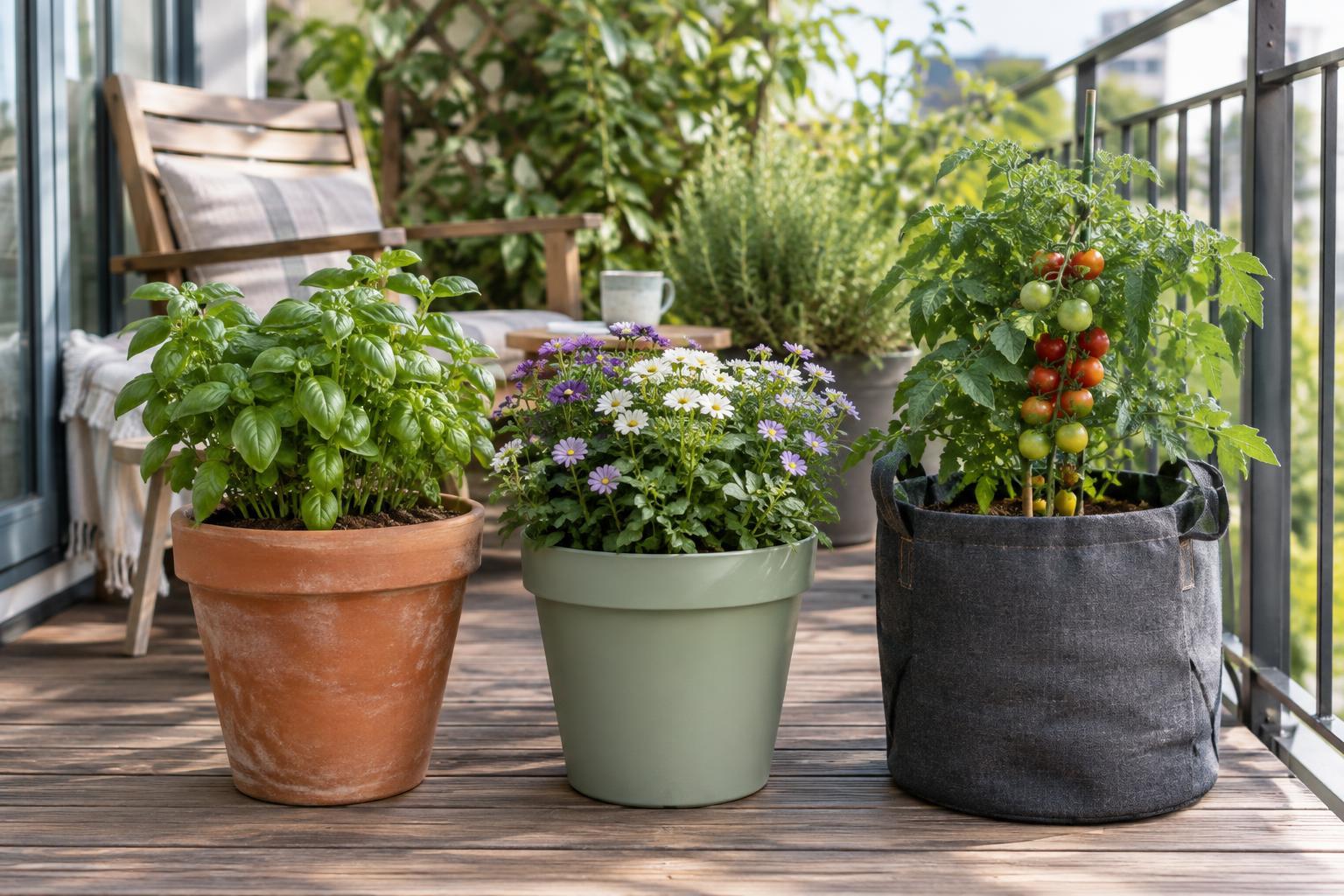
Once you know what is permitted, begin with a modest arrangement rather than covering the floor at once. Choose a few containers you can move and maintain, leaving clear space for walking and for normal use of the balcony. Lightweight containers can reduce the weight of the pots themselves, though the growing mix, plants and water still count. Select container sizes that suit the plants instead of using deep, oversized pots by default.
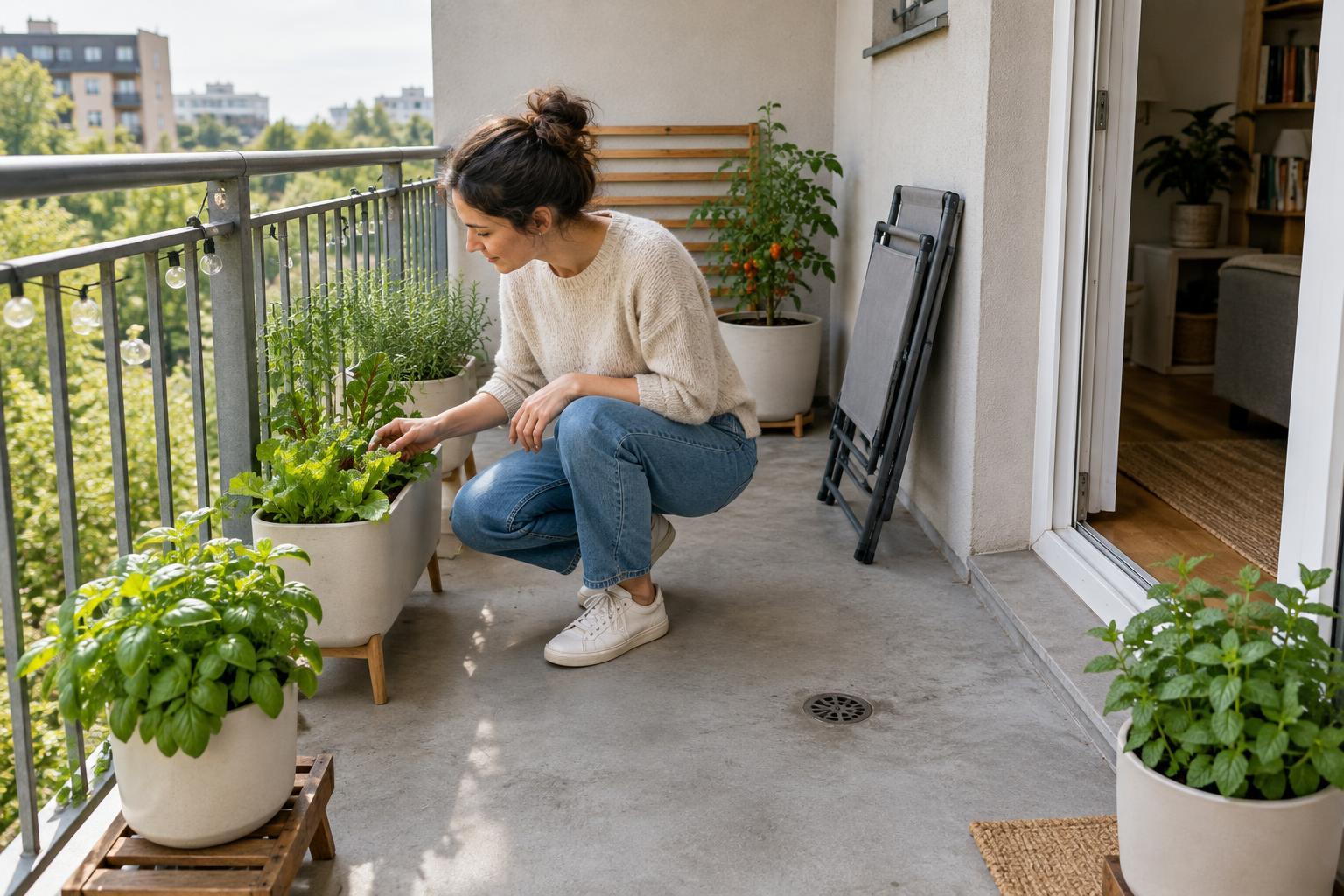
Keep the layout easy to adjust. A small grouping of herbs or compact flowers may give you greenery without a large raised bed. Avoid storing spare bags of mix or heavy decorative materials on the balcony unless they are included in your plan. Add plants gradually, checking that the setup remains within the guidance you received as the garden grows.
Keep water and access under control
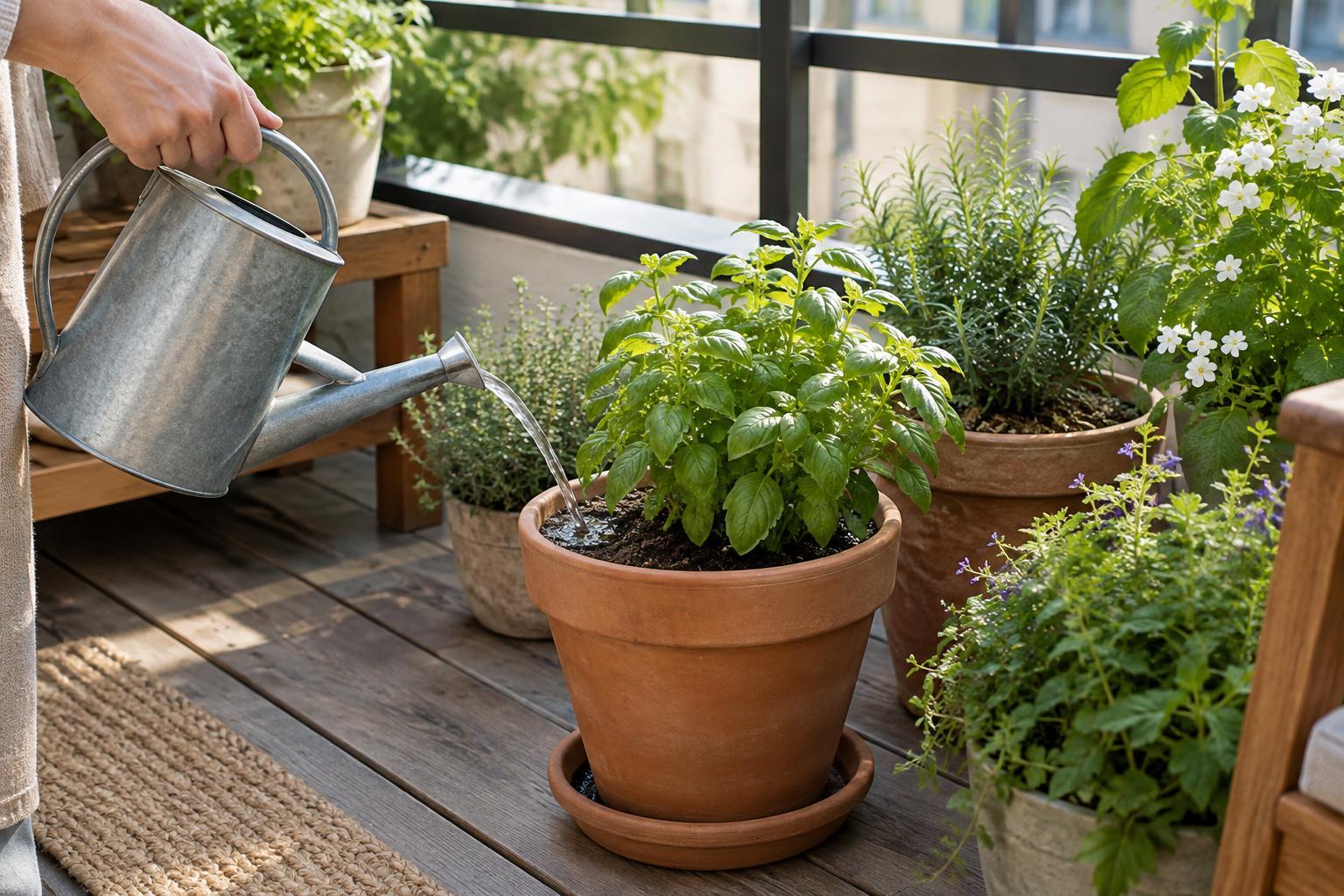
Good drainage matters for both plants and the space around them. Use containers with appropriate drainage, but check where runoff will go before watering. Trays can catch drips when used and emptied regularly; standing water adds weight and may create mess or damage. Keep drains clear, and do not let containers block doors, exits or access needed for maintenance.
Revisit the arrangement when you repot, add furniture or move plants outdoors for the season. If you notice damage, movement or another condition that concerns you, stop adding weight and contact the responsible building representative. The safest balcony garden is one planned around known limits, not one that tests them.