Start with the paths through the room
A bedroom reading chair works best when it feels like part of the layout, not an obstacle added at the end. Before moving furniture, walk the routes you take most often: from the door to the bed, from the bed to the wardrobe, and toward any window you open regularly. Notice where drawers extend and which side of the bed needs space for getting up. Keep those routes comfortable before claiming a corner for reading.
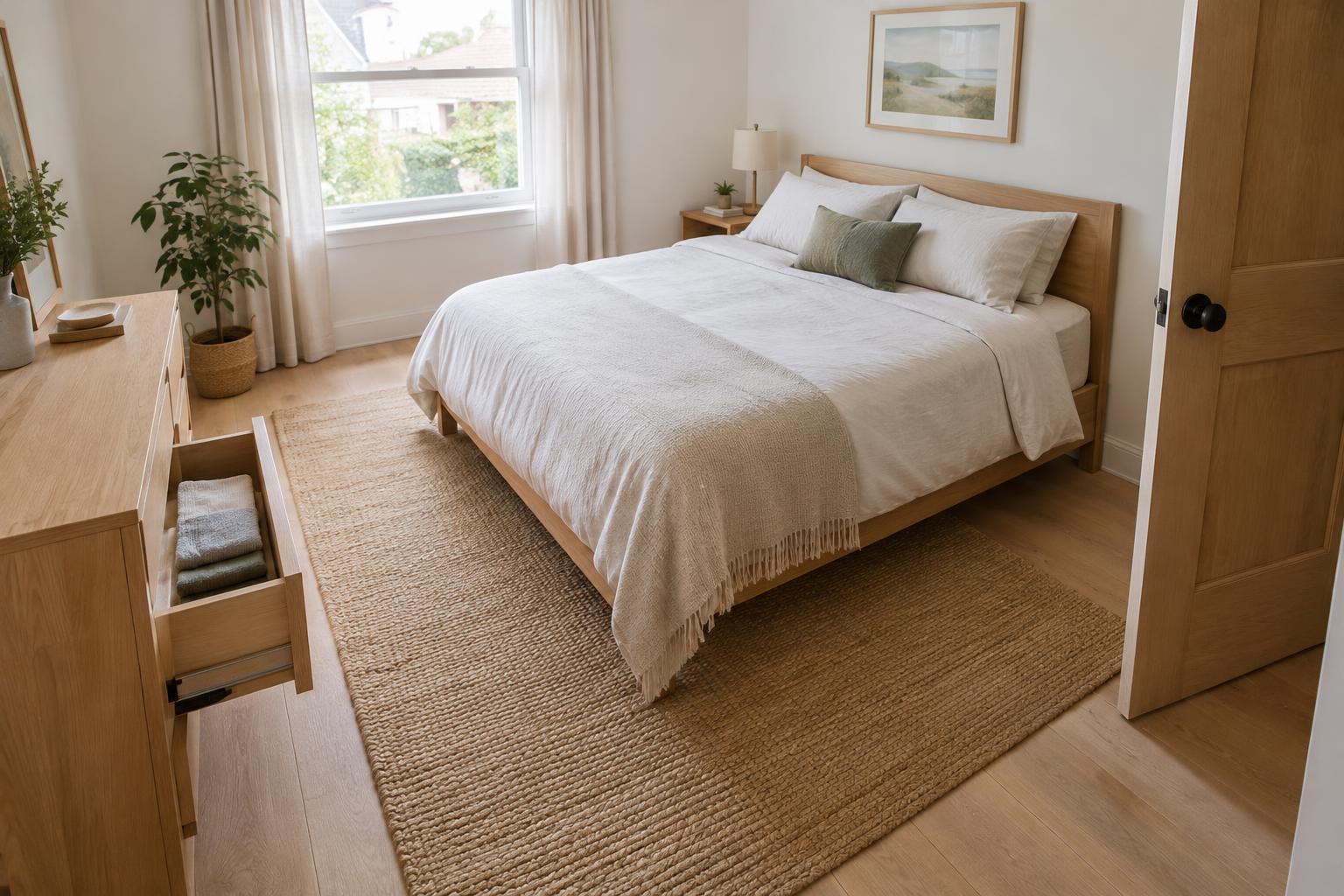
Try marking the chair’s footprint on the floor with removable tape or a folded sheet of paper. Then place a second marker where your feet or a small side table might go. This simple test helps reveal whether the chair fits in use, rather than only when it is empty. If you have to turn sideways to pass it or cannot fully open a drawer, try another position or a smaller chair.
Choose a position that suits the room
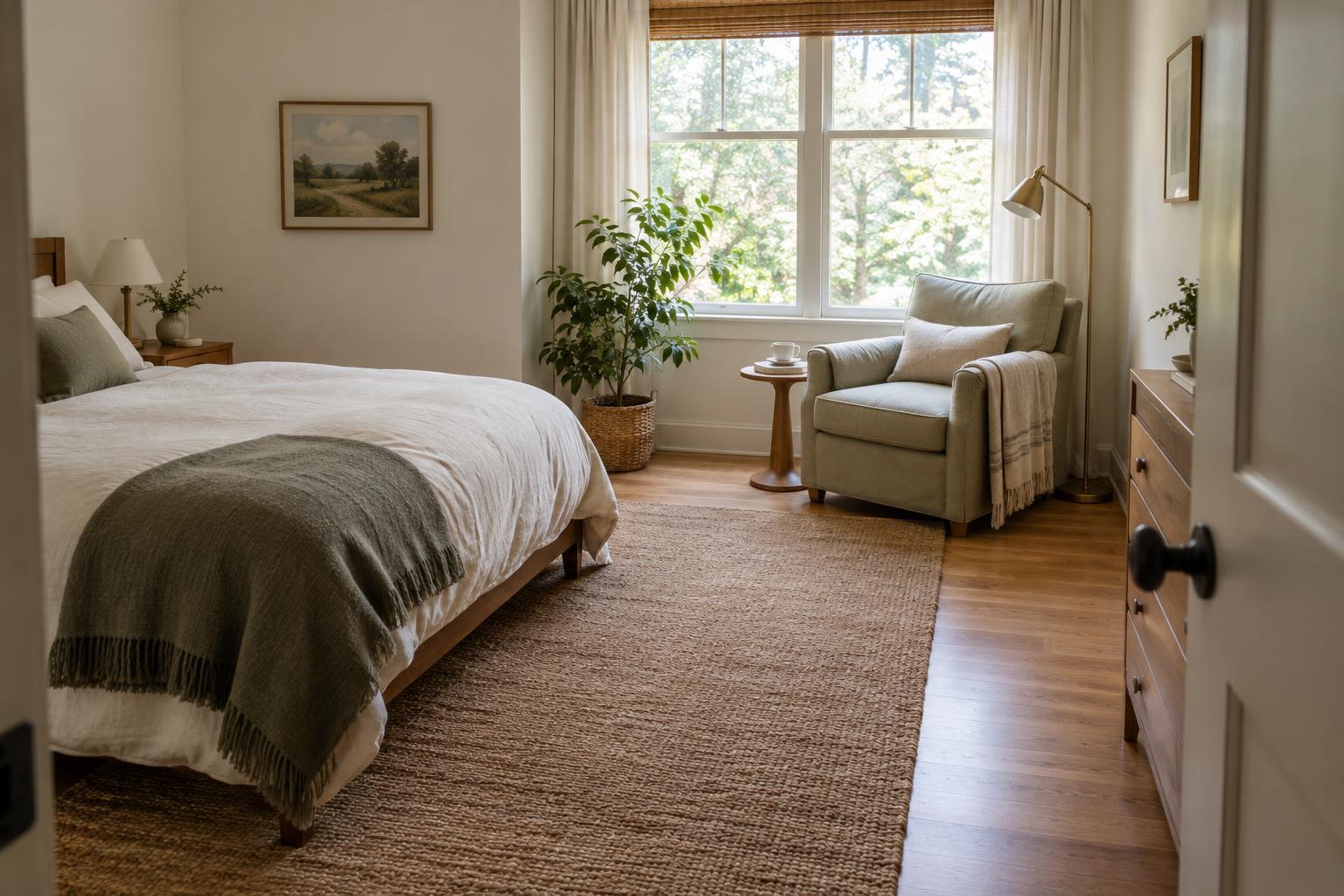
A spot beside a window is inviting for daytime reading, provided the chair does not block access to curtains or the window itself. Angling it slightly toward the room can feel more relaxed than pushing it flat against the wall. If direct light is uncomfortable at certain times of day, leave room for a curtain or shade that you can adjust.
In a long bedroom, a chair near the foot of the bed can make use of space that might otherwise feel empty. Check that there is still an easy route around the bed. In a smaller room, look for a corner beside a bedside table: the table can serve both the bed and the chair, reducing the need for another piece of furniture. A chair can also sit near a wardrobe if its doors and drawers have enough room to open.
Select a chair for sitting, not just looking
The right chair is one you can settle into while holding a book without constantly shifting position. Sit in it before committing if you can. Check whether your back feels supported, your feet rest comfortably, and the arms leave room for your elbows. A compact chair with a supportive seat may be more useful than a deep lounge chair that overwhelms the room.
Pay attention to the chair’s full shape, not only its seat width. Splayed legs, broad arms and a reclined back can take up more floor space than expected. If space is tight, a chair with a relatively upright profile may leave more room to move around it. An ottoman is pleasant but optional; if it blocks a route, try a cushion behind your back and keep the floor clear.
Give the chair its own light and landing place
A good seat can go unused if reading there strains your eyes. Consider how light reaches the page after dark. A floor lamp may work beside the chair if its base stays out of the walking path. A wall-mounted or clip-on lamp can free up floor space, though its placement should still allow you to direct light where you need it. Keep cords away from routes where someone might catch a foot.
You also need somewhere to set down a book and a glass of water. That could be an existing bedside table, a narrow shelf or a small stool. Choose a surface that you can reach without leaning far forward. If the bedroom already feels busy, this shared landing place is often more valuable than adding a dedicated reading table.
Keep the nook calm and easy to maintain
Natural textures can help the chair feel connected to the bedroom: a cotton cushion, a wool throw or a woven basket for the book you are reading. Use only what improves comfort. Too many layers can make a small chair feel cramped and give you more to move each time you sit down.
If you want greenery nearby, place a plant where its light needs can be met without making watering awkward or putting leaves across the seat. Finally, sit in the chair for a few evenings before deciding the layout is finished. Small adjustments to its angle, lamp position or nearby surface often make the difference between a corner that looks appealing and one you actually use.