First, find out what kind of bamboo you are buying
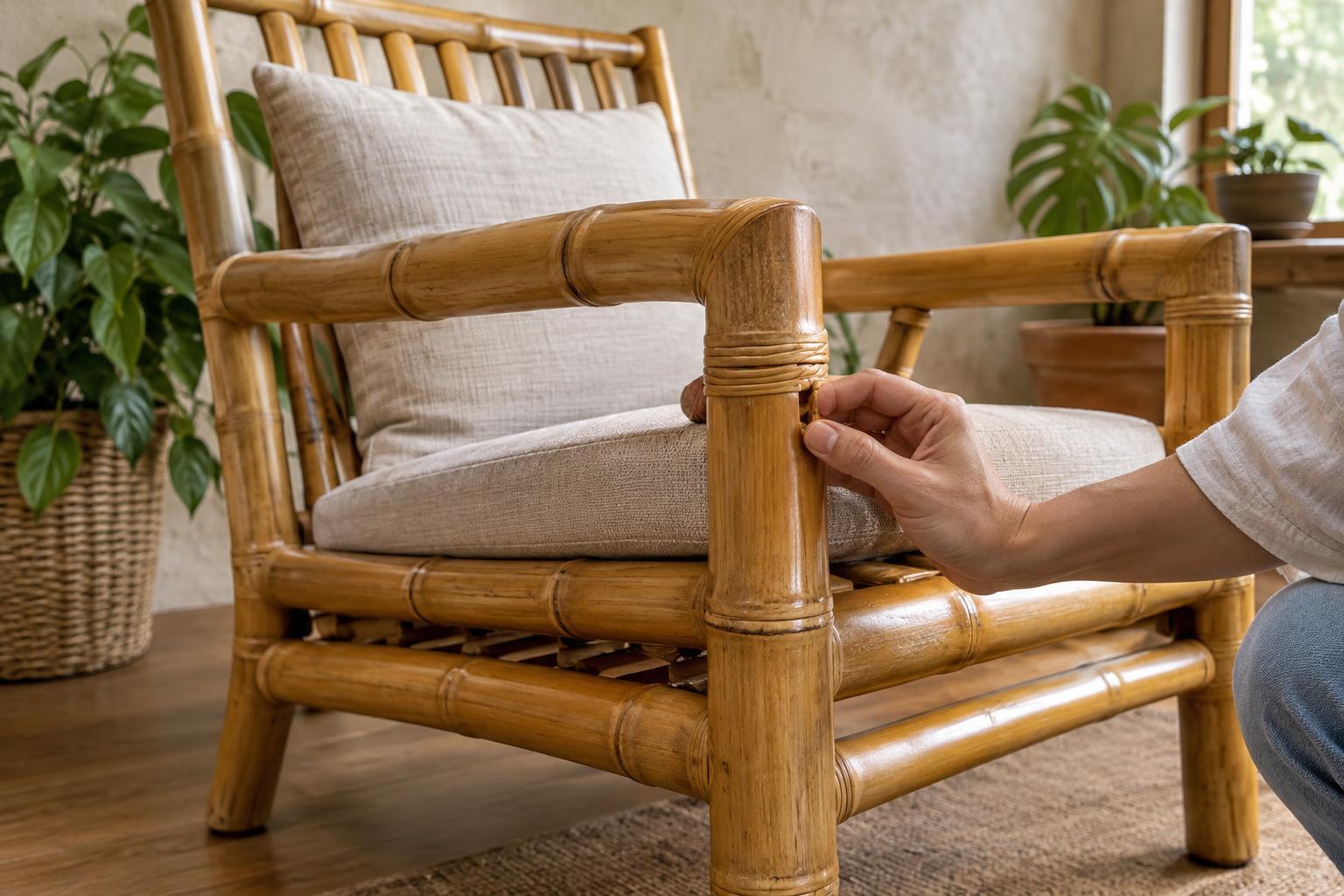
“Bamboo furniture” can describe several different constructions. A chair may use whole bamboo poles for its frame, narrow strips woven into a seat, or laminated bamboo boards made by bonding processed strips together. Some pieces combine these methods with wood or metal. The distinction matters because each construction has different points to inspect and care for.
Whole-pole bamboo has a hollow center and visible nodes along its length. Small variations in color and shape are normal, but the poles should feel firm and sit securely in their joints. Laminated bamboo looks more like a solid panel, often with parallel strips or a layered edge. Check that its layers meet evenly, especially at corners and exposed edges. If a listing calls a piece bamboo but the material is unclear, ask which parts are bamboo and whether it is intended for indoor, covered-outdoor, or fully exposed use.
Check the structure before the surface
A smooth finish cannot compensate for a loose frame. Set the piece on a level floor and press gently where it will bear weight. A chair should not sway at its legs or shift noticeably where the back meets the seat. A table should stand without rocking, and its top should feel well supported. Slight flexibility in woven parts may be intentional; movement at a load-bearing joint is less reassuring.
Look closely at connections. On pole furniture, check where poles meet and where screws or pegs enter the bamboo. Hardware should appear secure, without crushed areas, widening holes, or cracks radiating from a fastener. On laminated boards, look for gaps between layers, lifting edges, or separation around screws. Turn the piece over if you can: the underside often reveals how the frame is braced and whether the same care was taken in less visible areas.
Then examine the finish. It should be reasonably even, without sticky patches or exposed, rough fibers in places likely to be touched or cleaned. A tiny surface line is not necessarily a structural failure, particularly on a natural pole. A crack that opens when the piece moves, runs through a joint, or grows around a fastener deserves more caution.
Why bamboo can split
Bamboo responds to changes in its surroundings. Repeated shifts between damp and dry conditions can cause movement in the material and place stress on finishes and joints. Whole poles may develop lengthwise splits, especially if a joint concentrates force at one point. Laminated bamboo can develop gaps if bonded layers separate. These are different problems, so it helps to identify where a crack begins rather than treating every line as a finish flaw.
Placement and use also matter. Strong sun through a window, a nearby radiator, or a hot air vent can dry one part of a piece more quickly than another. Standing water can affect an exposed edge or joint. Dragging a chair by its back or loading a shelf beyond its intended use can put extra strain on connections. Good construction reduces these risks, but no natural-material piece is immune to damage.
Build simple habits that protect the piece
Aim for a fairly consistent indoor environment rather than trying to reach a perfect humidity number. Keep bamboo furniture away from direct heat and move it out of prolonged, intense sun when practical. Use coasters or trays beneath drinks and plant pots, and wipe up spills promptly. A waterproof plant saucer is especially useful: it protects both the bamboo and the floor from water that may escape after watering.
For routine cleaning, remove dust with a soft cloth or brush. If needed, use a lightly damp cloth and dry the surface afterward, paying attention to seams and the ends of poles. Avoid soaking the piece or leaving it wet. Test any cleaner on a discreet area first, and follow the maker’s guidance for its particular finish. Oil, wax, or a new coating is not a universal fix; an unsuitable product may leave a residue or interfere with an existing finish.
Only use bamboo furniture outdoors if it is made and finished for that setting. Even then, keeping it sheltered from persistent rain and letting it dry between wet periods may help it last longer. Bring movable pieces under cover when they are not in use for an extended stretch.
Respond early when a crack appears
Make a note of a new split and check whether it changes over the next few weeks. If it is shallow, stable, and away from a load-bearing joint, careful cleaning and a steadier location may be enough while you monitor it. Do not force glue into a crack without knowing how the piece is built or finished; a rushed repair can hide damage without restoring strength.
Stop using a chair, stool, or other weight-bearing piece if a split widens under pressure, a joint loosens, or laminated layers begin to separate. Contact the seller or maker about repair options, particularly if the piece is relatively new. Choosing a well-supported frame at the outset and paying attention to small changes afterward gives bamboo furniture its best chance to remain both useful and beautiful.