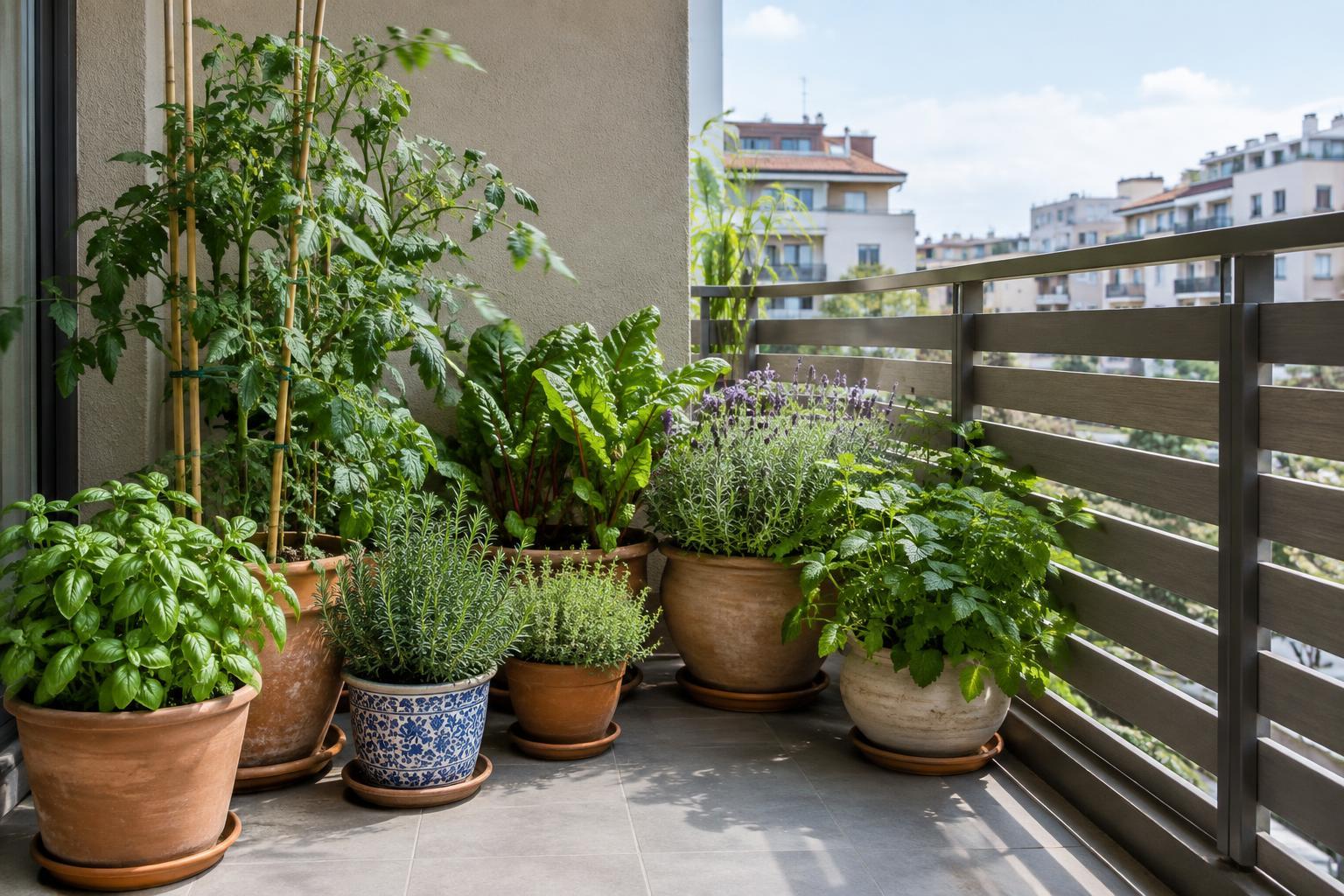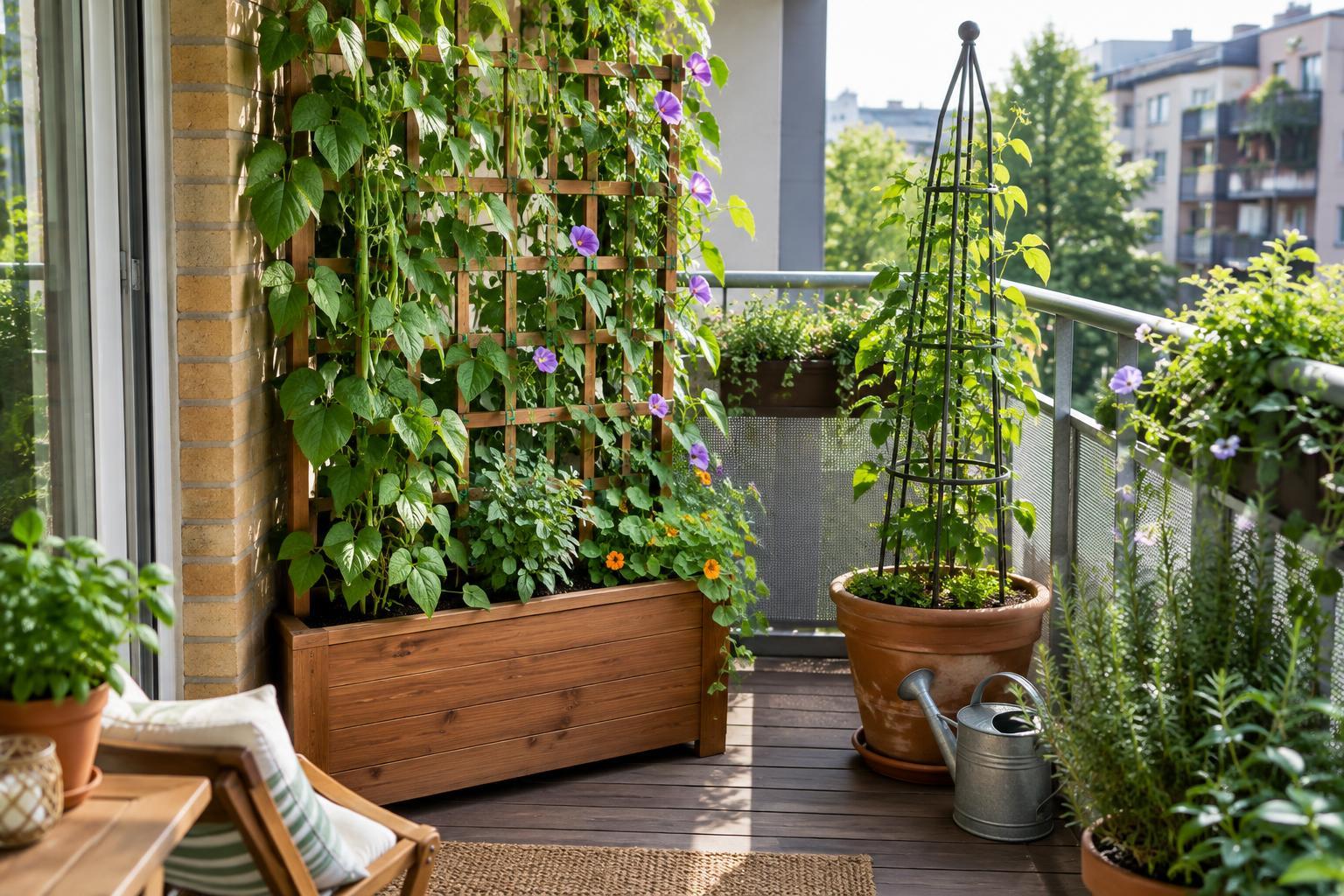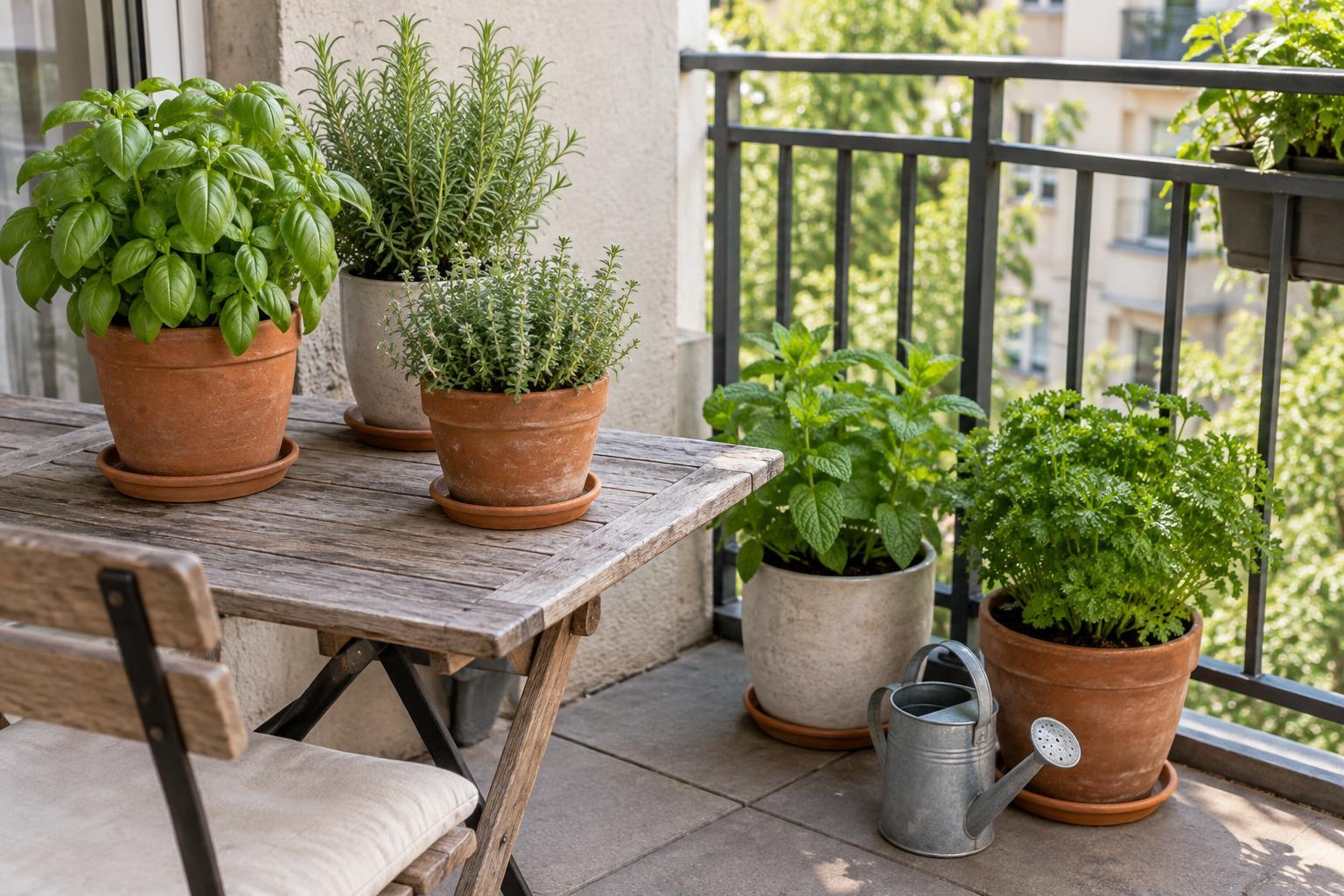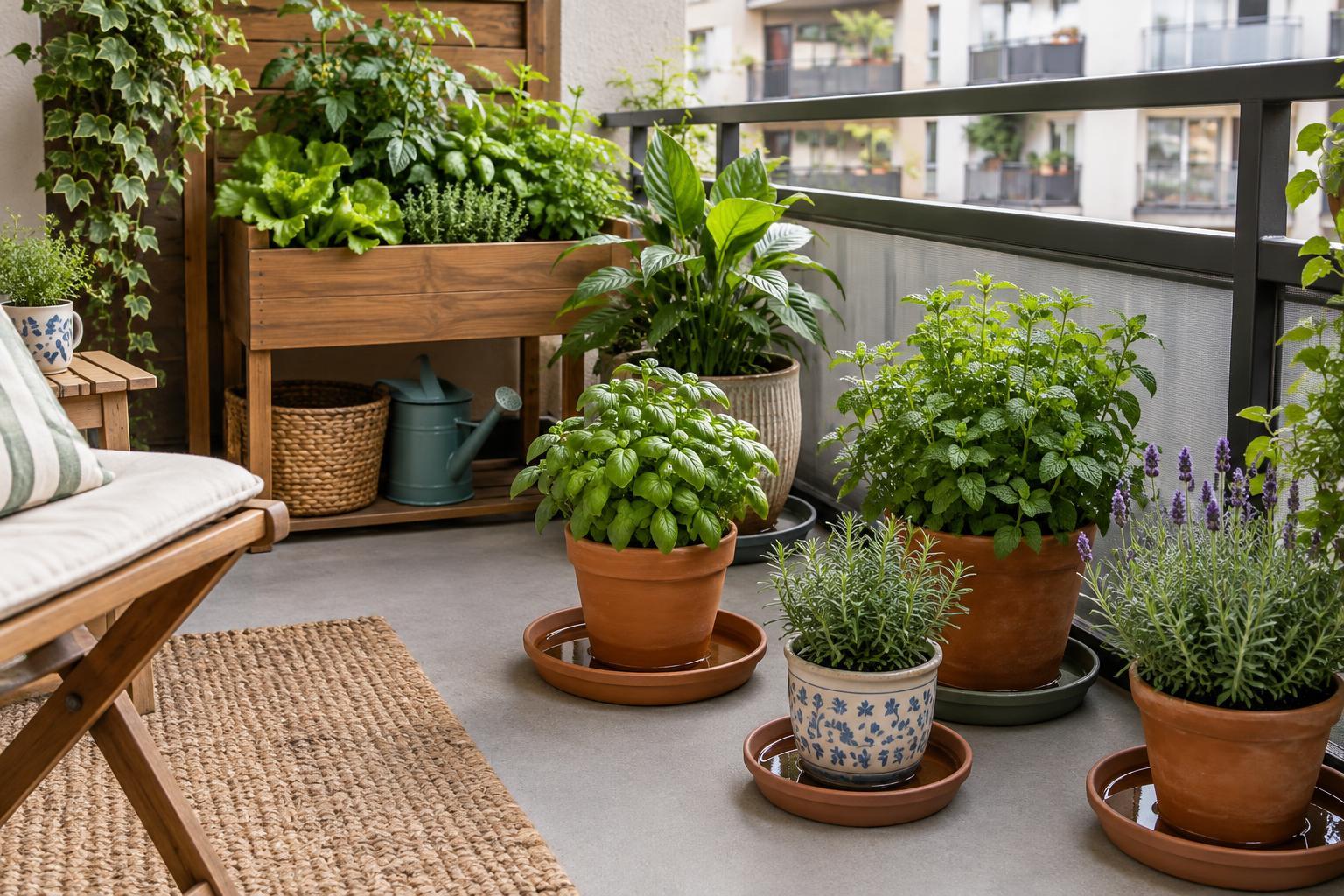
Start with the path the water takes
When you water a balcony pot, some moisture stays in the potting mix and the rest may leave through the drainage holes. If the pot sits on an open railing shelf or a slatted floor, that runoff can travel farther than you expect. Before rearranging plants, pour a small amount of water into an empty container at each planned pot location and watch where it would flow. Keep water away from balcony edges, wall joints and any area where it could reach the space below.
The aim is to catch excess water while still giving roots a way to drain. Closing the holes in a standard plant pot is rarely a good shortcut: water can collect around the roots, especially after rain. Instead, give drainage water a contained place to go and make it easy to empty.
Pair every draining pot with a reliable catcher
Choose a saucer or tray wider than the pot’s base, with enough depth to catch the runoff from a normal watering. A narrow saucer can overflow if water runs down the outside of the pot or if a breeze shifts the plant. Check that the pot sits securely and that the saucer is level; an uneven balcony surface can send water over one side.
For a group of small pots, one sturdy waterproof tray may be simpler than several saucers. Leave space between pots so you can see and remove collected water. A raised pot stand inside the tray can keep the base of a pot above runoff, but the tray still needs regular emptying. Test your setup with a modest watering before relying on it for a large plant or a windy day.
A decorative outer pot without drainage holes can also catch water from a smaller nursery pot. Lift the inner pot out to water it, let it finish dripping into a container, then return it. If you water directly into the outer pot, check its bottom afterward: hidden standing water is easy to overlook.
Water slowly, then deal with the overflow
Check the potting mix before watering rather than following a fixed schedule. If it still feels moist beneath the surface, many plants can wait. When it is time to water, add water slowly enough for the mix to absorb it instead of letting it race through dry gaps at the sides of the pot. Pause, then check the tray. You can add a little more if needed without filling the catcher to its rim.
Empty saucers and trays after the pot has finished draining. A small watering can, cup or sponge can help transfer runoff to a bucket without tipping a heavy pot. Dispose of the water where it is appropriate to do so, rather than pouring it over the balcony edge. After rainfall, check catchers again even if you have not watered; an uncovered tray can fill on its own.
If a pot drains immediately every time or stays wet for a long time, look beyond the saucer. The potting mix may have pulled away from the sides, become compacted or be poorly suited to the plant. Adjusting the mix or repotting can make watering more predictable, but keep the drainage catcher in place.
Plan for rain, wind and the balcony itself
Keep pots back from railings and open edges, where a tilted saucer or windblown rain could send water down to a neighbor. Put large containers where you can reach their trays without dragging them across the floor. For exposed balconies, use stable pots and trays that cannot easily blow away, and move vulnerable plants under cover when practical.
Catch runoff at the pot, but do not cover or block any drain intended to carry rainwater off the balcony. Avoid leaving water trapped against walls or door thresholds. If a plant and its wet soil are heavy, check the balcony’s permitted loads or ask the building manager before adding more large containers. Building rules may also limit railing planters or specify how runoff must be handled.
A simple routine makes the system work: look underneath each pot while watering, empty what collects, and check again after heavy rain. With that habit, drainage holes can keep doing their job without turning the balcony below into an unintended watering zone.