What fertilizer does for a houseplant
A houseplant gets its energy from light, while its roots take up water and nutrients. Potting mix may contain nutrients when it is new, but that supply can diminish over time. Fertilizer replenishes some of the nutrients available to a plant growing in a container. It supports healthy growth; it cannot make up for insufficient light, poor drainage, or a watering routine that leaves roots too wet or too dry.
Most houseplant fertilizers list three main nutrients on the package: nitrogen, phosphorus, and potassium. The numbers beside them show their relative proportions. For a beginner caring for a mix of common foliage plants, a general-purpose fertilizer labeled for houseplants is a reasonable place to start. You do not need a separate product for every pot on the shelf.
Choose a simple feeding method
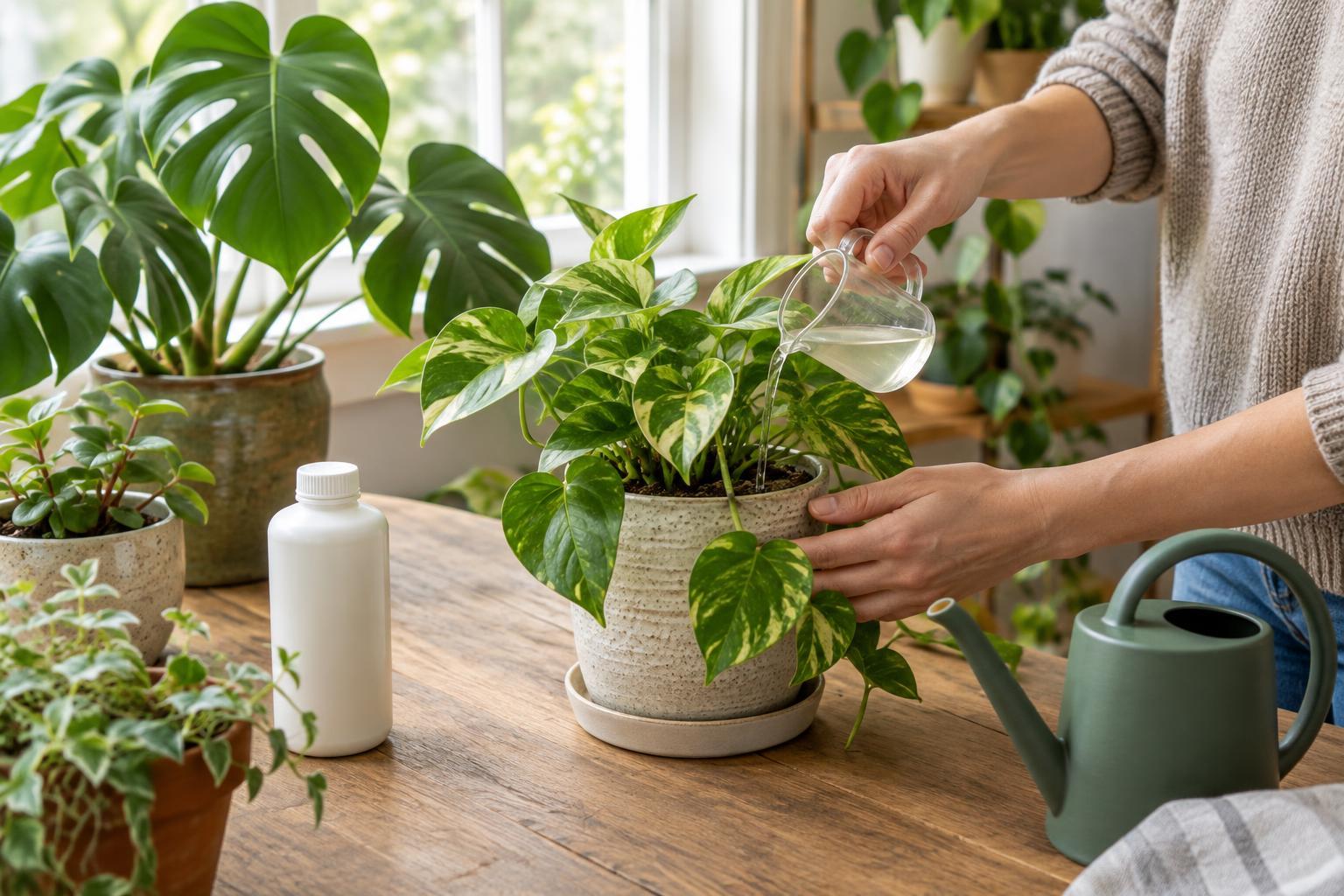
Liquid fertilizer is easy to incorporate into a watering routine because you dilute it in water before applying it. Slow-release granules are mixed into or sprinkled onto potting mix and release nutrients over time. Either can work; the useful choice is one whose directions you can follow consistently. Check the label for the recommended amount, frequency, and any plants the product is not intended for.
For a first feeding, use a weaker mixture than the label’s full recommended strength if the directions allow for dilution. This is a cautious approach for plants whose needs you are still learning. Avoid guessing with concentrates: measure the fertilizer and water rather than adding an extra splash. More fertilizer does not mean faster, healthier growth, and excess can leave salts in the potting mix or damage roots.
Let growth guide the schedule
Many indoor plants grow more actively when they receive longer, brighter days. That is often when feeding is most useful. When growth slows in lower light, a plant may need little fertilizer or none until it begins growing again. Use the product label as a starting point, then pay attention to the plant and its conditions instead of treating every pot on the same calendar.
A newly repotted plant may already have nutrients in its fresh potting mix, especially if the bag says fertilizer is included. Give it time before adding more. Likewise, pause feeding a plant that is wilting, badly underwatered, sitting in soggy mix, or recovering from root trouble. Address the growing conditions first. Fertilizer is most helpful to a plant that is otherwise able to grow.
Different plants also respond differently to indoor conditions. A fast-growing vine in a bright window may use nutrients sooner than a slow-growing plant across the room. Keeping a small note of when you fed each plant can prevent accidental repeat doses and help you adjust your routine over time.
Apply fertilizer without stressing the roots
When using a liquid product, follow the package instructions for mixing and application. If the potting mix has become very dry, water it normally first and wait until it has taken up moisture before feeding. Pour the prepared mixture onto the mix rather than concentrating it in one spot, and let any excess drain away. Empty the saucer afterward so the pot is not left standing in runoff.
A pot with a drainage hole makes watering and fertilizing easier to manage. If you notice a pale crust on the soil surface or pot rim, or leaf tips begin to brown after repeated feedings, excess fertilizer could be one possible cause. Pause feeding and check your watering and light conditions as well; those symptoms have more than one possible explanation. For a pot that drains freely, an occasional thorough watering can help carry accumulated salts out of the mix. Empty the runoff rather than letting the plant absorb it again.
Store fertilizer in its original container, follow the label’s handling directions, and keep it away from children and pets. Measure and mix it in a place where spills are easy to clean up.
Build a routine you can adjust
Start with one fertilizer, read its label, and feed only plants that are growing and otherwise doing well. Afterward, look for steady new growth rather than an immediate transformation. If a plant seems unhappy, check light, watering, drainage, and roots before adding another dose.
The best feeding routine is not the most intensive one. It is one you can repeat carefully and change when a plant’s growth or surroundings change. A measured, occasional feeding paired with good everyday care gives indoor plants what they need without making fertilizer the center of the routine.