Start with the space you need to move
Before adding storage, open the door fully and walk through the entryway as you normally would. Notice where you step while carrying groceries, where you pause to take off shoes and which way the door swings. Keep that movement area clear rather than filling every available wall. A drop zone works best when it supports arriving home without making the first few steps awkward.
Look for a spot beside the main path, not in front of it. A short wall, a recessed corner or the space beyond the door’s swing may be more useful than the wall closest to the threshold. If several people use the entrance, leave enough room for someone to pass while another person hangs up a coat. Painter’s tape can help you test the footprint of a shelf, bench or shoe rack before bringing it home.
Give daily items one easy landing place
Think about what actually comes through the door each day. Keys, a wallet, mail, a dog lead and reusable bags may need homes; rarely used accessories do not need to occupy the most convenient spot. A narrow wall shelf or small tray can catch pocket items without taking up floor space. Place it where you naturally reach after closing the door, rather than where it merely looks symmetrical.
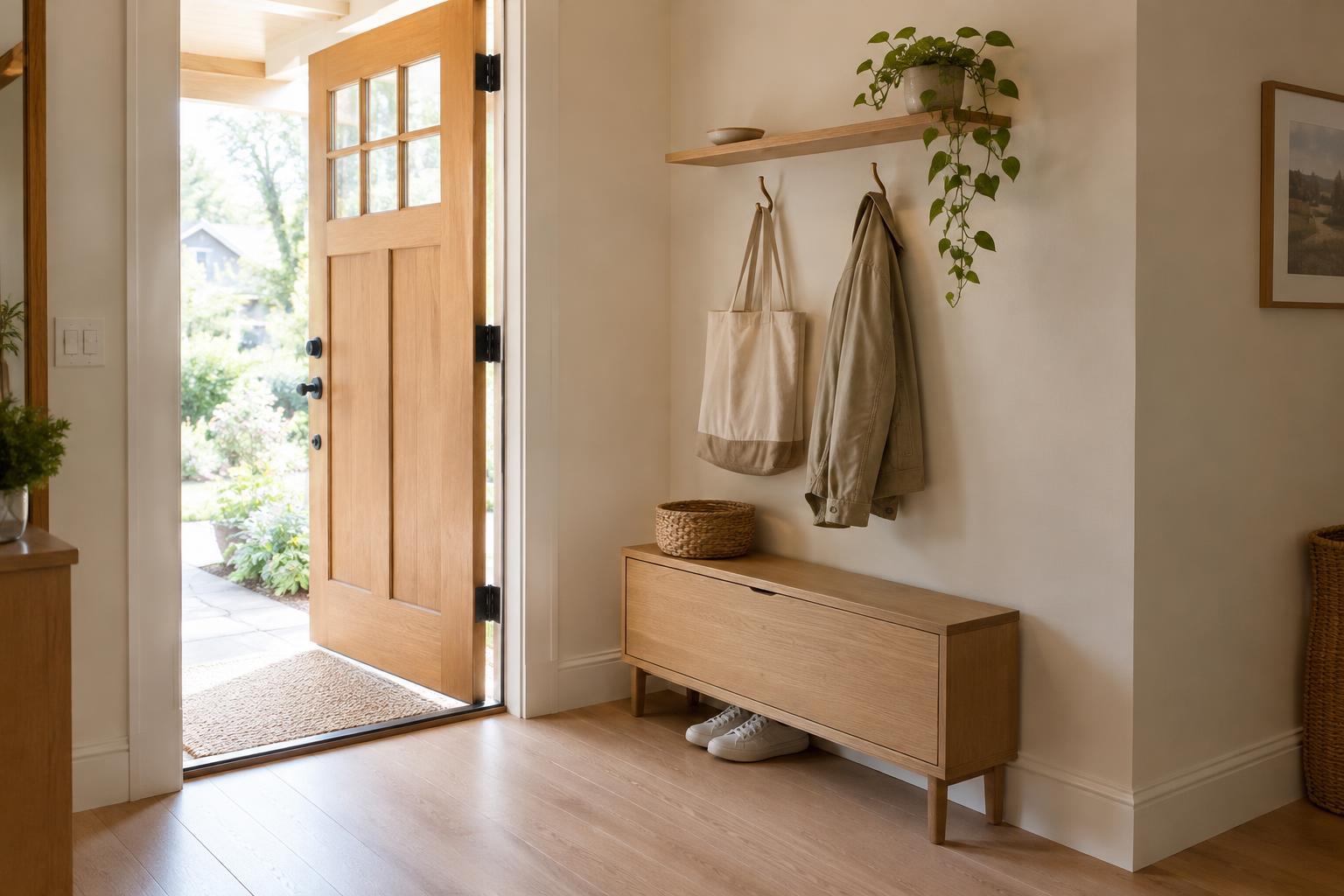
Hooks often make better use of a tight entryway than a freestanding coat rack. Set aside one for each regularly used coat or bag, and avoid placing them where hanging items will brush against the door or block a light switch. If an open row of hooks starts to look busy, keep only the current season’s outerwear there and store the rest elsewhere.
Keep shoe storage low and contained
Shoes can spread across a doorway even when the rest of the entryway is tidy. Choose one defined area for pairs worn most often: a low rack, a shallow tray or the space beneath a slim bench. The aim is to make putting shoes away easier than leaving them in the walking path. A tray can also contain damp soles, though it will need regular cleaning.
A bench is useful if someone needs to sit while putting on shoes, but it is not essential in every entryway. In a narrow space, a compact stool that tucks under a shelf may be more flexible. Check the depth of any seat or rack with the door open, then make sure bags and coats hanging above it do not reduce the usable space. Keep overflow shoes in another room so the drop zone remains manageable.
Use height and texture without adding bulk
When floor space is scarce, use a small section of wall thoughtfully. A shelf above hooks can hold a basket for less-used items, while a mirror can make the area feel brighter without projecting far into the room. Avoid stacking storage so high that daily essentials become hard to reach. Anything near the door should also be secured appropriately and positioned so it cannot be knocked by people passing through.
Natural materials can soften a practical setup. A woven basket, wooden shelf or washable coir mat adds texture without requiring extra furniture. Choose finishes that suit the wear the entryway receives: wet coats and muddy shoes may make an easy-to-wipe surface more helpful than a delicate one. If you want greenery, a plant on a secure shelf away from the door swing is usually less intrusive than a pot on the floor. Check that its light and care needs suit the spot.
Make resetting the area part of the routine
Even a well-planned drop zone can become crowded if it turns into storage for everything waiting to leave the house. Give outgoing items a small, temporary place, such as one basket, rather than allowing them to spread across the floor. Empty that space regularly and return misplaced items to their proper rooms.
Live with the arrangement for a week or two before adding more organizers. If keys still land on the nearest table, the tray may be too far from your usual route. If bags pile up, the hooks may be full or difficult to reach. Adjust the layout around those habits. The most welcoming entryway is not necessarily the one with the most storage; it is the one that lets you enter, set things down and move on comfortably.