Start with the room’s everyday uses
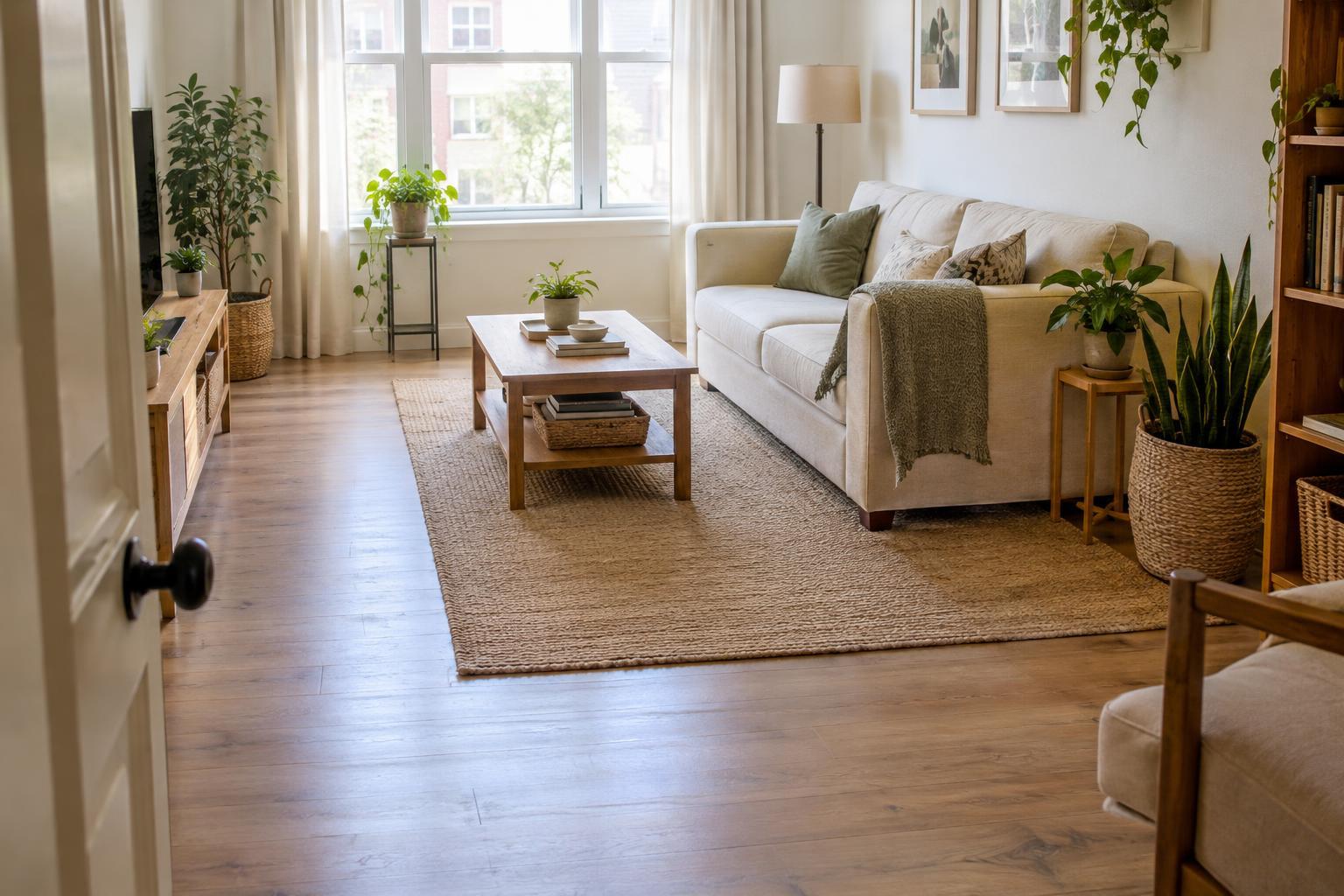
Before choosing a desk position, notice how people use the room when no one is working. Where do they walk most often? Which seats are used for relaxing, and which storage needs to stay accessible? A home office works better when it fits around those patterns rather than interrupting them. Sketch the room or move a few small objects to mark the space a chair would occupy when pulled out. This can reveal whether a promising corner leaves enough room for someone else to pass.
Decide what the work area actually needs to hold. Someone who works mainly on a laptop may need a surface, a comfortable chair and a place to charge devices. Paperwork or equipment may call for more storage. Keep the setup no larger than its daily tasks require; extra surface area can easily become a landing place for household clutter.
Give the desk a place, not the whole room
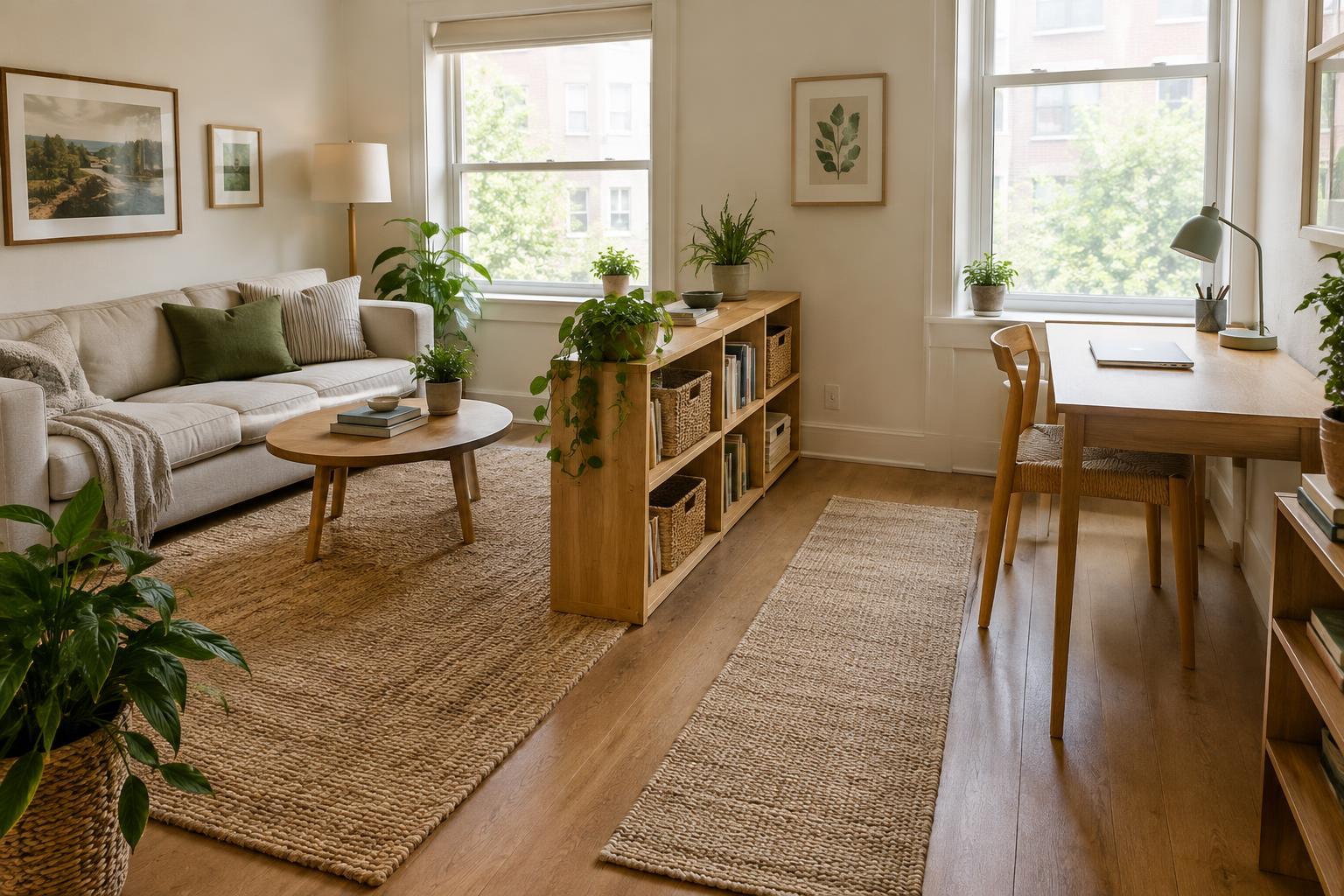
An unused wall, an alcove or the space beside a bookcase can give a desk a clear position without making work the focal point of the living area. If the room is narrow, a shallow desk may leave a more comfortable walkway than a deep one. Check where the chair will sit during use, not just where it tucks in afterward. Avoid placing it where an open drawer or chair blocks a doorway, a frequently used cabinet or the route to the sofa.
Consider what you will face while working. Looking toward a wall can limit distractions, while facing into the room may suit someone who needs to remain aware of family activity. If video calls are part of the day, look at the background from the chair before settling on a layout. A simple shelf or uncluttered wall is often easier to manage than a view across the busiest part of the room.
Make light and comfort part of the layout
Daylight can make a work corner pleasant, but a screen directly opposite a bright window may catch glare. Try positioning the desk so the window sits to one side, then adjust curtains or blinds as the light changes. A movable task lamp helps on darker days and keeps work light focused rather than brightening the entire living space. Put switches and outlets within easy reach, and route cords away from walking paths.
The chair matters as much as the desk. Choose one that lets you sit comfortably for the length of time you usually work, and check that your legs have room beneath the surface. If an office chair looks out of place or cannot remain in the room, a supportive dining chair may be useful for shorter sessions. Test the arrangement before buying furniture: a few days with an existing table can show which heights, sightlines and clearances need attention.
Use storage to create a gentle boundary
A shared room benefits from a visual cue that says where work begins and ends. A low shelf, a floor rug or a change in wall color can define the office area without closing it off. If you use a bookcase as a divider, keep the surrounding space open enough for comfortable movement and do not overload shelves that are not designed to hold heavy items. A plant can soften the edge of a desk, provided it has suitable light and does not crowd the work surface.
Give loose items a destination close to where you use them. A drawer, lidded box or portable caddy can hold chargers, notebooks and pens so they do not spread across the room. Vertical shelves can free up desk space, but leave frequently used supplies within easy reach. The aim is not to hide every sign of work; it is to make clearing the shared space straightforward.
Plan how the room changes after work
The best layout supports both working hours and downtime. If the desk is always visible from the sofa, try a small closing routine: put away papers, return the chair to its place and switch off the task lamp. A folding desk or mobile cart can be helpful when floor space must change uses, though only if setting it up and putting it away feels manageable in daily life.
Talk with anyone who shares the room about times when quiet, calls or access to seating matter most. A layout cannot solve every competing need, but it can make those needs easier to accommodate. Keep the first arrangement flexible. After living with it for a while, move the lamp, adjust storage or turn the desk if a walkway feels tight. Small changes often make a shared room more comfortable for everyone.